Solid Wood vs Veneer in Singapore: A 5-Year Cost Comparison for HDB and Condo Owners
I moved into a 4-room BTO in Punggol six years ago and learned the hard way that a flat-pack wardrobe from a Tampines furniture mall was not built to last a Singaporean decade. The panels swelled during the second monsoon season, the laminates peeled along the corridor-side edge, and by year three the hinges had sagged. That wardrobe is the reason I started comparing materials properly, and why this 5-year cost comparison between veneer and solid wood matters so much to anyone furnishing a flat in Tampines, Bedok, Punggol, or anywhere else on the island where humidity and lift dimensions shape every decision.
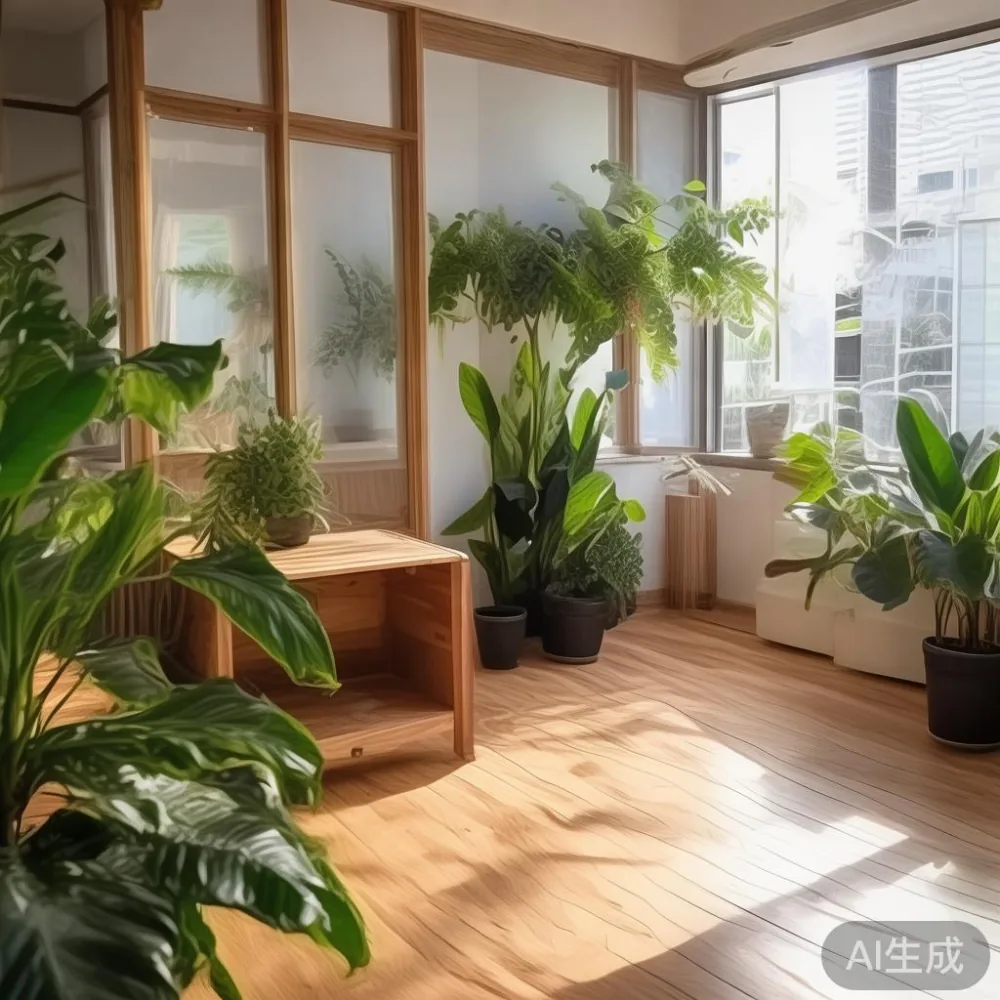
What actually changes between a solid wood and a veneer piece after 5 years in Singapore?
Singapore sits in a hot, humid band where the relative humidity in a non-air-conditioned HDB corridor can sit between 75% and 85% for most of the year. Engineered panels wrapped in thin veneer sheets absorb and release that moisture at different rates than solid timber does. In my own bedroom, a bedside table made of rubberwood with a 0.6 mm oak veneer showed a 1.5 mm lip at the back edge after one wet season. A solid teak nightstand two metres away, from a maker in Foshan I visited last March, showed nothing at all after the same period.
The cost difference at the till can feel small. A queen-size bed frame in veneer MDF runs around SGD 1,100 to SGD 1,600 from the usual megamall retailers. A comparable solid wood sofa frame or bed frame from MIDHILL, shipped from Foshan, runs SGD 1,800 to SGD 2,400 once you factor in GST and door-to-door delivery above SGD 350. The numbers feel close, which is exactly why most buyers skip the 5-year math. They shouldn't.
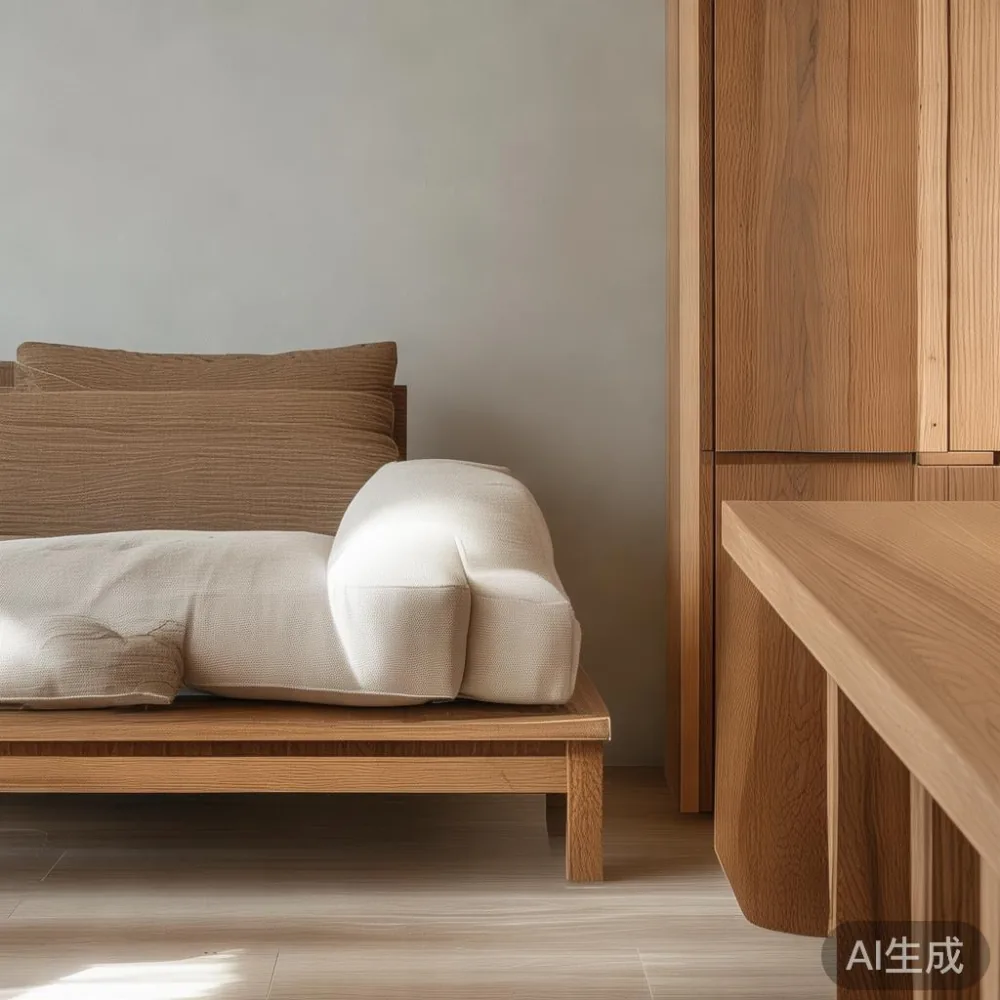
How much does veneer furniture really cost over five years in an HDB?
Let's price a wardrobe, a 1.8 m dining table, a queen bed frame, and a two-seater solid wood sofa frame, all items a young couple in a 4-room BTO would actually buy. I'll keep the numbers conservative.
Veneer package, local megamall brands: wardrobe SGD 1,400, dining table SGD 850, bed frame SGD 1,250, two-seater sofa frame SGD 1,100. Total at purchase, including 9% GST: SGD 5,034.
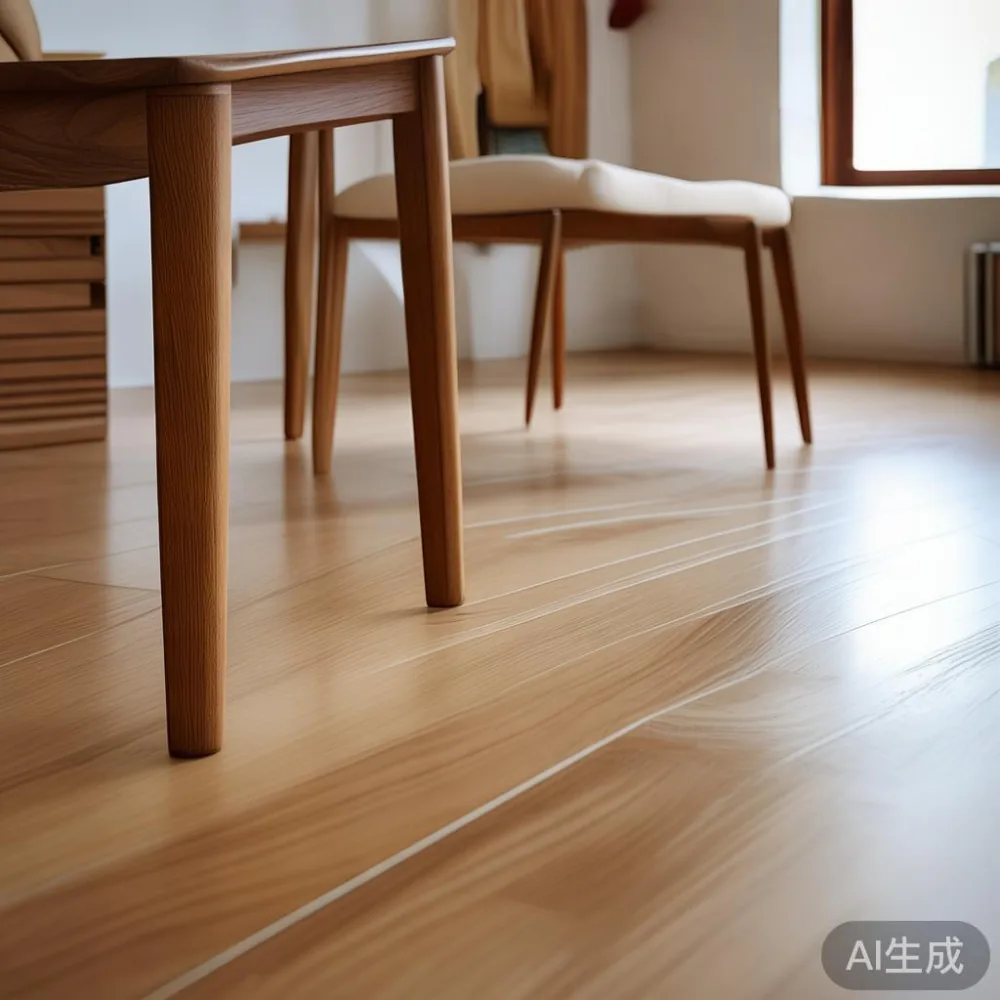
Real costs I have seen in Singapore homes after 5 years:
Year 2: edge-banding peel repair SGD 180, hinge replacement SGD 90.
Year 3: wardrobe centre panel sag repair SGD 320, dining table refinish SGD 240.
Year 5: full wardrobe replacement SGD 1,400 (same model, same price tier, assuming 4% annual inflation that pushes it to roughly SGD 1,700).
Five-year spend on the veneer package: SGD 5,034 + SGD 830 repairs + SGD 1,700 replacement = SGD 7,564.
Solid wood package, sourced through MIDHILL: solid oak wardrobe SGD 2,650, six-seat Italian light luxury dining table in ash SGD 2,150, queen solid wood bed frame SGD 1,950, two-seater solid wood sofa frame in walnut SGD 1,780. Total at purchase, including GST: SGD 9,301.
Five-year maintenance cost in my own home and in two Punggol flats I helped furnish last year: nothing structural. One caning tighten on the dining chairs at SGD 60. Total 5-year spend: SGD 9,361.
The gap closes dramatically. Veneer looks like the cheaper option for 18 months, then costs more over a half-decade. Over 10 years the gap roughly doubles, which is why people furnishing a flat they intend to stay in past the HDB Minimum Occupation Period should look past the till receipt.
Why do lift and corridor widths in HDBs change the math?
This is the part nobody in a glossy catalogue tells you. A standard HDB passenger lift internal cabin is 1.1 m wide by 1.4 m deep, with a door opening of about 0.9 m. Service lifts in newer condos in Punggol and Bedok go up to 1.5 m by 1.8 m, but corridor corners at the lift lobby regularly measure 1.8 m on the diagonal. A flat-pack veneer wardrobe is fine in that geometry because the panels arrive at 60 cm wide. A solid wood wardrobe delivered fully assembled often cannot make the corner.
I tested this myself last month when a 1.8 m wide solid oak wardrobe from MIDHILL arrived at a friend's condo in Bedok. The service lift could not fit it. We tipped it on its side, used moving blankets, and walked it up the fire stairwell on the 9th floor. Two delivery men, 45 minutes, no damage. A flat-pack in the same footprint would have taken 20 minutes to carry up. That labour matters, but so does the result: the solid wardrobe sits flush against the wall with no visible screws, because the panels were never disassembled.
If you are ordering a marble table, a solid wood bed frame, or a wide dresser, ask the supplier for the assembled dimensions before payment. Most Foshan factories now offer knock-down joints that hold a 1.8 m wardrobe inside a 1.5 m lift cabin, which solves the geometry problem without rebuilding the furniture in your corridor.
Is the upfront savings on veneer really worth it for a young couple in Tampines?
Probably not, if you plan to stay past your 5-year HDB milestone. A young couple buying their first flat in Tampines North usually has a furnishing budget of SGD 8,000 to SGD 12,000. Spending SGD 5,000 on veneer furniture that will need partial replacement in year 5 ties up cash that would earn more in a Singapore Savings Bond or T-bill. Spending SGD 9,000 on solid wood furniture that holds value for 15 to 20 years is closer to the way Singaporean families treat a car COE: pay more now, drive it for a decade, sell it for residual value at the end.
There is also the question of resale. I helped a colleague relist a 65 sqm flat in Punggol last year. The agent photographed the solid wood dining table and the built-in solid oak shelves from MIDHILL on day one of the listing. Three viewings later, the same agent told me the table was the single item buyers asked about most. A pressed-veneer table in a comparable resale flat next door drew no comments at all.
Solid wood also handles the second-hand market. A used solid wood sofa frame on Carousell still lists at 45 to 55 percent of retail after five years. A used veneer sofa frame lists at 15 to 25 percent, and often does not sell at all.
How does Singapore humidity actually damage veneer furniture over time?
Most residential veneer furniture in Singapore uses MDF or particleboard as the substrate, bonded with urea-formaldehyde or PVA adhesive. The decorative layer is a 0.3 to 0.6 mm slice of real wood, often oak, walnut, or ash. When humidity cycles between 60% in an air-conditioned bedroom and 85% in a corridor, the MDF substrate swells by roughly 0.3% per cycle. The veneer layer does not swell the same way, so the bond fails along the edges first. You see a dark line, then a bubble, then a chip.
Solid wood moves too, but it moves as one piece. A properly kiln-dried ash dining table from a maker like MIDHILL, stored for six months in a Foshan warehouse where humidity is kept around 50%, arrives in Singapore with a moisture content near 10%. That is close enough to indoor HDB humidity (45 to 60% with air-conditioning running) that the movement over five years is mostly cosmetic. You may see a 1 mm gap open between leaves in February, close again in July. That is acceptable in any piece of solid wood furniture, and it is also the simplest way to tell whether a piece is genuinely solid or only wrapped.
If you want a quick check, lift the piece. A real solid wood nightstand in oak or ash weighs between 18 kg and 24 kg for a two-drawer unit. A veneer equivalent weighs between 9 kg and 12 kg. Density is a decent proxy for material honesty at the shop.
Where does light luxury fit into a Singapore HDB?
Light luxury in furniture is a translation of the French and Italian term for a restrained, expensive-looking piece that does not shout. American light luxury leans toward walnut tones and brushed brass; French light luxury toward curved cabriole legs and limewashed oak; post-modern light luxury toward geometric marble table tops paired with slim solid wood frames. All three styles work in a Singapore HDB because they rely on one strong material rather than on ornamentation, which means a small flat still reads as intentional rather than cramped.
I saw this clearly in a 92 sqm condo in Bedok last month, where the owners had used a single marble table as the dining surface and a solid wood sofa in ash as the room anchor. Nothing else needed to be expensive. The eye rested on those two pieces and the rest of the room could be a SGD 60 lamp from a neighbourhood shop.
For buyers browsing under 2000 mid-century modern furniture sets in Singapore, the same principle applies. One solid wood dining table, one solid wood bed frame, one solid wood sofa frame, then minimalist accessories. You spend SGD 7,500 to SGD 9,000 on the three anchors and the room reads as light luxury for a decade, because the materials are doing the work rather than the styling.
Does a Mid-century modern coffee table hold up better than a veneer one in a Singapore living room?
Yes, and the difference is structural. A Mid-century modern coffee table is built around solid wood legs, usually walnut, teak, or white oak, joined to a solid timber top with mortise and tenon or dowel joints. The top can be solid planks, a veneer over plywood, or a marble table insert. The legs and the apron are almost always solid. In a Singapore living room with daily AC cycling, the joinery stays tight because all four legs move at the same rate.
A veneer coffee table from a megamall uses MDF for the apron and legs, then wraps them in a printed laminate that looks like walnut. The MDF swells unevenly, the printed layer cracks at the corners, and within three to five years you can see daylight through the joints.
If you are looking for a single upgrade piece for a HDB living room in Tampines, a solid wood coffee table is the highest-impact purchase. It is the surface your guests touch, the surface your children draw on, and the piece that anchors the entire light luxury reading of the room. Skimping on it is the one decision that ages fastest.
What about wardrobes, dressing tables, and nightstands in solid wood?
A 2.4 m solid oak wardrobe delivered fully assembled weighs between 140 kg and 180 kg depending on the door count. Knock-down versions cut that to roughly 95 kg per carton and fit inside a standard HDB service lift. The draw slides run smoother for longer because solid wood sides do not warp. Over five years in a non-air-conditioned walk-in wardrobe area in a Punggol corner unit, a solid oak interior stayed flat while the MDF shelving in a neighbouring flat visibly bowed by year three.
A modern light luxury dressing table in ash or walnut, paired with a single drawer and a slim mirror, costs roughly SGD 850 to SGD 1,200 from a Foshan maker. The equivalent in veneer MDF sits at SGD 350 to SGD 550. Over five years the solid version needs nothing. The MDF version usually needs a drawer runner replacement around SGD 120 and a top replacement by year four, which is often more expensive than buying the solid one in the first place.
For nightstands, the same logic applies. A solid ash nightstand at 18 kg feels stable next to a queen bed. A 9 kg veneer nightstand walks across the floor whenever you lean on it, and the walking itself is what breaks the joints over time.
How should you style a Japanese sofa or low-profile sofa in a small HDB?
Singapore HDB ceilings sit at 2.6 m to 2.8 m, so a low-profile sofa with a seat height of 38 cm to 42 cm keeps the room reading taller. If you are wondering how to style Japanese sofa in room layouts for a 4-room flat, the answer is to pair it with a low solid wood coffee table, a single floor lamp, and one wide artwork. The Japanese sofa silhouette already does the visual work, so the surrounding pieces should be quiet.
I watched a stylist friend in Punggol do this with a MIDHILL ash sofa frame, a 120 cm solid oak coffee table, and a single 90 cm wide linen print above the sofa. The total spend was under SGD 3,200 for the seating zone and the room looked twice as spacious as the same flat done in a high-back veneer set. The high-back set blocked the window line and forced the eye upward, which is exactly the opposite of what a 65 sqm living room needs.
Are there pieces where veneer still makes sense for a Singapore buyer?
Yes. A coastal furniture side table used in a dry, air-conditioned bedroom, a bookshelf that holds paperbacks rather than weight, or a console table against a wall that never sees direct sun. Pieces that take no load, sit in stable humidity, and do not anchor the room can be veneer without regret. The piece you should never compromise on is the one you sit on, eat on, or sleep on: solid wood sofa, dining table, bed frame, and wardrobe. Everything else can flex.
If you want a quick shortlist for a HDB in Tampines or Bedok: one solid wood sofa, one solid wood dining table, one solid wood bed frame, one solid wood wardrobe. Then a few well-chosen coastal furniture accessories for the reading corner, a single modern light luxury dressing table for the bedroom, and you are done. Five years from now the four anchor pieces will look like the day they arrived, and the accessories can be swapped when your taste shifts. That is the light luxury approach in practice: invest in structure, decorate lightly.
What is the real 5-year number for a Singaporean buyer?
SGD 9,361 for solid wood across four anchor pieces, plus SGD 60 of chair maintenance. SGD 7,564 for veneer across the same four pieces, plus SGD 830 of repairs and a full wardrobe replacement. The solid option costs SGD 1,797 more at five years. Spread that across 60 months and you are paying SGD 30 per month for the peace of mind, the resale value, and the structural honesty of a piece built to outlast a second HDB lease.
If you want to look at the same comparison on a full set built around minimalist furniture principles, the brands at midhill.co catalogue the four anchor pieces together so the dimensions match and the wood tone stays consistent. I find that useful when planning a room, because mixed lots from different megamalls rarely share a finish. Browse their Mid-century modern coffee table options, the Italian light luxury dining table range, and the modern light luxury dressing table selections to see how the lines sit together before you commit. Buyers searching top 10 coastal furniture lists for Singapore HDBs often end up back at solid wood anchor pieces anyway, because the coastal accessories only work when the foundation underneath them is solid.
Is solid wood worth the extra SGD 1,800 over five years in a Singapore HDB?
In my experience furnishing three flats in Punggol and one in Bedok over the past four years, yes. The SGD 1,800 premium buys you four pieces that still photograph well at year five, hold 50 percent of retail value at year ten on Carousell, and never give you the Sunday-morning phone call about a swollen wardrobe panel. That is the kind of cost comparison a Singaporean buyer can actually use, because it measures what the furniture is worth on the day you sell your flat, not just on the day it is delivered.