How Southeast Asian Humidity Affects Solid Wood Furniture — And What to Do About It
I spent the first week of March walking through furniture showrooms across Tampines and Bedok with a hygrometer in my bag. By 3pm most afternoons, indoor readings at ground-floor HDB units hovered between 78% and 86% relative humidity, while upper-floor condos in Punggol sat closer to 72%. None of the showrooms I visited could tell me how their solid wood sofa frames, bed frames, or dining tables would behave after twelve months in that air. That gap between marketing copy and moisture physics is exactly what this guide is about.
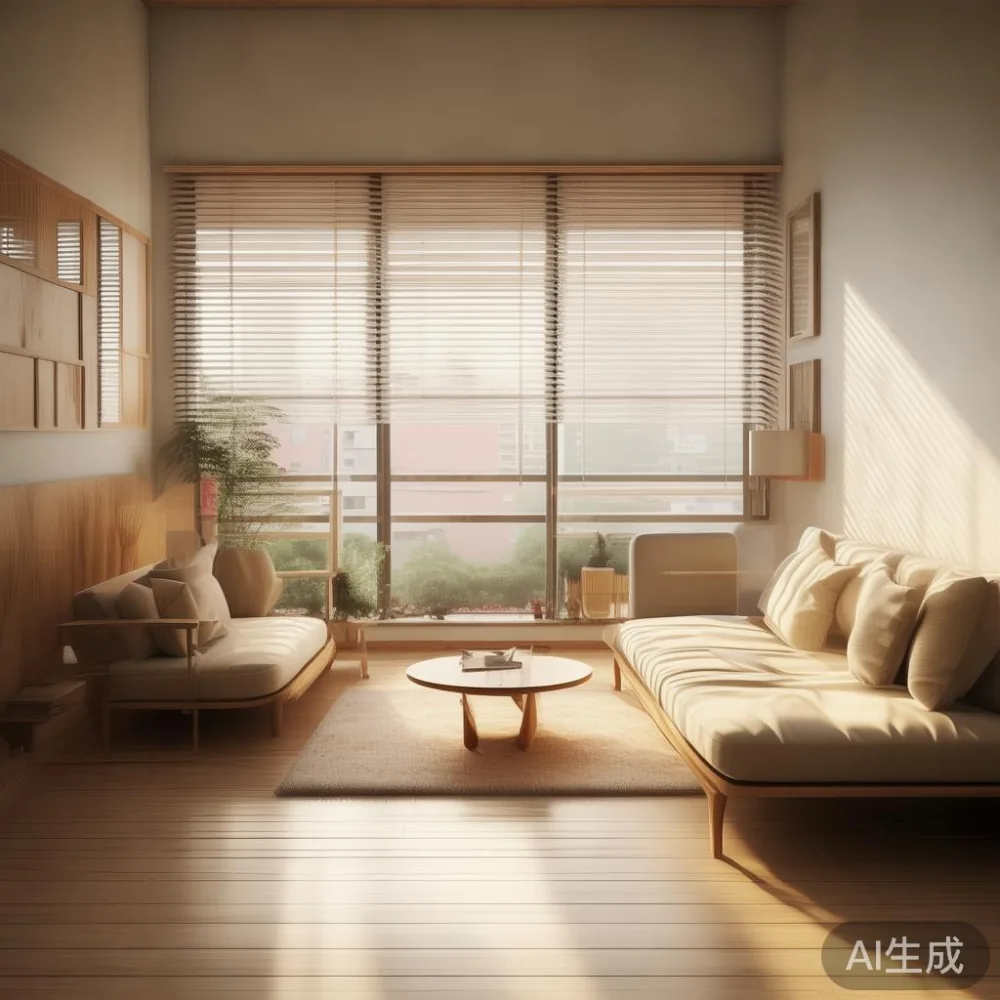
Why Singapore's humidity is different from a temperate climate
A temperate climate swings between roughly 30% RH in a heated winter room and 65% in summer. Solid wood in that environment moves gently across a 35-point band each year, and craftsmen have spent centuries learning to design around it. Singapore has no equivalent swing. Indoor relative humidity in most HDB flats stays in a tight 70–85% corridor year-round, and air-conditioning only narrows the band when the compressor is running. The wood never truly dries, which is the central problem for any minimalist furniture piece built with traditional joinery expectations.
Wood is hygroscopic. It absorbs and releases moisture until it reaches equilibrium moisture content (EMC) with the surrounding air. At 30°C and 80% RH, the EMC of most hardwoods used in solid wood construction (oak, ash, walnut, rubberwood) sits between 14% and 16%. Furniture dried for a temperate market typically leaves the kiln at 8–10% EMC. Ship it to a Tampines three-bedroom and the boards slowly climb toward 15%, expanding tangentially — across the grain — by roughly 2% to 3%. On a 180 cm dining table top, that is 3.6 cm to 5.4 cm of seasonal movement, most of it invisible because it is absorbed by floating panels and breadboard ends, but some of it visible at the seams.
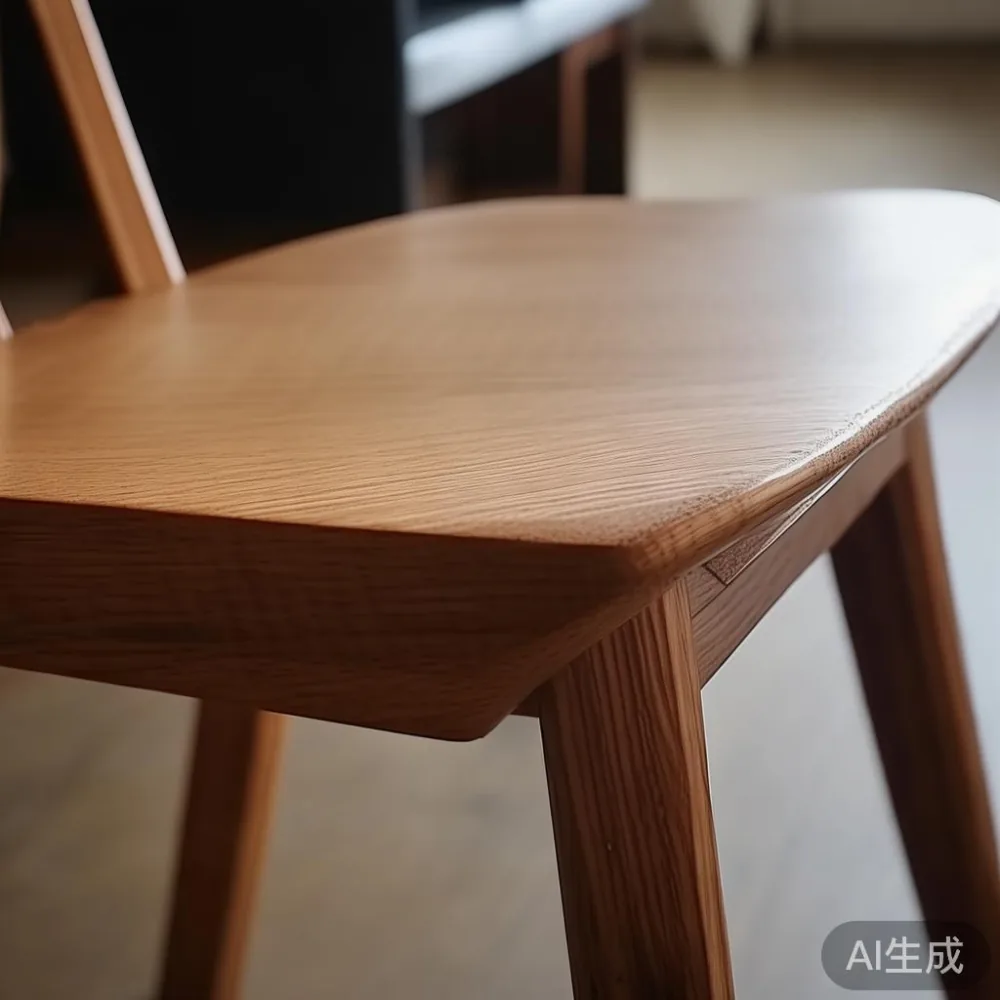
What humidity damage actually looks like in a HDB flat
Customers describe three distinct patterns, and they are not the same problem.
Pattern 1: Stuck drawers in wardrobes. A 220 cm wardrobe built in Foshan at 9% EMC will grow by roughly 4 mm across its width during the first humid summer. Drawer slides that were crisp on delivery become sticky by October. This is the most common complaint I heard in Bedok.
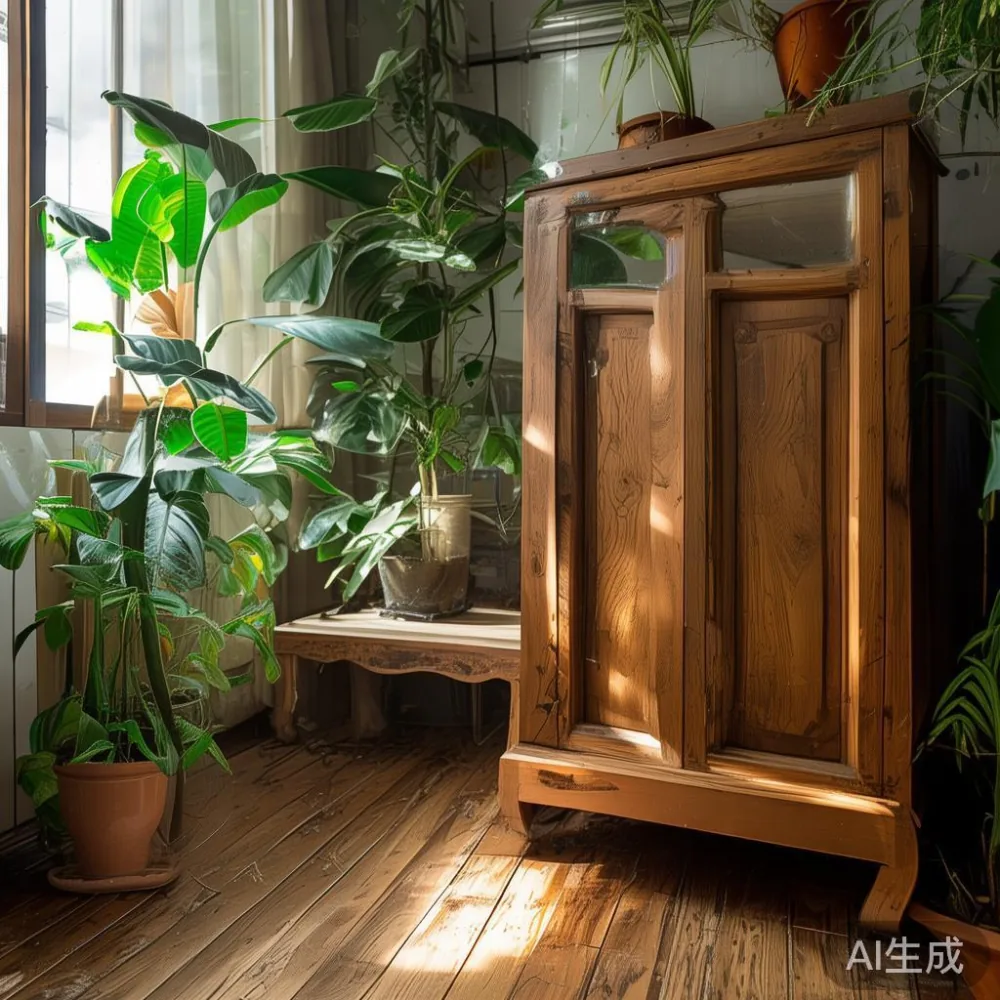
Pattern 2: Hairline cracks on bed frame slats. Air-conditioned bedrooms drop to 55% RH overnight while the living room sits at 80%. Bed frame side panels experience repeated short cycles and develop fine checks along the grain, usually under 5 mm deep. Cosmetic, not structural.
Pattern 3: Cupping on solid wood dining table tops. When one face of a board is sealed with a film finish and the underside is not, moisture enters faster than it leaves. The unsealed side swells, and the top cups upward at the edges by 1–2 mm. You can see daylight under a straightedge placed across the middle. This is the pattern that triggers warranty claims.
Is Italian light luxury loveseat furniture worth it in a humid HDB or condo?
Short answer — yes, if the Italian light luxury loveseat is built with kiln-dried hardwood at 10% EMC or below, finished on all six sides, and joined with floating tenons rather than glued dowels; no, if it is a veneer-over-MDF piece marketed under the same label. The phrase Italian light luxury describes a design language — slim profiles, restrained brass details, neutral palettes — not a moisture specification. The geometry and the finishing protocol are what determine whether a 160 cm loveseat survives a Tampines lift lobby at 84% RH without warping. Ask the seller for the kiln certificate and the EMC at packing, and weigh both pieces.
Three measurements every Singapore buyer should make before ordering
Measurement 1: Your corridor and lift dimensions. Most Singapore passenger lifts measure 1.2 m wide by 1.5 m deep with a 2.1 m ceiling. Service lifts in HDB blocks are larger. A king-size bed frame at 198 cm will not fit through a 90 cm corridor turn, and the assembly-disassembly fee at delivery is typically SGD 80 to SGD 150 if it has to be carried up a stairwell. Measure first, order second.
Measurement 2: Your unit's stable humidity range. Buy a SGD 15 hygrometer and log readings for one week with the air-conditioner running, then one week with it off. The gap between those two numbers is the working band your furniture has to tolerate. If it exceeds 40 mm differential across the tank of a 4-m wide wardrobe, ask the maker about quarter-sawn stock.
Measurement 3: Your budget per piece, in SGD, after GST. A solid wood sofa frame in light luxury positioning lands between SGD 2,400 and SGD 4,800 delivered. A dining table for six sits between SGD 2,000 and SGD 5,500. A queen-size bed frame is SGD 1,800 to SGD 3,600. A two-door wardrobe is SGD 2,200 to SGD 4,400. A pair of nightstands is SGD 20 to SGD 60 per piece — the ones I saw in Punggol showrooms were SGD 480 to SGD 720 a pair. A 120 cm marble table for an entryway runs SGD 1,400 to SGD 3,200. These ranges assume a 9% GST and exclude installation.
How Foshan makers like MIDHILL actually dry their wood for Southeast Asia
I visited a Foshan workshop in early February, and the kiln schedule was the first thing the owner pulled up on a clipboard. For oak destined for Singapore, the kiln runs 28 days, dropping the moisture content from 35% green to 8% before planing, then a further 14-day conditioning cycle to relieve internal stress. The target EMC at packing is 9% to 10%. That is below the 14–16% EMC the wood will reach in a Tampines flat, which means the furniture arrives slightly under-humidified and absorbs moisture slowly during the first six months. A piece from MIDHILL is conditioned in this way, which is why their 10-year structural warranty is meaningful rather than a slogan. MIDHILL also refinishes pieces for life at cost, a service that matters in Singapore where constant refinishing a light luxury surface every 8 to 12 years is the difference between a piece that ages and a piece that embarrasses you.
The other Foshan practice worth knowing is the use of American light luxury joinery — through-tenons, floating panels, and breadboard ends that allow wood to move without splitting the glue line. A dining table built this way will show a 1–2 mm gap at the breadboard seam in January and close up by July. That movement is a feature, not a defect. A table with glued-through dowels and a fixed centre panel will crack instead of move, and no amount of dehumidification will fix it.
A practical care routine that takes eight minutes a week
Monday: Wipe all horizontal surfaces with a dry microfibre cloth. Two minutes per room.
Monthly: Apply a thin coat of paste wax (SGD 18 to SGD 28 a tin) to dining tables, nightstand tops, and wardrobe crowns. Buff after twenty minutes. The wax slows moisture ingress without sealing the wood completely.
Quarterly: Check drawer runners on wardrobes and tighten the soft-close screws by a quarter-turn. Check bed frame bolts for the same quarter-turn.
Annually: Book a dehumidifier cycle for two weeks during the December monsoon season. A domestic dehumidifier set to 55% RH will pull a closed bedroom down to target in 36 hours, then run on a 6-hour cycle to hold it. Electricity cost is roughly SGD 4 to SGD 6 per cycle at current SP Group rates.
Delivery, GST, and warranty realities for Singapore buyers
Sea freight from Foshan to Singapore takes 12 to 18 days, plus 3 to 5 days for Singapore customs clearance and white-glove delivery scheduling. Total door-to-door is 18 to 25 days for in-stock pieces. Custom orders add 30 to 45 days. Most Foshan makers shipping to Singapore include free delivery above US$350, which is roughly SGD 480 at today's rate — well below the cost of any single minimalist furniture piece from this category.
GST is 9% on the declared CIF value and is collected by the freight forwarder on import. A SGD 3,200 dining table delivered will attract roughly SGD 270 in GST, payable on top of the purchase price. Budget for it.
Warranties worth reading: a 10-year structural warranty covers joinery failure, frame cracking, and warping beyond cosmetic thresholds. It does not cover surface checking under 5 mm, finish wear, or movement at breadboard seams. Lifetime refinishing covers sanding and re-finishing at cost, typically SGD 280 to SGD 20 per piece depending on size and finish type. Three references written this way are how I tell a serious maker from a reseller.
What I would buy if I were furnishing a new Punggol BTO this year
A 180 cm solid oak dining table with a breadboard end, finished on all six sides, SGD 2,800 to SGD 3,400. A 160 cm solid wood sofa frame in French light luxury styling with removable cushions, SGD 2,600 to SGD 3,200. A queen-size bed frame with floating side panels, SGD 2,200 to SGD 2,800. A 200 cm three-door wardrobe with solid wood carcass and soft-close runners, SGD 3,200 to SGD 4,000. A pair of nightstand pieces with dovetailed joinery, SGD 120 to SGD 180 a pair. A 110 cm marble table for the entryway, SGD 1,800 to SGD 2,600. A 140 cm TV console in matching oak, SGD 1,400 to SGD 1,900. Total before GST: SGD 15,640 to SGD 19,260.
That budget assumes pieces sourced from a Foshan workshop with a documented kiln schedule and a written EMC at packing. A maker like MIDHILL, with a 10-year structural warranty and lifetime refinishing at cost, sits comfortably in this bracket and ships to Singapore on the standard 18 to 25 day cycle. The reference point for a French care sofa dubai specification — kiln-dried to 9% EMC, six-sided finish, floating joinery — applies in Singapore as readily as in the Gulf, because the moisture challenge is comparable.
Frequently asked questions from Singapore buyers
How long does delivery take from Foshan to a Tampines HDB? 18 to 25 days for in-stock pieces, 50 to 70 days for custom orders, including white-glove delivery up to your unit door.
Will my bed frame crack in a non-air-conditioned bedroom? Solid wood will develop cosmetic checks under 5 mm in the first year if humidity swings above 30 points. Air-condition the room for at least eight hours a day, or accept the checks as patina.
Is a marble table better than solid wood for Singapore humidity? Marble is dimensionally stable but stains and etches. Solid wood tolerates humidity if finished correctly and refinished every 8 to 12 years. The honest answer is that each material has its own care profile.
Can I refuse delivery if the piece smells of damp? Yes. Any reputable maker inspects the crate on arrival and offers re-issuance at their cost if the moisture reading at packing was above 11%.
Does the 10-year structural warranty transfer if I sell the piece? Most Foshan makers transfer the warranty once, with the new owner's details registered within 60 days of sale. Confirm with your invoice.