Solid Wood vs Veneer: A 5-Year Cost Reality Check for Singapore Homes
Three years ago, I helped a friend in Tampines furnish her four-room HDB flat. She picked a glossy veneer dining table because it looked just like the solid oak version on the showroom floor, and the price tag carried an extra two thousand dollars in her pocket. Last month I visited her again. The once-gleaming tabletop had lifted at the corners near the aircon vent, and a thin white line ran along one edge where the laminate had peeled back. She told me, with the kind of honesty reserved for close friends, that she wished she had spent the money differently. That conversation is the reason I sat down to run the real numbers on what a 5-year horizon actually costs when you choose between veneer furniture and solid wood furniture in Singapore.
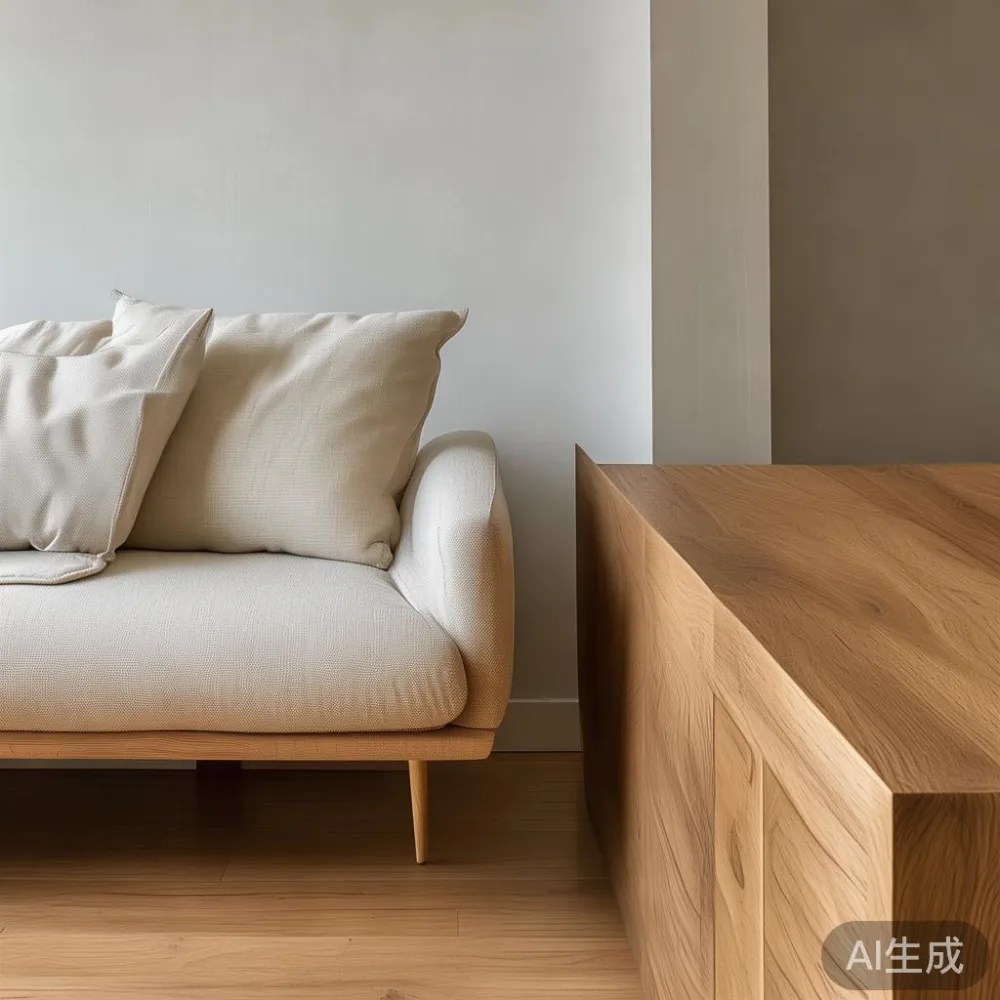
The Upfront Price Tag Looks Smaller on Veneer
Let us start where most people start: the price sticker. A six-seater veneer dining table measuring 180 cm x 90 cm typically retails in Singapore at SGD 1,100 to SGD 1,800 from mall brands. The same size in solid oak or ash wood sits at SGD 2,400 to SGD 3,600. A 1.6 m wardrobe with sliding doors in engineered veneer panels costs around SGD 1,500 to SGD 2,800, while a comparable solid wood wardrobe lands between SGD 3,200 and SGD 5,500. A queen-size bed frame in veneer runs SGD 700 to SGD 1,300, versus SGD 1,800 to SGD 3,200 for solid wood with a proper slatted base. The nightstand gap is similar: SGD 220 to SGD 380 for veneer, SGD 480 to SGD 850 for solid wood. Across a full set (one bed frame, one dining table, four chairs, one wardrobe, two nightstands), the veneer bill in Singapore often comes in at SGD 6,000 to SGD 9,000. The same set in solid wood lands at SGD 11,000 to SGD 18,000. That gap of SGD 5,000 to SGD 9,000 is the number people remember, and it is the reason veneer wins the first round on the calculator.
What Actually Breaks First in a HDB or Condo
Singapore weather does not punish furniture gently. Relative humidity sits between 70 percent and 85 percent most of the year, and the aircon cycle drops moisture levels inside the bedroom to roughly 55 percent for eight hours, then climbs back up overnight. Over weeks, that swing pulls at any glued joint. In veneer furniture, the failure point is almost always the substrate: the chipboard or MDF core absorbs moisture at the cut edges, swells, and the thin wood layer on top separates. I have seen a bedside table in a Punggol eco-flat bubble at the back panel within 18 months because it was placed two centimetres from a bathroom door. A solid wood bed frame does not behave this way. A 35 mm thick ash plank might cup slightly across its width, but it will not delaminate, because there is no laminate to peel. For households with children, the second failure mode is impact. A 1.2 kg toy car launched from the upper deck of a bunk will chip a lacquered veneer surface down to the grey substrate in one hit. The same impact on solid oak leaves a dent that can be sanded out in twenty minutes.
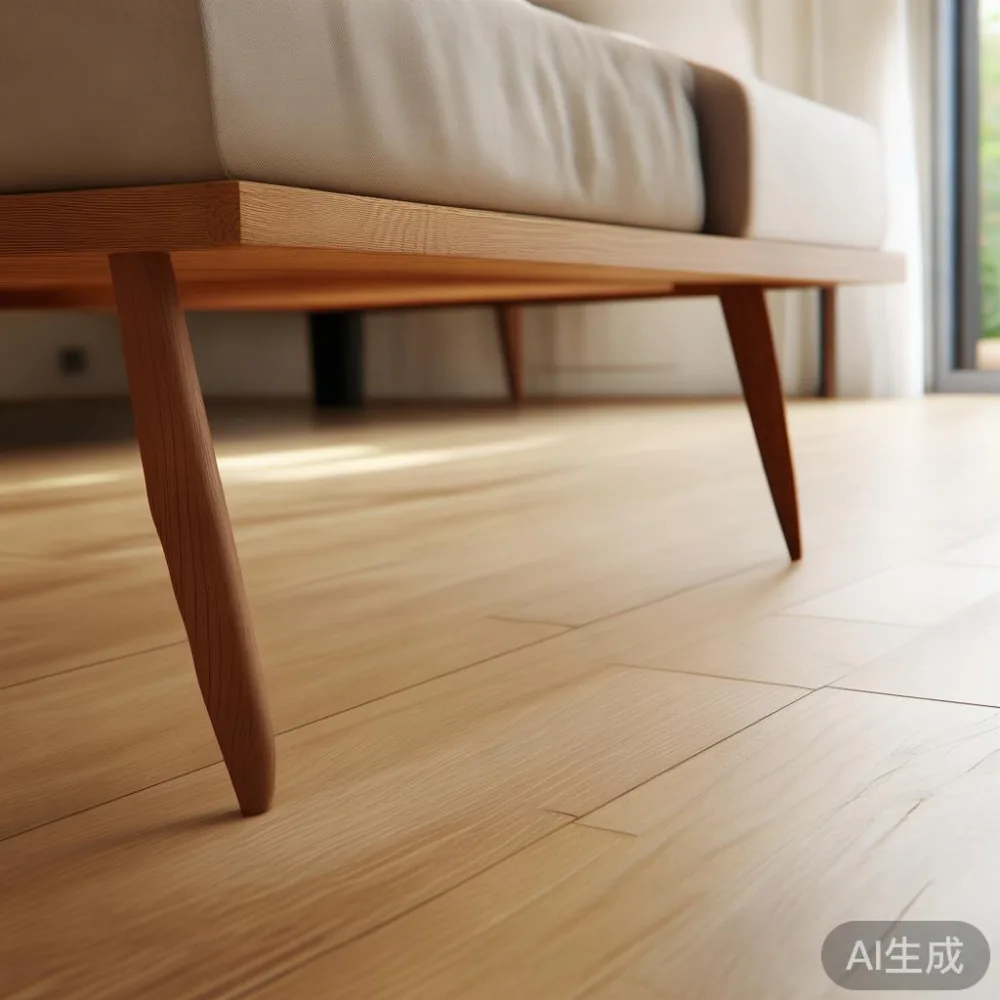
Repair Costs in Singapore, Year by Year
This is the part of the comparison that showroom staff rarely volunteer. Repairing veneer furniture in Singapore is expensive and unreliable. A carpenter typically charges SGD 80 to SGD 150 per visit for a site assessment, then SGD 200 to SGD 450 to re-laminate a single wardrobe door. If the substrate has swollen, the only real fix is panel replacement, which runs SGD 350 to SGD 700 per door including labour. Over five years, my friend's veneer set will likely incur two to three such repairs, totalling SGD 700 to SGD 1,800. Solid wood repair is a different story. Light surface scratches on a solid wood dining table or solid wood sofa frame respond to a SGD 35 wax stick and twenty minutes of buffing. Deeper dents are sanded and re-oiled for SGD 120 to SGD 250 per piece. A wardrobe door that has warped (rare in solid wood, but possible if the home has a persistent leak) can be planed and re-hung for SGD 150 to SGD 300. Across five years, a reasonable repair budget for a solid wood set is SGD 200 to SGD 600, most of it routine maintenance rather than salvage work.
Resale and Refinishing Value Over Five Years
Resale value is where solid wood quietly catches up. A second-hand solid wood dining table in good condition still sells in Singapore for 50 to 65 percent of its original price after five years, particularly if it is a neutral oak, ash, or walnut tone that fits a new owner's minimalist furniture plan. A second-hand veneer dining table in the same condition fetches 15 to 25 percent, and that drops to near zero if any lifting is visible. The arithmetic is straightforward. On a SGD 3,000 solid wood dining table, you recover SGD 1,500 to SGD 1,950. On a SGD 1,400 veneer equivalent, you recover SGD 210 to SGD 350. The gap of roughly SGD 1,200 to SGD 1,600 per piece, across a full set, erases much of the upfront savings. Solid wood also accepts refinishing. A scuffed oak tabletop can be sanded back to bare wood and re-oiled for SGD 280 to SGD 450, returning the surface to a like-new state. The same service is not available on veneer; once the top layer is sanded through, the substrate shows.
Brands such as MIDHILL, a Foshan-based maker shipping solid wood pieces worldwide since 2008, offer lifetime refinishing on their furniture, which is why buyers who think past Year 3 tend to factor that into the calculation. A solid wood piece you can refinish twice in a decade is, in honest accounting, three pieces of furniture rolled into one.
How do I choose a budget under1000 for a study?
If you have under SGD 1,000 for a home study setup, prioritise one solid wood anchor piece (a 120 cm x 60 cm solid oak desk at SGD 480 to SGD 750) and pair it with second-hand minimalist furniture finds for everything else, because the desk takes the daily 8-hour wear and the chair takes the body load, while shelves and storage can be upgraded later without functional loss.
The logic is unglamorous but reliable: spend on the items you touch every day. A solid wood desk measuring 120 cm wide, 60 cm deep, and 75 cm tall is widely available in Singapore at SGD 480 to SGD 750, with a 1.5 to 2 cm thick top and a steel or solid wood leg frame. Add an ergonomic chair (SGD 200 to SGD 350 on sale), a small wall-mounted shelf (SGD 60 to SGD 120), and a cable-managed power strip (SGD 30 to SGD 50). Total: SGD 770 to SGD 1,270. If you must stay strictly under SGD 1,000, drop the chair to a refurbished model and add it in Month 2. What you avoid is the classic mistake of buying a full veneer suite for the study and replacing the desk in Year 3 because the substrate has bowed under the monitor arm clamp.
Light-Luxury Style and Why Solid Wood Carries It Better
The phrase light luxury covers a few overlapping looks. French light luxury leans on cream tones, curved cabriole legs, and brushed brass details. American light luxury is broader: think deep button-tufted sofas, oversized headboards, and pieces that borrow from traditional country silhouettes, including the American country queen bed australia buyers often request, with its turned posts and low footboard. Post-modern light luxury pulls in geometric marble accents and sculptural bases, which is why a marble table with a solid wood sub-frame has become such a common pairing. Across all three styles, the common material requirement is the same: the eye expects to see real grain, real weight, and real depth. Veneer can fake the first, struggles with the second, and almost never delivers the third. A 40 kg solid wood dining table reads differently under the hand than a 15 kg veneer equivalent, even if a side-by-side photo fools the camera. In a Singapore condo with 2.4 m ceiling heights and compact living-dining layouts, that tactile honesty is often the difference between a flat that photographs well and a flat that feels like home.
The 5-Year Total Cost of Ownership, Side by Side
Add it all up for a representative Singapore household furnishing a three-bedroom condo in Tampines or Bedok. Veneer set (bed frame, dining table, four chairs, wardrobe, two nightstands, sofa, marble table accent piece): upfront SGD 8,500, repairs SGD 1,200, replacement of one failed piece SGD 900, resale recovery SGD 600. Net 5-year cost: SGD 10,000. Solid wood set with the same items: upfront SGD 15,000, repairs SGD 350, refinishing once SGD 400, resale recovery SGD 6,800. Net 5-year cost: SGD 8,950. The solid wood owner has spent less over five years, owns furniture that can run another five, and has skipped at least one Saturday afternoon spent arguing with a carpenter about swelling panels.
This calculation shifts further toward solid wood if you factor in Singapore-specific costs. Delivery to a high-floor unit in Punggol with single-corridor access (often 1.2 m wide) is easier with smaller solid wood pieces that disassemble flat-pack than with bulky pre-assembled veneer units that may not fit the lift. GST at 9 percent applies to both, but solid wood pieces from established makers such as MIDHILL often include free shipping above a stated order value, removing one more variable from the total. A 10-year structural warranty, common on factory-direct solid wood, does not exist on most veneer sets sold at retail.
When Veneer Still Makes Sense
Solid wood is not the right answer for every wallet or every room. A rental bedroom in a five-year HDB tenancy, a child's room that will be re-themed twice before they leave for university, and a study that doubles as a guest room for two years are all situations where engineered veneer earns its keep. The honest version of the advice is this: pick solid wood for pieces that anchor the home (the bed frame, the dining table, the wardrobe), and accept veneer for the rotating cast (a trend-led nightstand, a desk that will be replaced when WFH ends, a console that may move to the entryway in two years). Mixing the two tiers is what most well-run minimalist furniture budgets in Singapore actually look like.
What I Would Buy in Singapore Today, on a SGD 12,000 Budget
If a colleague handed me SGD 12,000 in cash and asked me to furnish a four-room HDB with minimalist furniture that needed to last a decade, the list would be short and deliberate. A solid oak queen-size bed frame at SGD 2,200. A 200 cm x 100 cm solid wood dining table with four chairs at SGD 3,800. A 1.8 m solid wood wardrobe with hinged doors at SGD 3,400. Two solid wood nightstands at SGD 480 each. A solid wood TV console at SGD 1,100. Total: SGD 11,460, with SGD 540 left for a doormat, a floor lamp, and the small joy of a marble table lamp on the nightstand. Everything on that list is solid wood. Everything on that list will outlast two flat leases. None of it will ever peel.
That is the quiet arithmetic of furniture in Singapore: the price you pay at the shop is the price you remember, but the price you live with is the price that counts.