Sofa Selection in Singapore: Key Checks Before Purchase
I tested seven sofas last month in showrooms across Tai Seng, Eunos, and a small atelier off Geylang Road before I bought one for my Tampines HDB flat. Two of those sofas were beautiful in photographs and miserable in person. One had a frame that twisted when I lifted one end. Another had a "solid wood" label that turned out to mean plywood with a 2 mm oak veneer on the visible faces. The exercise taught me that buying a sofa you cannot physically sit on first — because it ships from a factory in Foshan, or sits in a container for three weeks, or simply lives behind a glass showroom barrier — demands a different kind of checklist. This guide is the checklist I now use, and it is built for Singapore homes specifically: the 90 cm corridors, the 2.1 m lift doors, the 9% GST line on every invoice, and the afternoon thunderstorm that will hit your door landing if the cardboard is even slightly soft.

Why is buying a sofa without sitting on it so common in Singapore now?
Most Singapore buyers under 40 purchase their sofa the same way they purchase their bed frame and dining table — online, from a brand they have never visited, after reading reviews they have no way to verify. Container direct furniture from Foshan has rewritten the rules: a 3-seater at S$1,490 instead of S$3,200 at a Paragon showroom, with free delivery above S$350, a 14-day return window, and a 10-year structural warranty that is, in theory, transferable if you sell the flat. The catch is that you commit to a 2,400 km decision before the corrugated carton clears customs at PSA. So the question is no longer whether the sofa looks right in a styled photograph. The question is what you check before the courier ever rings your door.
How do I style a standing desk in a modern Singapore home?
A standing desk in a Singapore home works best when it is treated as the anchor of a small, deliberate cluster — a 120 × 60 cm solid wood top on a manual lift frame, a narrow 40 cm-deep bookshelf behind it, and a single piece of wall art hung at 150 cm from the floor so your eye rests on it while you stand.
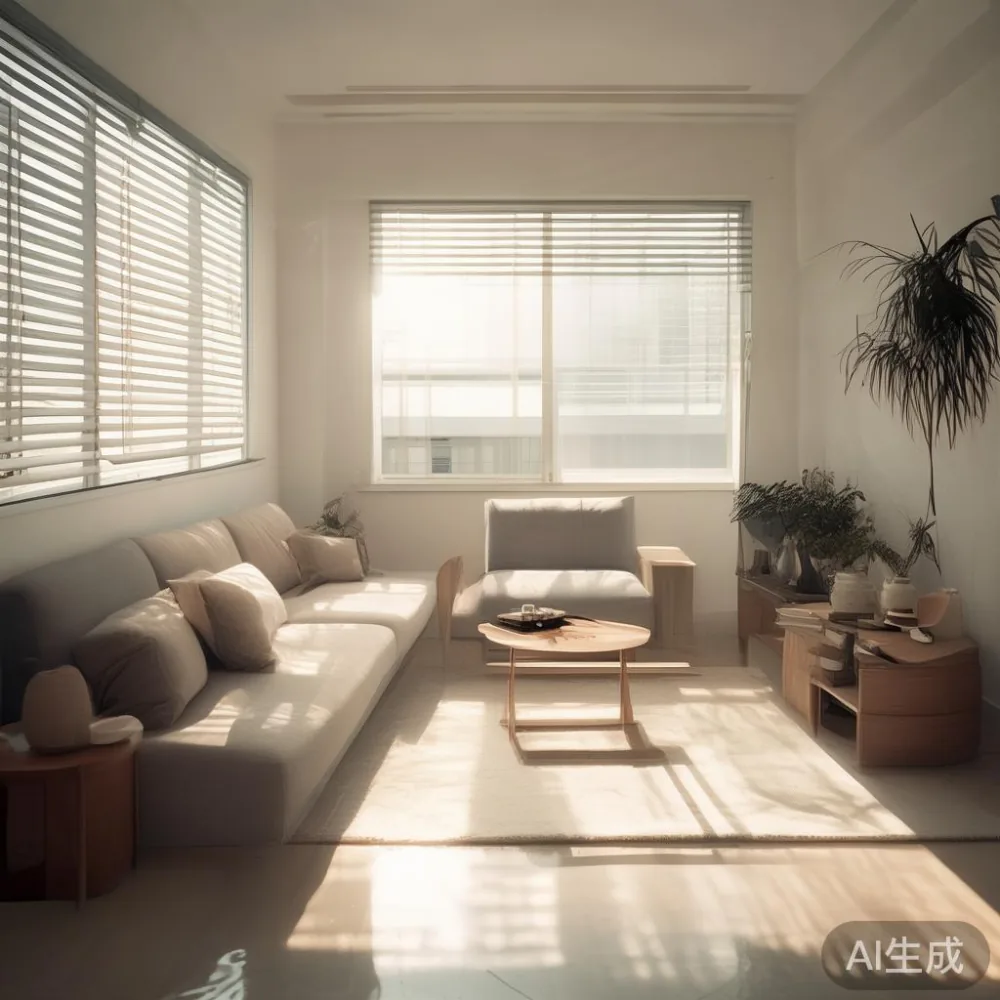
That is the quotable line. Now the longer version. In a 93 sqm Punggol BTO, my colleague replaced a 140 × 70 cm particleboard desk with a 120 × 60 cm solid wood standing desk and freed up 28 cm of floor depth — enough to slide a small two-seater reading chair perpendicular to the window. The desk became the room’s spine, and the minimalist furniture around it stopped competing. Light luxury here reads as restraint: brushed brass cable grommet, no monitor arm, no drawers, no plant. The wood does the work. If your home runs on American light luxury — softer edges, lower contrast, oatmeal boucle on the reading chair — pair the desk with a slim oak nightstand repurposed as a printer stand, and you have a 1.4 × 1.4 m work zone that disappears when the laptop closes.
What measurements actually matter when the sofa cannot enter your home?
Three numbers decide whether a sofa you cannot sit on will ever live in your home: corridor width, lift depth, and the diagonal of the carton. Measure all three before you fall in love with a product page.
Corridor width. Most HDB corridors in Tampines, Bedok, and Punggol run between 90 cm and 120 cm between handrails. Subtract 10 cm for turning clearance. A sofa deeper than 100 cm will not pivot cleanly around the bend at your stair landing.
Lift dimensions. Newer HDB blocks use 1.1 m × 2.1 m lift cars with 80 cm doors; older blocks sometimes run 1.0 m × 1.8 m. The diagonal of the lift floor is roughly 2.37 m on the newer spec. A 2.4 m sofa will not fit on the diagonal; a 2.2 m one will, but only if the carton is under 95 cm tall, which most solid wood frame sofas are not.
Carton diagonal. For a fully packed three-seater, the rule of thumb is (length² + width² + height²)^0.5. A 220 × 95 × 88 cm carton produces a diagonal of 256 cm — over the diagonal of almost every lift in Singapore. Ask the supplier for the packed dimensions in centimetres, then add 10 cm for the pallet base. If the total diagonal exceeds 240 cm, refuse the order or request unassembled flat-pack shipping.
For buyers who have given up on standard 3-seaters, a large sectional sofa for balcony with detachable chaise modules solves the lift problem entirely — each module ships under 100 cm in every direction, and the modular design lets two adults assemble the sofa inside the living room in under 40 minutes with a single hex key.
What does "solid wood" actually mean on a Foshan sofa listing?
On a Foshan listing, "solid wood" can mean five different things, and four of them will fail within five years of Singapore humidity.
1. Kiln-dried hardwood throughout the frame. This is the only specification that earns a 10-year structural warranty. Look for FAS-grade oak, ash, or beech with a moisture content between 8% and 12%. The frame should weigh at least 28 kg for a 3-seater; anything under 22 kg is hollowed out.
2. Solid wood on visible faces only. The front rail and arm panels are real oak; the internal stretcher and back rail are poplar or rubberwood. Acceptable for a budget piece, but the warranty will exclude frame twisting.
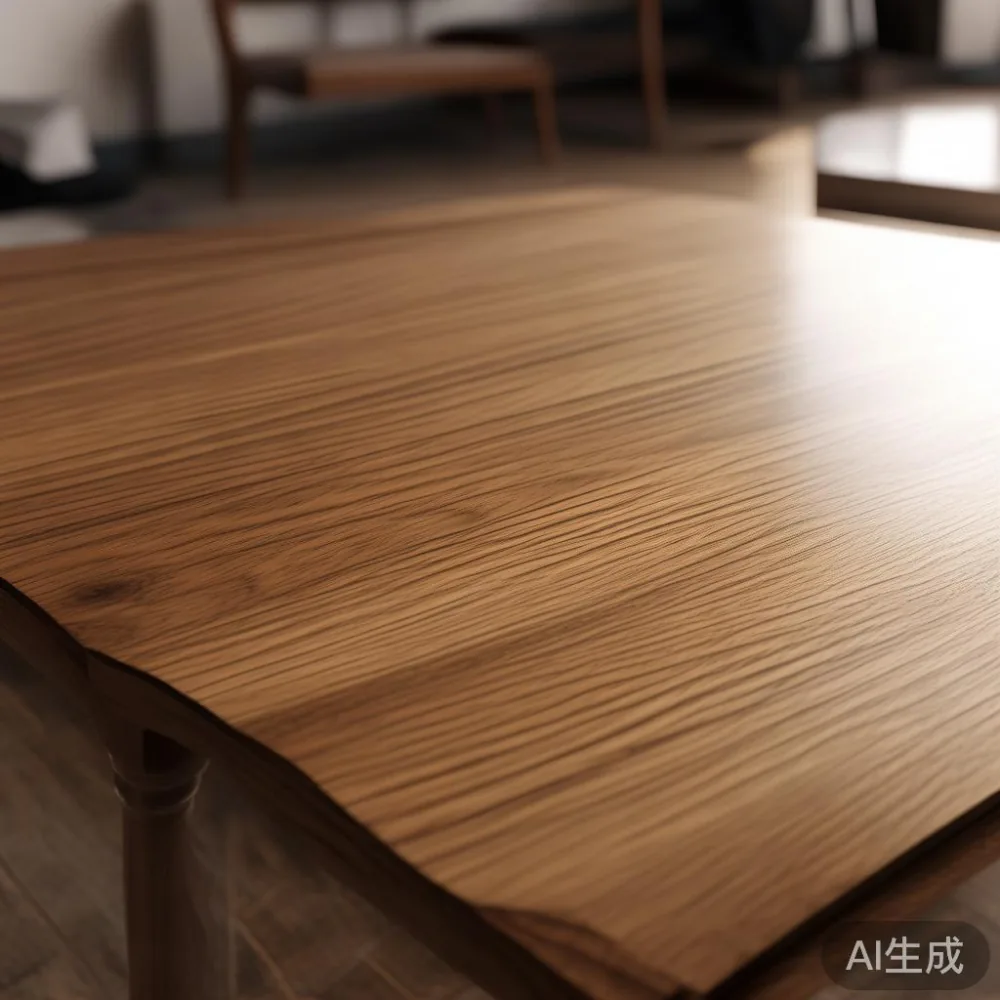
3. Plywood core with real wood veneer. Common, stable, but not "solid wood". A 12 mm plywood base under a 0.6 mm oak veneer will outlast many "solid" frames in Singapore’s 80% average humidity, so do not reject it on principle — just know what you are paying for.
4. MDF with wood-print laminate. This is the one to walk away from. It swells within 18 months of any leak from the kitchen or aircon condensation.
5. Reclaimed or finger-jointed pine. Genuine, sustainable, and cheap, but soft. A fingernail will dent it. Fine for a guest-room bed frame; not fine for a daily-use sofa.
When I visited the MIDHILL showroom in Foshan last March, the buyer took a chisel to a sample block of frame wood in front of me and held up a magnifier to show the end grain. That kind of transparency is what you want before you wire S$1,800 to a supplier you have never met. Ask every brand the same question: "Show me a cross-section of the frame rail." If they stall, the answer is plywood.
How do suspension, foam density, and fabric choice survive Singapore’s climate?
A sofa that feels firm in a 22°C Foshan showroom will feel different after six months in a Tampines flat that runs 26°C with 78% humidity year-round. Three specifications decide whether the seat still feels right in year three.
Suspension. Eight-way hand-tied springs are the gold standard and add roughly S$600 to the price of a 3-seater. Sinuous S-shaped springs are the practical choice for most Singapore buyers under S$2,500. Webbing only is acceptable for a low-use formal sofa but will sag within 30 months on a daily-use piece.
Foam density. Anything below 30 kg/m³ is disposable. For a daily-use seat, target 35–40 kg/m³ for the main cushion and 28 kg/m³ for the back. Down-wrapped foam feels best at first and worst by year four unless you commit to weekly plumping. For humid Singapore, a high-resilience foam with a Dacron wrap is the most forgiving choice.
Fabric. Performance woven fabric at 300 g/m² or higher, with a Martindale rub count above 40,000, is the practical floor. Top-grain leather at 1.2 mm or thicker will outlast fabric by roughly five years but adds S$900 to S$1,400 to the ticket. Boucle — the current darling of French light luxury interiors — looks beautiful in a styled shoot and pulls cat hair like a magnet. If you have a cat, choose a tight weave. If you do not, boucle is fine.
The combination of kiln-dried solid wood, sinuous springs, 35 kg/m³ foam, and a 45,000 Martindale fabric is what you should be paying S$1,400 to S$2,200 for in a Foshan-direct 3-seater in 2025. Below S$1,200, one of those four has been cut. Above S$2,800, you are paying for a brand name and not much else, unless the brand offers a lifetime refinishing programme that includes re-upholstery — which is one of the quietly powerful arguments for established Foshan makers like MIDHILL.
What should the contract, warranty, and delivery terms actually say?
Three clauses separate a serious export order from a box of problems.
Clause one — the warranty. A 10-year structural warranty should cover frame breakage, spring failure, and joint separation. It should not cover fabric pilling, foam softening, or colour fade, because those are wear items. Read the small print for the phrase "acts of God", which in Singapore humidity law has been stretched to cover mould. If mould is excluded, you have no warranty.
Clause two — the returns window. 14 days is the standard for cross-border furniture to Singapore, but it is meaningless if the supplier pays return shipping from Singapore to Foshan. Confirm who pays. A return from Singapore to China costs roughly S$380 to S$620 for a 3-seater by sea freight; if that is on you, the 14-day window is theoretical.
Clause three — the delivery specifics. Free shipping above US$350 is common, but "free shipping" sometimes means "free to your port", not "free to your door". Confirm the incoterm. DDP (delivered duty paid) means GST and customs are included. DAP (delivered at place) means you pay the 9% GST on the declared value at your door in cash. DDP is worth a 4% premium; DAP is a 30-minute paperwork headache at best and a held shipment at worst.
Lead times in 2025 from Foshan to a Singapore HDB door run 28 to 42 days by sea plus 3 to 7 days for last-mile delivery and assembly. Build a buffer of 10 days above the supplier’s quoted lead time; the Port of Singapore has averaged two weather-related delays per quarter in 2024.
Which sofa style suits which Singapore home?
Match the silhouette to the floor plan before you match the fabric to the wall colour.
90 sqm BTO in Punggol or Sengkang. A modular three-seater at 200 × 95 cm with a removable chaise leaves room for a 120 cm-wide solid wood dining table and still preserves a 70 cm walkway. Post-modern light luxury — clean lines, no tufting, no skirt, walnut-stained ash legs — fits this footprint best.
100–120 sqm resale condo in Tampines or Bedok. A 240 × 100 cm four-seater with a low back and 18 cm legs gives the room visual height. Pair it with a marble table coffee table at 110 × 60 cm and a slim solid wood TV console at 180 cm to ground the layout.
Landed property in Bukit Timah or Serangoon. Anything goes, including a 280 cm chaise-end sectional in performance boucle. The lift problem disappears, the corridor problem disappears, and you can shop for comfort first.
For most buyers in HDB flats, the practical sweet spot is a 200–220 cm three-seater in a tight-weave performance fabric, kiln-dried solid wood frame, sinuous spring base, and 35 kg/m³ foam — paired with one minimalist furniture accent, a marble table or a single wooden side table, so the room reads as edited rather than full.
What questions should I ask the supplier before I pay the deposit?
Eleven questions, in order. Send them by email so you have the answers on file.
1. What is the packed carton size in centimetres, and does the diagonal clear a 1.1 m × 2.1 m lift on the diagonal?
2. What is the frame species, and what percentage of the frame is solid versus engineered?
3. What is the kiln-dried moisture content, and can you provide a test certificate?
4. What is the foam density of the seat and back cushions?
5. What is the suspension system?
6. What is the fabric Martindale rub count and the composition?
7. What is the warranty period, and what exactly does it exclude?
8. Is delivery DDP or DAP, and does the quoted lead time include assembly in the home?
9. What is the return shipping cost from Singapore, and who pays it?
10. Is there a lifetime refinishing or re-upholstery programme, and what is the cost?
11. Can I see a recent customer reference in Singapore with a working phone number?
If a supplier answers nine or more of these in writing within 24 hours, the deposit is reasonable. If they stall on the foam density or the moisture content, walk away.
How does the same checklist apply to a bed frame, dining table, or wardrobe?
The same five-point logic — packed size, frame material, internal hardware, warranty, delivery incoterm — applies to every large piece of minimalist furniture you buy sight-unseen. A solid wood bed frame in king size at 198 × 212 cm will not fit through a 90 cm HDB corridor on its side; it must be flat-packed or shipped in two cartons under 100 cm wide. A dining table over 180 cm long must clear the lift diagonal, which forces a butterfly leaf design rather than a single slab. A wardrobe taller than 215 cm will not fit standing up in a standard lift; ask for a two-piece split with a metal cam-lock joiner. A marble table over 80 cm in any dimension should ship with a plywood sub-frame so the top can be replaced if it cracks during transit. And a nightstand at 50 × 40 × 55 cm almost never has a clearance problem, which is why most buyers never get burned on the small pieces.
Buying a sofa you cannot sit on is not a leap of faith if you convert the leap into a checklist. Measure the lift. Read the warranty. Ask for the foam density. Confirm the incoterm. Then wire the deposit — and keep the email thread, because the email is your warranty.