Warm Minimal Living: A Singapore Guide to Choosing Minimalist Furniture That Lasts
Step into a Tampines 4-room HDB flat on a Sunday afternoon and you will notice something subtle. The owner has painted the walls in cream, the floor is pale Scandinavian oak, and the only colours in the room come from a single ceramic vase and a stack of books. The furniture is sparse, but it never feels cold. This is the quiet appeal of warm minimalism: a small Singapore home that breathes, stores everything a family of four actually owns, and still looks composed on a Tuesday morning when the laundry has not been folded.
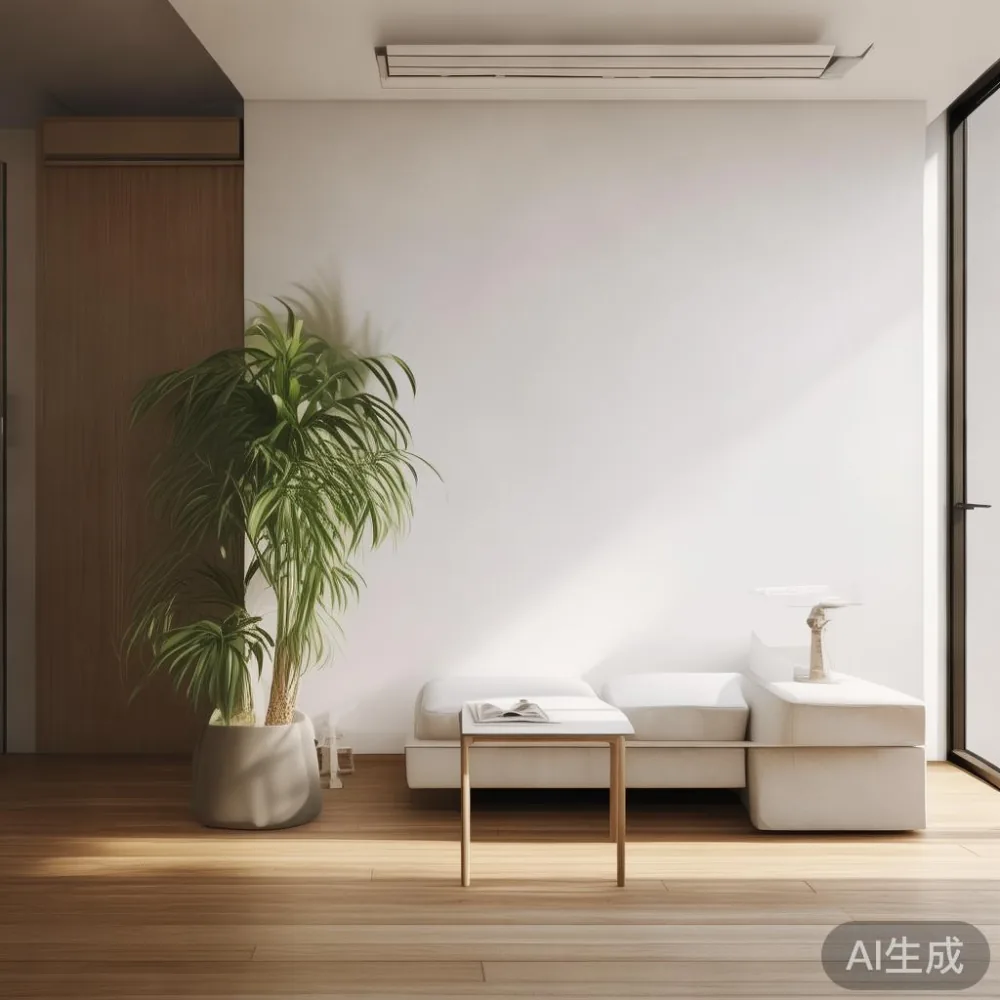
Achieving that look in a 90 sqm HDB or a 1,200 sqft Punggol condo is less about buying less and more about choosing well. In this guide, I will walk through the principles, the measurements, and the price points that make minimalist furniture work in a tropical, compact context. I will reference Singapore-specific realities: lift doors that measure roughly 90 cm wide, corridor turns that punish anything over 2.1 m long, and the 9% GST you pay on every imported sofa frame.
What exactly is a warm minimal interior?
Warm minimal is the softer cousin of strict Scandi minimal. Strict minimal relies on white walls, cool greys, and crisp edges. Warm minimal keeps the same restraint but swaps cold tones for honeyed oak, off-white linen, and clay. The emotional goal is calm rather than sterile. Practically, it means a room with fewer objects, each one earning its place through material quality.
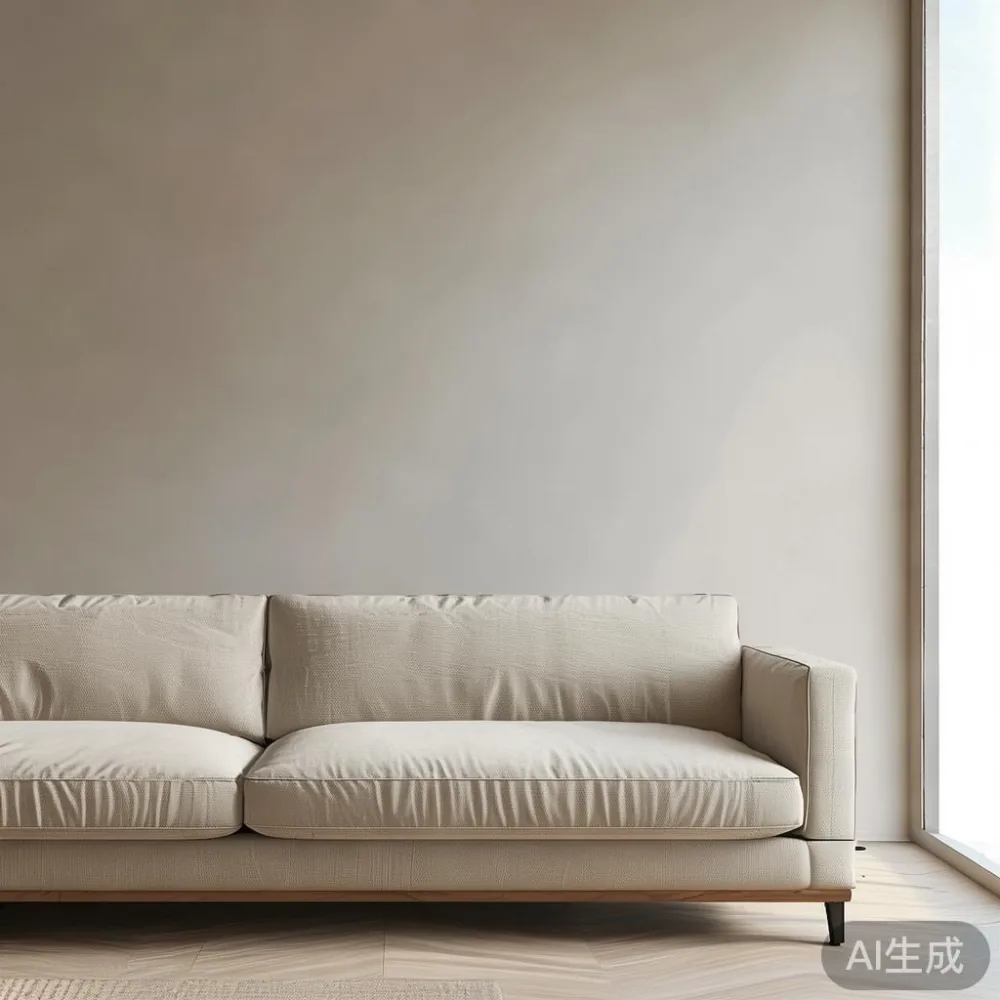
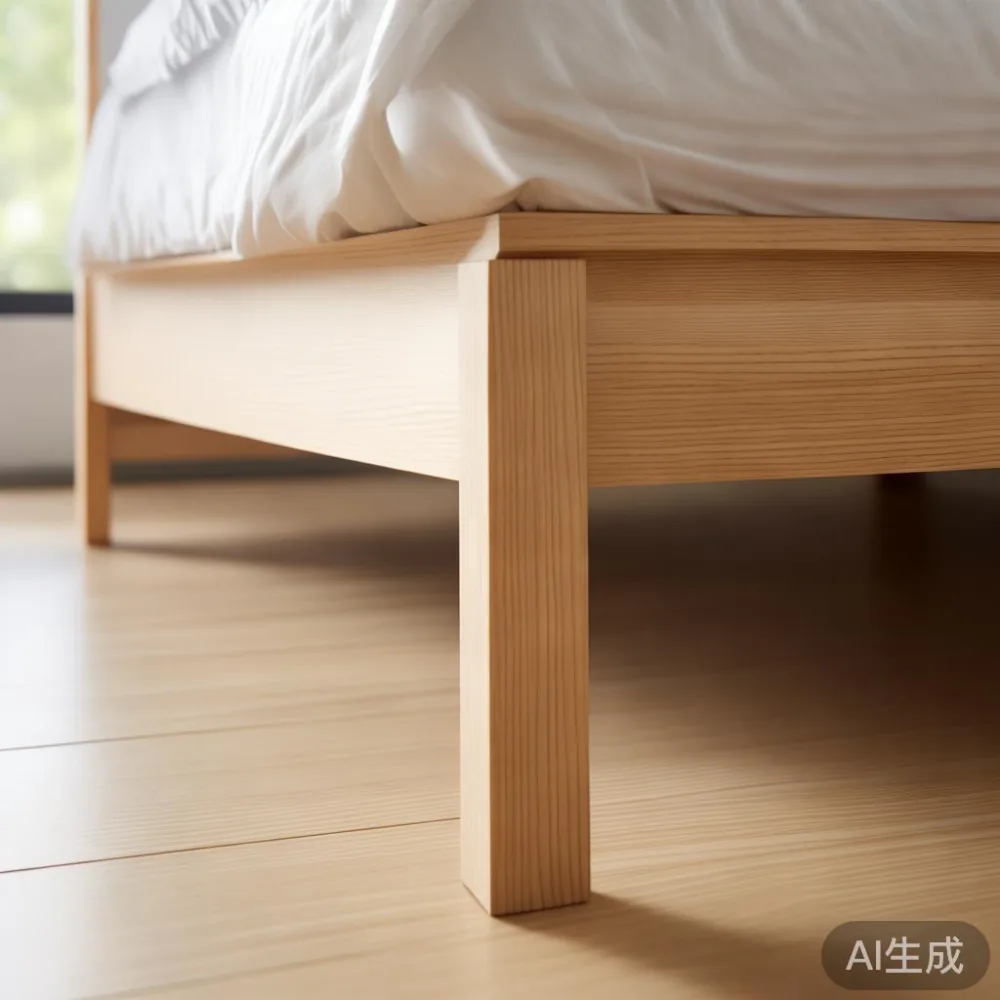
The materials matter more than the colours. A solid wood sofa with a visible grain does the heavy lifting. A solid wood bed frame in white oak grounds the whole bedroom. Even a small nightstand in ash quietly repeats the language of the floor. When every surface is muted, the wood becomes the decoration. Light luxury design philosophy supports exactly this approach: rather than adding ornament, you refine the material itself.
How do I choose a minimalist furniture for a condo?
Choose minimalist furniture for a condo by measuring every door, lift, and corridor in your block first, then prioritise solid wood pieces under 2 m long that can be partially disassembled, in warm neutral finishes that match your floor tone within one shade. That single sentence is the entire decision tree for most Singapore buyers, and the rest of this article explains why.
Start with access. A standard HDB passenger lift in Tampines or Bedok has an internal cabin of roughly 1.1 m wide by 1.4 m deep, with a door opening of about 0.9 m. A standard condo service lift is wider, often 1.5 m by 2.0 m, but you must book it in advance and pay a fee of S$80 to S$150 per delivery slot. Before you fall in love with a 2.4 m dining table, take a tape measure to your lift lobby and trace the corridor turn. Pieces longer than 2.1 m rarely survive the corner from lift to door on upper floors without disassembly.
Then prioritise solid wood. A solid wood dining table in oak or ash, sized at 1.6 m to 1.8 m, seats four comfortably and can be flipped to seat six on weekends. A solid wood bed frame in queen size measures 168 cm by 203 cm internally; the outer frame usually sits around 178 cm by 213 cm, and that figure is the one you must check against your lift. A solid wood wardrobe from a maker such as MIDHILL, built with traditional mortise-and-tenon joinery, typically ships in two or three sub-assemblies that rejoin on site in under 90 minutes with an Allen key.
Solid wood, marble, and the quiet language of light luxury
Light luxury, whether the French interpretation with its bourgeois restraint, the American interpretation with its ranch-house warmth, or the post-modern light luxury reading that mixes travertine with matte black, always returns to one principle: material over decoration. A marble side table costs more than a laminated one, but it also carries weight, literally and visually, that anchors a soft corner of a room.
In a Singapore context, a 60 cm round marble table with a honed Carrara top and a slim brass base will sit next to a linen armchair without shouting. Pair it with an extendable chest of drawers for balcony storage, in the same oak as your interior, and you have a corridor-friendly piece that handles shoes, plants, and folded laundry without breaking the visual line of the rest of the home. That is the work of warm minimal: each piece knows its job and its proportion.
Price-wise, expect to pay S$1,800 to S$3,200 for a four-seater solid wood sofa with removable covers, S$2,400 to S$4,500 for a six-seater extendable solid wood dining table, S$1,600 to S$2,900 for a queen solid wood bed frame, S$2,100 to S$3,800 for a two-door solid wood wardrobe, and S$420 to S$680 for a matching nightstand. A small marble accent table will run S$550 to S$1,200. These figures include 9% GST and reflect the kind of construction you want for pieces that will move with you across two or three HDB cycles.
Last month I visited a Punggol showflat — here is what I learned
A colleague of mine moved into a new 1,066 sqft Punggol condo in March and asked me to help style the living room. The unit came with a 3.2 m feature wall and a window facing the Punggol Way park connector. We brought four pieces for the test fit: a 2.2 m ash sofa, a 1.4 m round dining table, a 1.8 m tv console, and a 90 cm marble side table.
The sofa did not fit the lift. We waited 40 minutes for the service lift slot, paid the S$120 fee, and discovered the corridor turn from lift to unit was a 1.2 m radius. The sofa is now a 1.9 m ash sofa in her home, and it looks better for the reduction. The marble side table, at 35 kg, took two of us to carry but fit every other constraint. The dining table, being round, handled the corner cleanly even at 1.4 m.
The lesson was practical: warm minimal is a discipline of subtraction, but in a Singapore home the subtraction is forced on you by the building itself. A 1.9 m sofa, a 1.4 m round table, and a 90 cm marble accent piece is enough. Anything more and the room feels like a warehouse.
Can minimalist furniture actually store everything a HDB family owns?
Yes, if you choose pieces with internal volume rather than visible bulk. The trick is depth. A solid wood wardrobe at 60 cm deep holds roughly 24 hanging pieces per running metre, the same as a 65 cm box from a mass-market brand, but presents a thinner profile to the room. A solid wood chest of drawers at 45 cm deep with full-extension runners gives you four drawers in the footprint of two side tables.
For balconies, which in newer HDBs run about 1.5 m deep by 4 m wide, an extendable chest of drawers for balcony use is the unsung hero. It tucks brooms, plant pots, and folded cardboard flat against the wall, then pulls out when you need the surface for potting or folding laundry. Closed, it reads as a calm wooden panel in the same tone as your interior joinery.
In the bedroom, a queen solid wood bed frame with hydraulic lift storage adds roughly 0.6 cubic metres of hidden space under the mattress, enough for off-season linen and two cabin-size suitcases. A pair of nightstands in matching ash at 45 cm wide by 40 cm deep bookend the bed without crowding a 3.4 m feature wall.
What should I budget for a full warm-minimal HDB refit in 2025?
For a four-room HDB flat of about 92 sqm, a realistic 2025 budget sits between S$18,000 and S$32,000 for furniture alone, not including renovation labour. The breakdown: a solid wood sofa S$2,200 to S$3,200; a solid wood dining table with four chairs S$3,400 to S$5,800; a solid wood bed frame S$1,800 to S$3,100; a solid wood wardrobe S$2,500 to S$4,200; two nightstands S$700 to S$1,100; a tv console in matching wood S$1,200 to S$2,000; and a marble accent table S$600 to S$1,200.
Delivery for a full set in Singapore typically takes 35 to 60 days from order to white-glove installation, with a 10-year structural warranty on joinery. International brands often quote 90 to 120 days and ship by sea container, which is why local stockists of established Foshan makers such as MIDHILL are practical: pieces are already in regional warehouses, refinishing is offered for the lifetime of the product, and returns within 14 days are standard.
Add the 9% GST, lift booking fees of S$80 to S$150 per slot, and a small contingency of about 8% for the inevitable one piece that has to be re-ordered, and you land at the upper end of the range. Skimping on the bed frame or the sofa is a false economy; those two pieces take the most daily abuse and anchor every other choice in the room.
Which mistakes do Singapore buyers make most often with minimalist furniture?
Three mistakes come up again and again. The first is buying pieces that look right in a 3,000 sqft showroom but overwhelm a 92 sqm HDB. A 2.6 m dining table seats eight, but in a four-room flat it eats the corridor. The second is mixing wood tones without a plan. Warm minimal works when there are two wood tones in a room, occasionally three, never five. Pick a primary oak or ash, then let one darker walnut piece punctuate the room.
The third is ignoring the climate. Singapore humidity sits between 70% and 90% year-round. Solid wood furniture needs to acclimatise for 48 to 72 hours after delivery before any wax or oil is applied. Good makers kiln-dry their timber to 8% to 10% moisture content, then pack it in breathable wrapping rather than sealed plastic. Skip this step and you will see cupping or hairline cracks within the first monsoon season.
A small test you can run at any showroom: ask to see the underside of a drawer, the back of a wardrobe, and the inside of a sofa frame. If the maker shows these willingly, the construction is sound. If the pieces are stapled, paper-thin, or faced with printed foil pretending to be oak, walk away.
How long should good minimalist furniture actually last?
A solid wood piece built with mortise-and-tenon joinery, kiln-dried to the right moisture content, and finished with hard wax oil will outlast three HDB cycles in Singapore. That is 18 to 24 years of daily use. The finish will need refreshing every 7 to 10 years, which is where a lifetime refinishing service pays for itself. The structural warranty of 10 years covers joinery, drawer runners, and any cracking from seasonal movement.
Marble needs a different kind of care. Seal a honed marble top on arrival, then reseal every 12 months. Wipe spills within 20 minutes, especially anything acidic like lime juice or soy sauce, and the surface will stay matte and clean for a decade. A polished marble table forgives less; a honed marble table forgives more. In a family home, honed wins.
The simplest way to make minimalist furniture last is to slow down at the point of purchase. Measure the lift. Tape the floor plan. Check the moisture content. Read the warranty line by line. Then buy once.
Final thoughts on building a warm minimal home in Singapore
Warm minimal is not a style you buy; it is a set of constraints you accept. The lift is 90 cm wide. The corridor turns at 1.2 m. The walls are 2.6 m high and the budget is finite. Once those constraints are accepted, the room designs itself. A solid wood sofa in ash, a 1.8 m dining table in oak, a queen solid wood bed frame, a deep solid wood wardrobe, two nightstands, a tv console, and one marble accent table is a complete inventory for a four-room HDB. Add an extendable chest of drawers for balcony duty and the apartment is solved.
Light luxury, in any of its three readings, asks the same question: what is the smallest number of objects that can carry the most meaning? In a Tampines or Punggol home, the answer is usually seven or eight well-made pieces, each one chosen for material and proportion rather than trend. That is the entire discipline, and it is enough.