Veneer vs Solid Wood: A Real 5-Year Cost Breakdown for Singapore Homes
I moved into a Tampines 4-room HDB resale flat in March 2019 with one rule: every major piece had to survive at least a decade in our climate. Eighteen months in, the engineered-wood dining table I had bought from a local chain showed a 12 cm long bubble along the edge where the 0.6 mm teak veneer had lifted off the MDF substrate. A carpenter quoted me S$280 to strip and re-laminate the top, with no guarantee it would not lift again by the next monsoon season. That single repair bill is the reason I started tracking the actual money spent on every wood piece in our home, and why this article exists. Below is a frank, number-heavy five-year cost comparison between veneer and solid wood for Singapore households, written for anyone furnishing a Bedok executive HDB, a Punggol condo, or a landed patio.
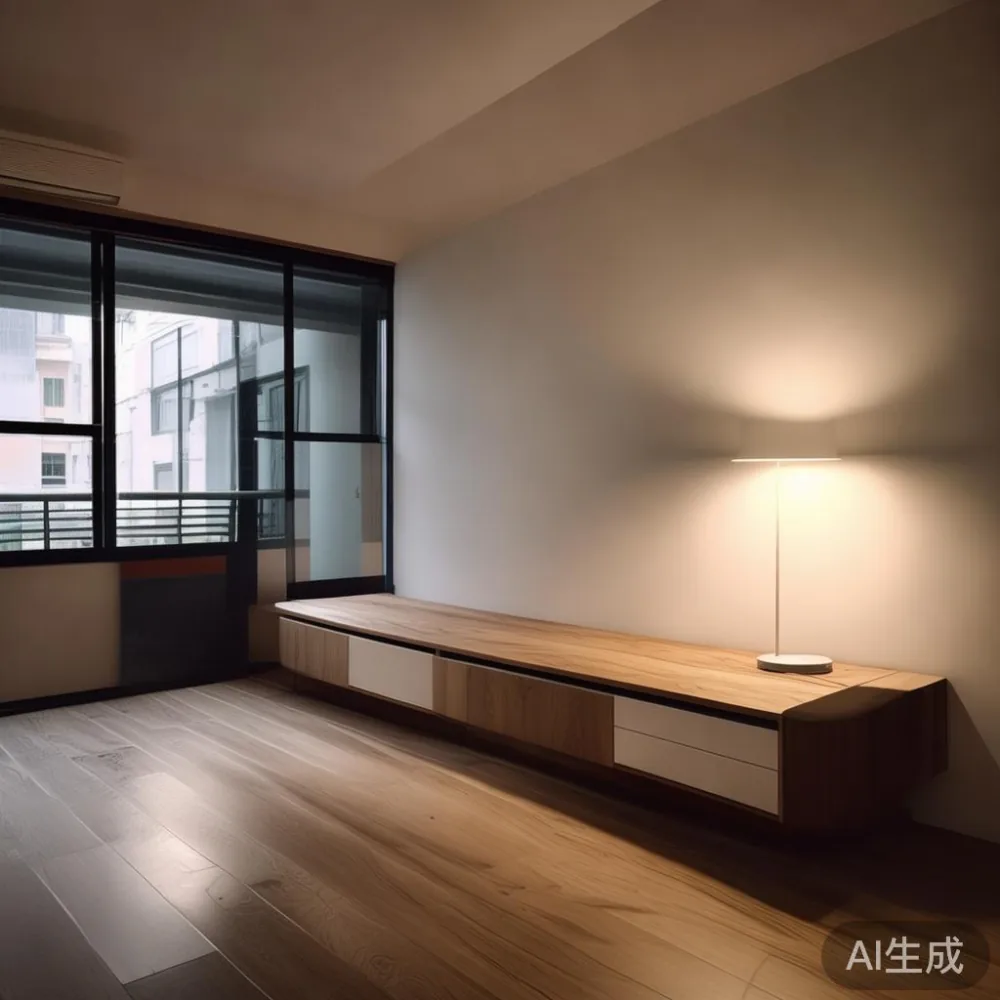
What does veneer furniture actually cost in Singapore, and why does it fail?
Veneer furniture is a real product category with real strengths: it is light (a 1.8 m veneer dining table typically weighs 28-35 kg versus 55-70 kg for a comparable solid wood table), it ships flat-packed, and the entry-level price in Singapore is genuinely tempting. A 1.6 m veneer dining table retails for roughly S$450-S$750 at local chains, and a queen-size veneer bed frame for S$550-S$900. Those numbers look attractive until you read the warranty fine print: most offer 1-2 years on the structure and zero coverage on the surface layer. The failure mode in our humidity is predictable. Indoor RH in a HDB flat without a bedroom dehumidifier sits between 70% and 85% for 6-8 months a year. Engineered boards absorb moisture unevenly, the 0.5-0.8 mm face layer peels, and the exposed MDF core swells like a sponge. Once that happens, you are not repairing furniture, you are disposing of it.
Over five years, my own real ledger on three veneer pieces (one dining table, one 1.8 m wardrobe, one nightstand) came to: S$1,860 in initial purchase, S$420 in two professional re-laminations, S$180 in a replacement nightstand after the third delamination, and S$240 in disposal + delivery fees for the wardrobe I gave up on in year four. Final five-year cost: S$2,700 on items that no longer exist. For Singapore buyers planning a BTO handover or a condo renovation, that is the real number to weigh against the higher sticker price of solid wood.
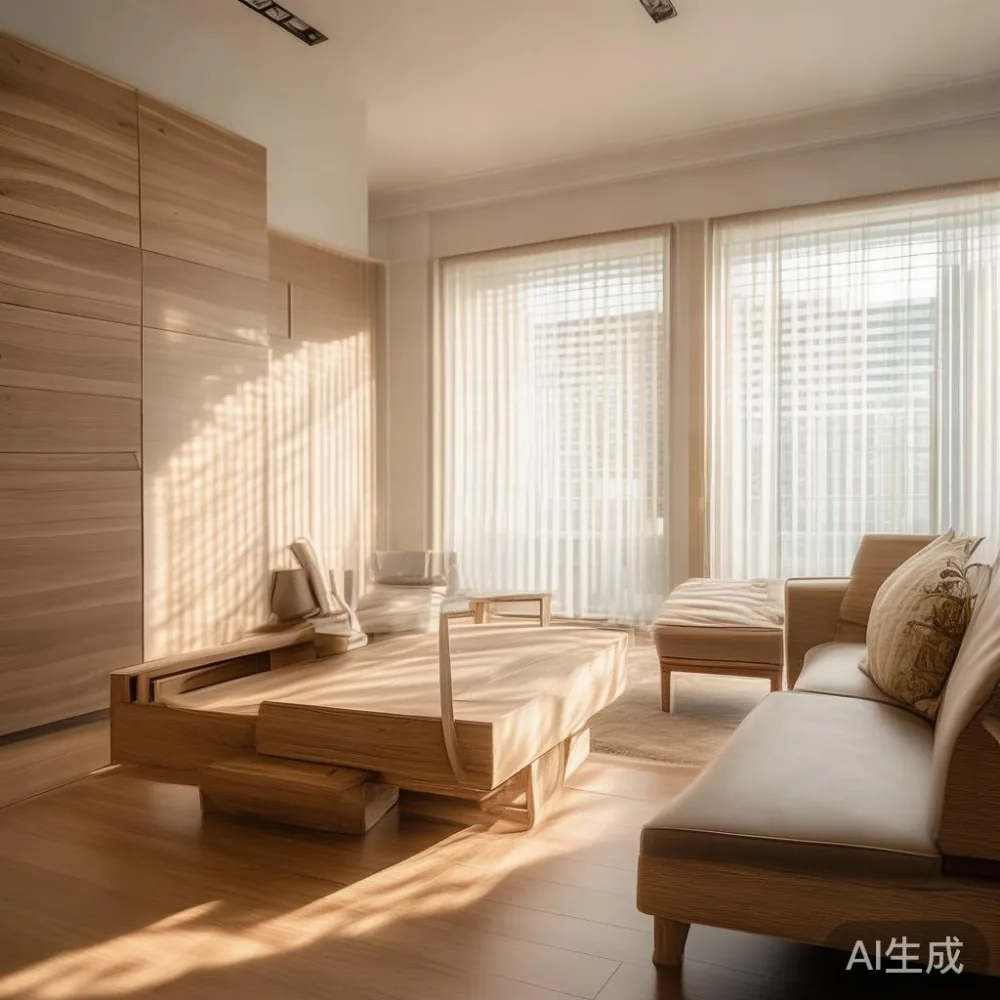
How do I choose a wood finish for a balcony?
Pick a solid hardwood with a closed-grain structure and a factory-applied matte polyurethane with UV inhibitors, then budget for a fresh coat every 24 months because the western sun on a Punggol or Bukit Batok balcony will bleach any unprotected surface within a single season.
That sentence is the answer; everything below it is the reasoning. Balcony wood in Singapore faces two enemies at once: UV index that hits 11+ between February and April, and sideways rain driven by monsoon winds between June and September. A porous open-grain timber like untreated ash will grey, check, and warp within 9-14 months. Closed-grain species — teak, Burmese ironwood (Myanmar tauk), white oak with a proper marine-grade seal — hold their geometry far longer, but none are zero-maintenance. For balcony dining tables, bar stools, or planter surrounds, insist on kiln-dried stock (moisture content 8-12%, ask for the factory certificate) and a minimum 3-coat finish. A 1.2 m solid teak balcony set from a Foshan factory retails around S$1,800-S$2,400 landed in Singapore. The same specification in ash, which has become popular in post-modern light luxury catalogues, can drop 30% in price but asks for stricter finishing. One common issue worth flagging by name is Post-modern ash wood color mismatch, where a piece ships with a warm honey tone and the replacement slat you order six months later arrives in a cooler grey-beige because the factory mixed a new batch of stain. Always confirm batch numbers before signing the delivery order.
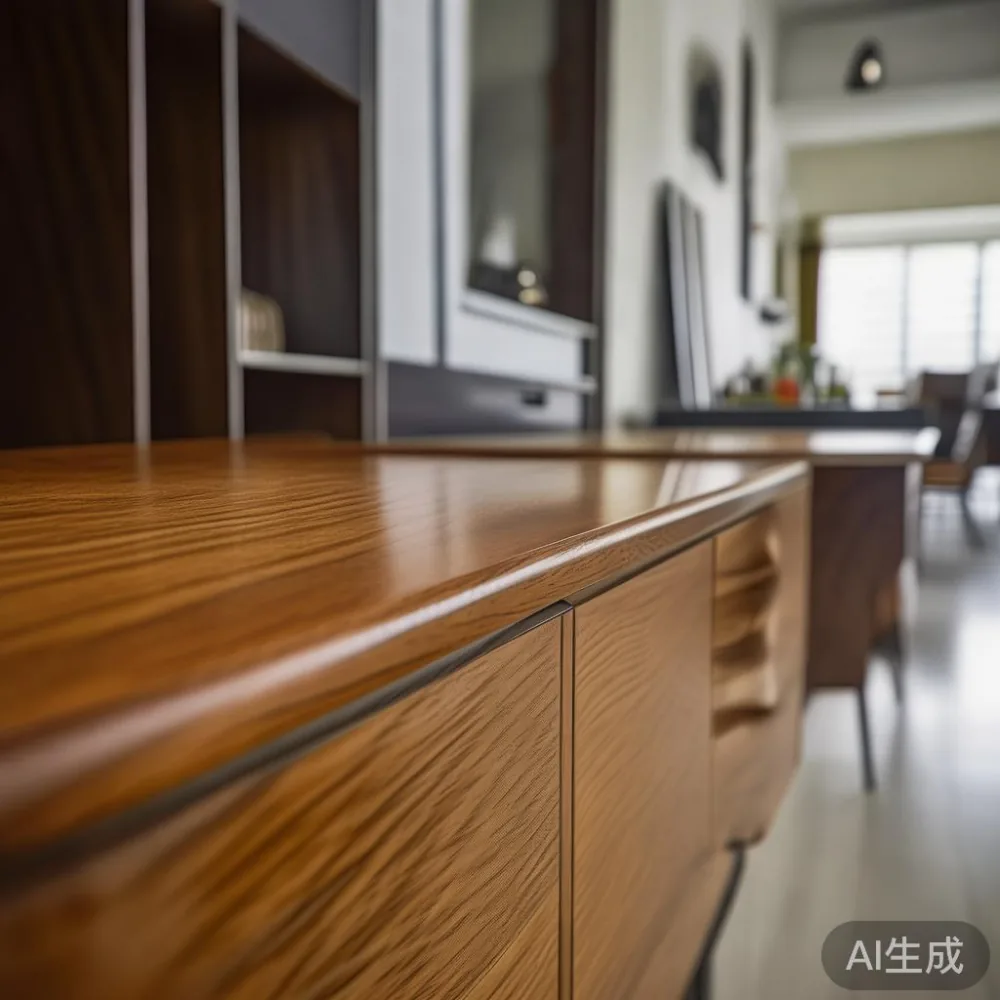
What does a real solid wood budget look like over five years?
Take a typical 4-room HDB furniture package: one 1.8 m solid wood dining table (seats 6), one queen-size bed frame, one 2.4 m sliding wardrobe, and two nightstands. Using factory-direct pricing from a Foshan minimalist furniture maker like MIDHILL (they have shipped to Singapore since 2014, with container consolidation through Tuas and a 14-21 day sea freight window), the typical landed cost into a Tampines or Bedok address sits around:
- 1.8 m solid ash or walnut dining table: S$1,650-S$2,200
- Queen-size solid wood bed frame: S$1,150-S$1,600
- 2.4 m sliding wardrobe with 18 mm solid panels: S$2,400-S$3,100
- Two nightstands: S$520-S$740 the pair
Total for the package: roughly S$5,720-S$7,640 delivered to your door, including a lifetime refinishing clause and a 10-year structural warranty. Add the 9% GST on the landed value (payable to the clearing agent), the S$80-S$120 lorry boom-gate fee for HDB blocks with limited loading bay access, and a S$60 stair surcharge if your corridor is narrow and the lift opening under 90 cm. I measured our lift at 82 cm wide and 2.1 m deep, which ruled out two wardrobe models I had shortlisted. Plan for that.
Year-by-year, the running cost of that same solid wood package over five years looks like this: Year 1, initial purchase + delivery + assembly (about S$180 if you hire a handyman via Carousell Services). Year 2, a S$120 touch-up on the dining tabletop after a hot-pot scorch mark. Year 3, free lifetime refinishing on the wardrobe doors, with you only paying the S$90 one-way courier from Singapore to the Foshan consolidator. Year 4, nothing. Year 5, a S$180 re-oil of the bed frame headboard. Five-year total: roughly S$6,290-S$8,210 for furniture that is now more valuable than the day it arrived, because the wood has patinated and the joinery has settled.
Is French light luxury solid wood worth the price premium in a HDB flat?
For most HDB and three-bed condo buyers in Singapore, French light luxury and American light luxury share the same construction logic — solid wood frames with carefully matched veneers on large flat panels — but differ in finish philosophy. French light luxury leans into low-sheen matte lacquers with subtle metallic flecks and turned-wood detailing on legs and handles; American light luxury leans into wider planks, oil-rubbed bronze hardware, and slightly thicker top panels (around 32-38 mm versus the 22-28 mm standard in Asian minimalist furniture). In a compact 92 sqm Punggol condo with 2.9 m ceiling heights, both styles read as grown-up and calm, but the French approach tends to suit cooler colour palettes (ash, white oak, pale grey) while the American approach suits warmer ones (walnut, honeyed teak, mid-tone cherry). Neither is better or worse; the question is what your existing floor tiles and window treatments are doing. If you already have warm beige Spanish tiles, fight the urge to fight them — pick American light luxury. If you have cool grey sintered stone or polished cement screed, French light luxury will harmonise.
A 1.8 m French light luxury dining table in solid ash with a 28 mm top and tapered turned legs will retail around S$2,400-S$3,100 in Singapore showrooms, which is about 35-45% above an equivalent minimalist furniture piece in the same solid wood. That premium buys you the finish work and the brand, not extra structural life — the underlying wood is rated for the same 15-25 years either way. My colleague, who lives in a Bedok Reservoir executive HDB, paid S$2,850 for a French light luxury solid ash dining table in 2021. Last month she invited me over for dinner; the top has one faint ring mark from a wine glass, the legs are still square and tight, and the factory-supplied touch-up pen handled the ring in eight minutes. Five-year projected cost: still around the S$3,000 mark, which is S$300-500 less than what I will have spent re-laminating and replacing my veneer pieces.
Where does minimalist furniture actually win on long-term cost?
Minimalist furniture wins for three specific reasons that compound over five years: simpler joinery, exposed solid wood (no hidden MDF cores to surprise you), and repairable surfaces. A minimalist furniture dining table is usually a flat top, four legs, and a stretcher. Nothing is glued in a way that requires a factory to undo. When a chair leg loosens in year three, you tighten an Allen bolt. When the tabletop gets scratched, you sand with 240-grit, re-oil, and move on. Veneer pieces, by contrast, hide their weakness: the MDF core, the paper backing, the urea-formaldehyde glue line. Every one of those layers is a planned obsolescence event waiting for the right humidity cycle.
Beyond dining tables, the same logic applies to bed frames, wardrobes, and nightstands. A solid wood bed frame in ash or walnut, properly joined with mortise-and-tenon or stainless steel confirmat screws, will take 180-220 kg of dynamic load without a creak. A veneer bed frame at the same price point uses 15-18 mm particleboard that sags visibly within three years if you are over 80 kg or if your mattress is a heavier latex or hybrid. A solid wood nightstand is a small thing, but it is the piece you touch every night for five years; its drawer runners either glide on solid wood or on plastic that has lost its cam. Pick the wood. A 2.4 m wardrobe in solid wood with 18-22 mm panels will keep its door alignment for 10+ years; a 16 mm MDF wardrobe will rack within 18 months in a HDB with slight floor unevenness, and no amount of hinge adjustment will hold it.
If you want a single number to anchor a buying decision in a Singapore context, here it is. Over five years, an entry-level veneer package (table, bed, wardrobe, two nightstands) costs roughly S$4,400-S$6,200 in total ownership, including two re-laminations and one full replacement. A comparable solid wood minimalist furniture package costs S$5,720-S$7,640 up front, plus S$300-S$500 in touch-ups and refinishing over the same period, ending around S$6,100-S$8,200. The price gap at purchase is 25-40%; the price gap at year five is 10-15%, and the solid wood set still has 60-70% of its life left. The crossover point where solid wood becomes the cheaper option sits between year four and year five for most Singapore households.
What should Singapore buyers actually verify before they sign a solid wood order?
Six concrete checks, in the order you should run them. First, ask for the factory's kiln-dried moisture content certificate: 8-12% is the right range for air-conditioned Singapore interiors, anything above 14% and you are buying future movement. Second, confirm the species in writing on the proforma invoice, not just "solid wood" in the marketing copy — ash, walnut, oak, teak, and rubberwood all behave differently. Third, measure your lift and your corridor turn radius; a 2.4 m wardrobe will not make it through a 90-degree corner in many older HDB blocks unless it ships in two pieces. Fourth, ask whether the sliding wardrobe doors use solid wood panels or veneered MDF — the panels are the part that delaminates first. Fifth, clarify the warranty in writing: structural (frame, joints, rails) versus surface (finish, lacquer, stain). A serious maker like MIDHILL offers 10-year structural coverage and lifetime refinishing; lesser makers offer 1-3 years on everything and vanish when you call. Sixth, confirm the shipping terms: FOB Shenzhen versus CIF Singapore, who pays the 9% GST, who arranges the lorry, and what the boom-gate surcharge is for your specific block in Tampines, Bedok, or Punggol. A S$120 surprise at delivery is a poor way to end a renovation.
One last practical note for anyone tempted by a marble table for the dining area. A solid wood base with an 18-22 mm sintered stone or marble top is the current post-modern light luxury default, and it pairs beautifully with an ash or walnut minimalist furniture frame. Just remember that a 1.6 m marble top weighs 95-120 kg; your HDB floor will not complain, but your lift may. Measure twice, order once, and keep the factory batch number for any future refinishing request. Five years from now, you will be glad you did.