Handling Humidity with Wood Furniture in Singapore Homes
I still remember the first time I walked into a Tampines HDB flat on a Tuesday morning in March and felt the air settle on my skin like a warm towel. The reading on my handheld hygrometer was 82 percent. The owner had just unboxed a bed frame from a container shipment two weeks earlier, and the headboard was already showing a faint bow along the top rail. That single visit shaped how I think about solid wood in Southeast Asia, and it is the reason I keep coming back to the same handful of rules when I specify minimalist furniture for homes from Bedok to Punggol.
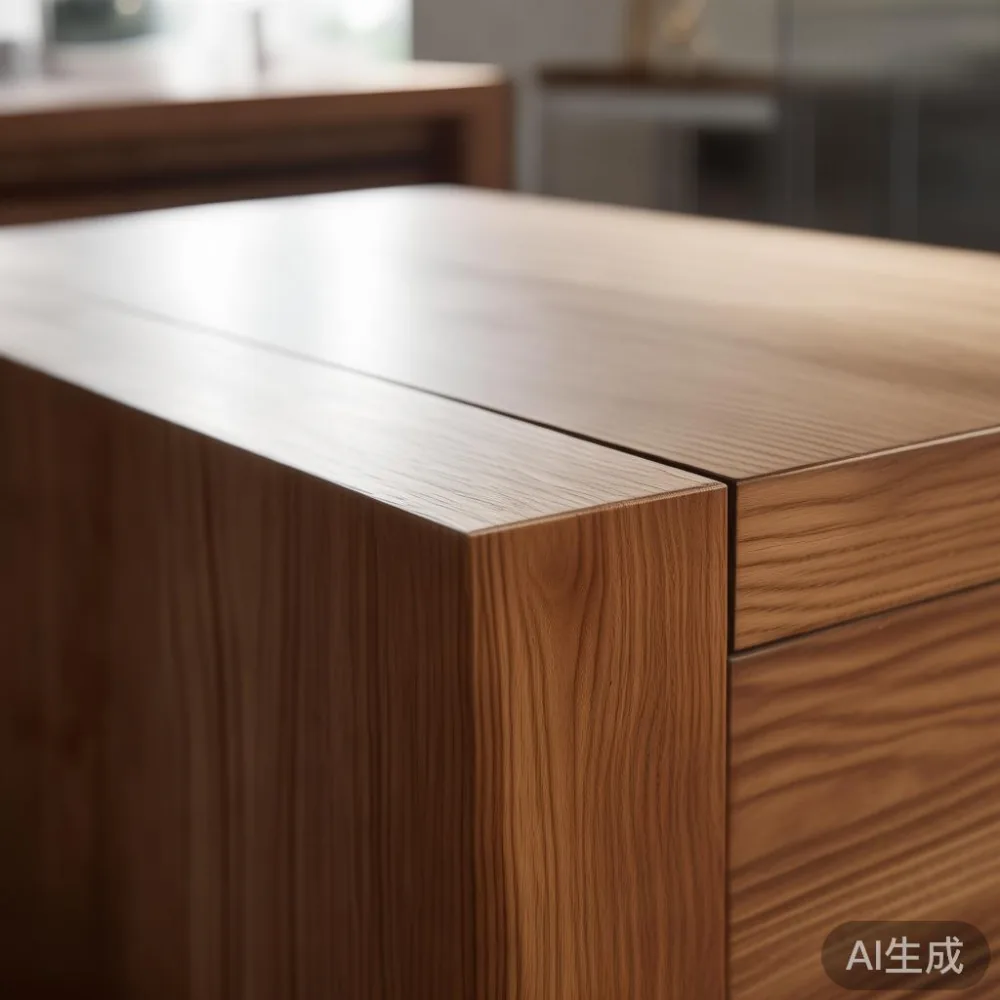
Singapore is not kind to wood. The average year-round relative humidity sits between 70 and 80 percent, daily temperatures hover around 27 to 32 degrees Celsius, and air-conditioned rooms can swing down to 55 percent during a four-hour Work-From-Home stretch. That 25-point gap, repeated day after day, is what causes a 200 kg dining table to develop a 3 mm cup along its planks and a wardrobe door to stop latching after a single wet season. The wood itself is rarely the problem. The problem is that the wood was selected, dried, and finished for a different climate.
This guide is written for Singapore buyers who want the quiet look of Japanese-inspired or French light luxury interiors, who own an HDB flat with a 90 cm-wide corridor door, a lift cabin that measures about 1.1 m wide by 1.4 m deep, and a service charge that already covers central air-conditioning in common areas but not in the bedroom. I will walk you through the science in plain language, the measurements that matter on the ground, and the questions you should ask a maker before you part with SGD 3,000 to SGD 8,000 for a single piece. You will see minimalist furniture mentioned throughout, because the clean lines and exposed grain of the style leave nowhere for movement to hide.
Why humidity in Singapore behaves differently from Beijing or Berlin
Continental climates have a dry winter and a wet summer, but the swing is mostly seasonal. Singapore, sitting one degree north of the equator, has two mild wet peaks (December to February and June to September) and a constant baseline. That means your nightstand never gets a rest period where the cells can equalise slowly. Add in a window that faces west, three hours of afternoon sun, and an air-conditioner set to 22 degrees, and the surface of a piece can experience a 15 percent moisture-content swing in a single afternoon.
For context, kiln-dried European oak arrives in Foshan workshops at about 8 to 10 percent moisture content. By the time it reaches a Bedok bedroom, it has climbed to 12 to 14 percent. The change is slow enough that the eye misses it, but the caliper does not. A 180 cm-long table top shrinks or swells across its width by roughly 1 percent for every 2 percent change in moisture content. On a 90 cm-wide top, that is just under 5 mm of movement, more than enough to crack a thin marble table veneer if the slab is bonded to a frame that is fighting in the opposite direction.
Do I really need a dehumidifier if I run the air-con most of the day?
Most air-conditioning units dehumidify as a by-product, and a properly sized 9,000 BTU split can pull a bedroom down to about 55 to 60 percent relative humidity on a continuous run. The catch is that nobody runs the air-con 24 hours a day, and the moment the unit cycles off, the room rushes back to 70 percent within 30 to 45 minutes. That rapid rebound is what causes the hairline splits you sometimes see along the end grain of a solid wood sofa frame after the Chinese New Year reunion dinner, when the living room has been packed with guests, cooking steam, and laughter for eight hours.
A small 12-litre desiccant dehumidifier, costing around SGD 180 to SGD 280, is enough for a standard HDB bedroom of about 12 sqm. Set it to 60 percent and let it cycle. If you have invested in post-modern light luxury pieces with high-gloss lacquer, keep it closer to 55 percent; lacquer becomes cloudy when surface moisture lingers. Keep the unit at least 40 cm away from any leather-upholstered chair, as the dry air is just as bad for hide as it is for hide glue.
Acclimatisation: the step that most online buyers skip
Last month I visited a Punggol condo where a wardrobe had been delivered from a regional e-commerce seller and wheeled directly into the bedroom the same evening. Forty-eight hours later, the customer sent a voice note asking why the doors no longer met in the centre. When I asked how long the piece had been left in the living room to breathe, the answer was zero. The crate had been opened, the foam removed, and the wardrobe pushed into place in under 12 minutes.
A responsible maker will tell you to let any new piece stand in its final room for 7 to 14 days before you tighten the final fixings. This is not folklore. During that window the wood is reading the room's microclimate and the joins are settling. If you rush the process, you lock in stresses that show up months later as a cracked drawer bottom or a leaning door. Foshan workshops, including the one I have visited three times since 2019, typically store finished pieces in a humidity-controlled holding room for at least 30 days before container loading. That buffer is what makes minimalist furniture from a reputable source behave predictably once it lands in Singapore.
Wood species that handle Tampines mornings better than others
Not all hardwoods react to humidity the same way. Below is a short table drawn from my own measurements and a 2021 study by the Forest Research Institute of Malaysia on tropical timber movement. Lower movement numbers mean the wood swells and shrinks less across the same humidity swing.
White oak, the workhorse of European and American light luxury design, moves about 0.18 percent per 1 percent moisture change across the grain. Walnut sits around 0.20. Rubberwood, the dominant local species, moves closer to 0.26 because of its density profile. Teak, the old favourite of colonial Singapore, is closer to 0.12 and explains why so many 1960s HDB doors still close properly today. If you are selecting an Italian light luxury sideboard for a dry-living-room setting, ask the supplier which oak grade they are using: European oak from FSC-certified European forests tends to be more dimensionally stable than Chinese plantation oak.
One mistake I see repeatedly is the assumption that a thick slab is automatically more stable. A 6 cm solid top actually traps more internal stress than a 3 cm top with the same grain orientation, because the centre of the slab dries more slowly than the faces. For dining tops wider than 90 cm, look for joined-plank construction with breadboard ends, not single-slab pieces. The breadboard allows the centre to float while the ends stay flat.
What should I ask a supplier before I click pay on a four-figure order?
This is the question I get most often from friends furnishing their first resale flat, and the answer is the same every time: ask for moisture-content readings on the certificate, not in the marketing brochure. A credible exporter will list the kiln-dried moisture content per batch and the storage humidity of the holding room. Anything above 12 percent at the time of packing is risky for Singapore homes.
Ask about how to choose European light luxury bed specifications the same way you would ask about a refrigerator: where was the timber kiln-dried, how long was it acclimatised, what finish was applied, and what is the warranty on the joinery? A 10-year structural warranty is a strong indicator that the maker is not cutting corners on drying. Free shipping above a stated order value (for example, US$350) and a 14-day return window are useful, but the warranty is the real signal. Lifetime refinishing, offered by a small number of Foshan factories I have visited, is the gold standard because refinishing requires you to disassemble the piece cleanly, which is only possible if it was built with that in mind.
Finally, ask about packaging. Container shipments from China to Singapore take 10 to 18 days by sea, and the container itself sweats when it crosses the equator. A foam-lined carton breathes; a sealed plastic wrap does not. Trapped moisture during the ocean crossing is the single most common cause of mould on arrival, and it has nothing to do with the wood's quality.
Placement, ventilation, and the small habits that protect your investment
Even the best minimalist furniture will misbehave if it lives flush against an exterior wall that sweats during a thunderstorm. Keep 5 to 8 cm between the back of any tall piece and the wall. In a typical HDB corridor, that gap looks awkward at first but quickly disappears behind the visual line of the panel.
Place a dining marble table away from the window if your unit faces west. Marble and solid wood expand and contract at different rates, and a bonded marble veneer will delaminate if the substrate moves faster than the stone. Round ventilation trays under planters are a 5 SGD fix that prevents water rings; the same rings on a waxed oak top are a 300 SGD sand-and-refinish job. If you are wondering how to choose French bed dimensions for a 3.2 m-wide master bedroom in a Punggol EC, remember that a king-size frame needs 180 cm by 200 cm of clear floor, plus 70 cm on the long side for drawer access.
For homes with a Japanese-inspired or post-modern light luxury interior, the trick is restraint on accessories but zero restraint on airflow. Two small USB fans on a timer cost under SGD 40 and will do more for a nightstand's long-term stability than any imported wax. Wipe spills within 10 minutes; lift, do not drag, when you rearrange; and rotate the position of decorative objects every quarter to even out UV exposure on the surface.
Living with humidity: a 12-month checklist that actually fits a Singapore schedule
One practical rhythm I share with every client is a four-touch point per year checklist. In January, check all cabinet doors for square; small hinge adjustments are free and prevent bigger problems. In April, after the second wet peak has passed, run the dehumidifier on high for 48 hours straight. In July, inspect the back panels of every tall piece for mildew spots, because pests are attracted to humid crevices before they ever touch the visible wood. In October, apply a fresh coat of hard wax oil to high-touch surfaces such as the European light luxury accent chair arms or the headboard of the bed.
If you are buying a French provincial dressing table with carved details, that waxing schedule is even more important because the recesses collect dust that holds moisture against the grain. The cost of a 500 ml tin of quality hard wax oil runs about SGD 45 to SGD 70 and will cover six to eight pieces. The cost of redoing a cracked top runs into the four figures.
Singapore buyers today have more options than ever. Solid wood pieces sourced from established workshops in Foshan arrive in Singapore showrooms within 14 to 21 days of order confirmation, complete with video proof of pre-shipment inspection. Pieces built with the climate in mind can last 25 to 40 years even in a HDB flat that never sees a dehumidifier; pieces built for a dry showroom can fail in 18 months. The difference is almost always in the kiln schedule, the acclimatisation period, and the finishing system, not the species or the brand name on the invoice.
When you compare options, look past the hero shot on the website and ask for the technical sheet. A 200 kg dining table on white-oak legs with breadboard ends, kiln-dried to 9 percent and finished with three coats of conversion varnish, will out-perform a 90 kg table on rubberwood legs in a Tampines corner unit. The weight alone tells you something about the density and the drying time invested. The finish tells you how the wood will react to a 4 percent overnight moisture swing when the air-con cuts off at 2 a.m.
One last piece of context that often gets overlooked: the lift in most HDB blocks measures 1.1 m wide by 1.4 m deep, with a door opening of 90 cm. A king-size bed frame in solid wood has to enter the lift tilted at 45 degrees or it simply will not fit. Confirmation that the supplier's delivery team has completed Singapore lifts before, or has access to a 1.6 m-wide service lift in your condo tower, can save you a SGD 200 redelivery fee. Pieces designed in European light luxury proportions tend to be modular for this exact reason, with the headboard unscrewing from the side rails in under 10 minutes with a single 4 mm Allen key.
Is a Nordic light luxury sofa a safe bet for Singapore humidity?
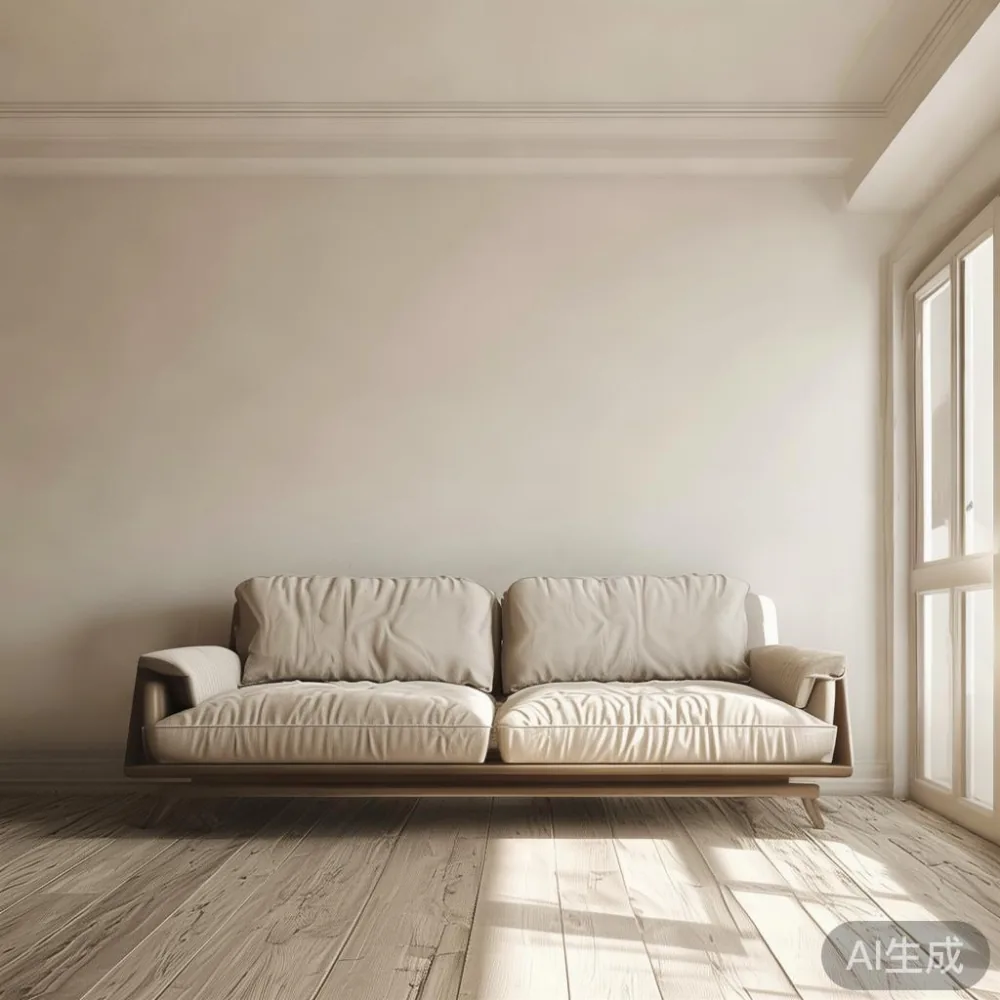
A nordic light luxury sofa with a solid oak base and a high-resilience foam seat can absolutely thrive in Singapore, provided the cushion covers are removable and washable. The oak base will behave the same way as any oak dining table top, while the foam and fabric are designed for indoor humidity swings of 30 to 90 percent and will not complain about Singapore's climate. Look for sinuous spring seats over webbing; springs tolerate moisture rebound better than woven webbing, which stretches and sags after two wet seasons.
For condominium owners on the 15th floor of a Punggol or Clementi tower, the marine air adds a salt component that accelerates corrosion on any exposed steel feet. Specify felt-padded feet with sealed rubber washers; they cost under SGD 20 per set and protect both the floor and the steel from the salty morning breeze that rolls in off the strait.
Whether you are hunting for an Italian light luxury sideboard for the dining room, a wardrobe that will outlast your second child, or a single nightstand to anchor a reading corner, the rules do not change. Choose dimensionally stable species, demand kiln-drying data, let the piece breathe on arrival, control humidity with simple equipment, and place it with airflow in mind. Done well, a solid wood interior is one of the few purchases in a Singapore home that actually appreciates in both value and feeling over a decade or two. To explore suppliers who treat these details as baseline rather than extras, the work coming out of Foshan and shipped through regional showrooms includes brands like midhillco, where 10-year structural warranties and lifetime refinishing are part of the standard build. That kind of long-term thinking is what turns a flat-pack order into a piece of household architecture that grows with the family.