Singapore's Solid Wood Furniture: Pricing Secrets of Minimalist Design
Solid wood furniture can range from a modest bedside table to a sculptural dining table, yet the price gap is not explained by the word “wood” alone. Timber species, board dimensions, joinery, surface treatment, hardware, design complexity, packing and delivery all affect the final figure. For homeowners furnishing Singapore HDB flats and condos in Tampines, Bedok and Punggol, those factors matter even more because access routes are rarely generous.

Take a typical HDB lift measuring roughly 90 cm wide and 140 cm deep. A dining table may be perfectly comfortable at home yet difficult to move into the building if it is 220 cm long. Even a 180 cm table can need to be turned on its side within the lift and corridor. Price is therefore not only about appearance inside the room; it also includes the practical decisions required to deliver substantial furniture safely.
This guide explains where solid wood furniture prices come from, why lighter construction can be a sensible choice, and how to compare quotations without focusing on one misleading number. The examples use Singapore prices in SGD, excluding the 9% GST that applies to most retail purchases. For buyers who value longevity and repairability, MIDHILL furniture offers solid timber construction, a 10-year structural warranty and lifetime refinishing support.

What determines the price of a solid wood furniture piece?
The starting point is usually timber. Different species have different densities, grain patterns and working properties. Oak, for example, weighs about 700–750 kg per cubic metre when dry, while rubberwood is closer to 550–650 kg. Dense hardwood is not automatically the superior choice: weight increases freight, handling and installation demands, especially in an apartment block.
The grade also affects price. “Solid wood” describes construction, not a single commercial grade. A clear board with consistent colour may cost more than a board selected for knots, sapwood or pronounced grain. For a dining table, furniture makers may use wider boards to reduce joins. A top made from 3 boards of about 20 cm each can show fewer joints than one assembled from 6 boards of 10 cm each, but the cost of suitable timber rises accordingly.
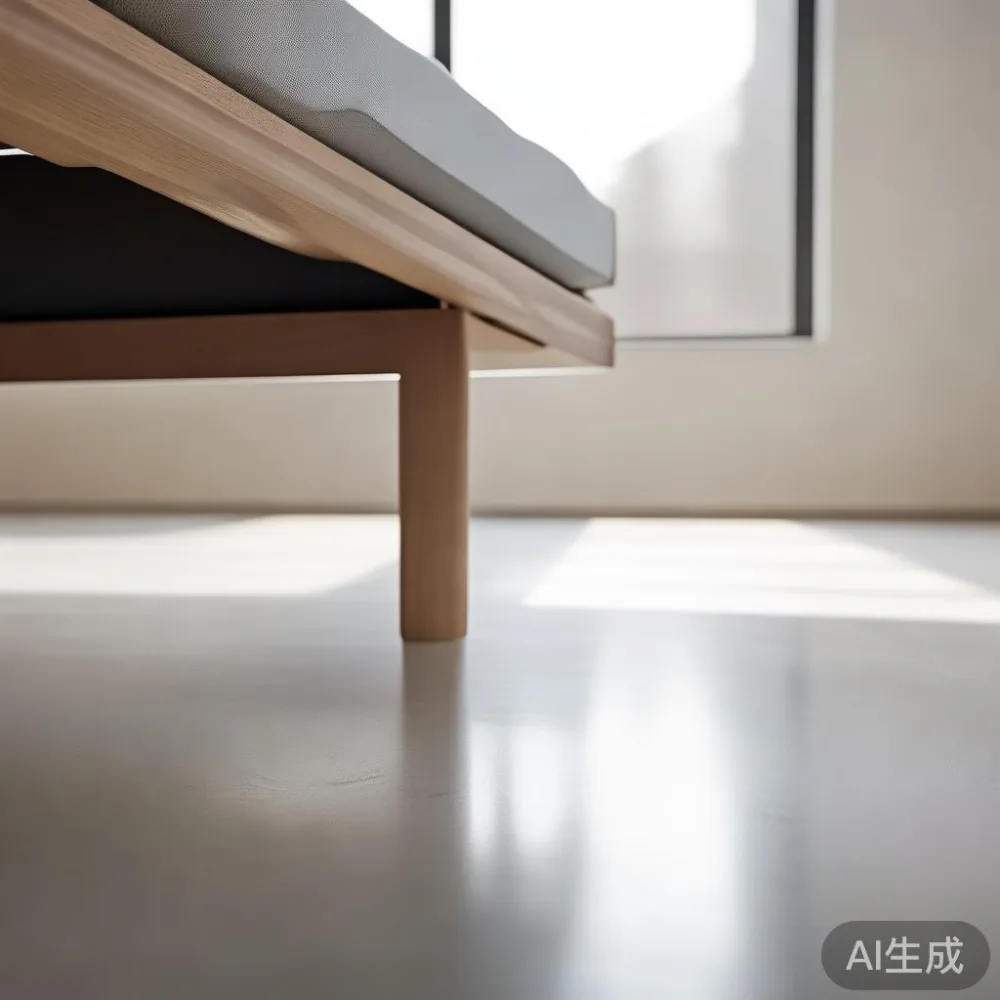
Thickness has a direct effect. Increasing the top of a bed frame from 18 mm to 25 mm adds material, weight and machining time. On a 180 × 200 cm bed frame, that difference can add roughly SGD 90–220 before delivery. On a 200 × 220 cm bed frame, it may add SGD 120–300. These figures illustrate why two quotations may differ even when both describe their products as solid wood.
Joinery determines how much the price reflects long-term performance. Mortise-and-tenon joints, dowels, dovetails and bridle joints require accurate cutting and assembly. Hidden fasteners can reduce visible hardware, while traditional joinery may use more labour. A well-made solid wood sofa may combine a kiln-dried hardwood frame with a timber or metal support system, webbing and high-density foam. Its price should be assessed as a complete system rather than as the price of one visible timber board.
Why do minimalist furniture pieces cost different amounts?
Minimalist furniture is not defined by being inexpensive. It is defined by restrained proportions, functional forms, clear lines and controlled visual detail. A minimalist dining table can be expensive because the uninterrupted top requires accurate grading, stable construction and a finish that remains consistent. A simple nightstand can cost less because it uses smaller parts and fewer complex joints.
Scale still matters. A compact 45 cm-wide nightstand with one drawer and two legs may sell for SGD 180–320. A 60 cm version with a full-extension drawer, soft-close mechanism and more elaborate frame may sell for SGD 280–520. A dining table in the 180–220 cm range commonly falls around SGD 1,100–2,400, depending on timber, finish and construction. A marble table may range from SGD 1,300 to more than SGD 3,500 because the stone slab, support structure and weight each carry separate costs.
Surface treatment is another major price driver. Penetrating oil highlights grain and can be maintained by the owner. Lacquer creates a more uniform surface and colour but can be harder to repair locally. Water-based matte coatings are increasingly common, though they still require careful preparation and application. One additional coat may add SGD 12–30 per piece for a small item and SGD 35–90 for a large table, while a multi-colour stain can add more.
Some furniture is “finished” on only the visible faces. That can reduce cost, but exposed edges and undersides may behave differently when humidity changes. Singapore’s year-round relative humidity often sits around 65–85%, while air-conditioned interiors can be much drier. Stable kiln-drying below about 12% moisture content helps reduce movement, although the environment still influences long-term performance.
How do timber species and construction change the final price?
Oak, ash, beech, walnut, teak, rubberwood and other species occupy different market positions. Imported lumber, certification and processing can change the cost, while local availability and shipping routes affect supply. Walnut may command a premium because of its colour and figure, but that does not make it suitable for every use. Teak is valued for stability and weather resistance, while rubberwood can provide an economical route to a solid wood bed frame or dining table.
Construction should be checked against dimensions, not just material names. A bed frame’s headboard, side rails, slat spacing and centre support all affect loading. Slats spaced around 5–7 cm apart may create a firmer support system than slats at 12–15 cm. For a queen bed, approximately 12–14 slats can provide useful support. A 10-year structural warranty, as offered by MIDHILL, gives buyers a clearer benchmark than a vague promise of “strong quality”.
Drawers reveal additional variables. Dovetail construction takes more time than dowel assembly. Full-extension slides, soft-close dampers and solid timber drawer boxes can add SGD 45–180 per drawer. A wardrobe with six lifting hinges may cost more than one with eight basic hinges because the mechanisms, fabrication and installation are more involved. Hardware should match the daily load: a wardrobe hanger rated for 30 kg needs suitable supports and fixings, particularly in high-rise housing where vibration can occur.
Last month I visited a Singapore showroom with my colleague and compared two minimalist dining tables that looked nearly identical at 3 metres away. One used finger-jointed 20 mm board with a veneer surface; the other had a 30 mm solid timber top with mortise-and-tenon corner joints. The second weighed 48 kg against 31 kg. The heavier table was not simply “better”; it offered a more substantial surface and a different repair profile, while its delivery required a second-person carry.
How much should delivery to a Singapore apartment add?
Delivery is often quoted as a simple fee, but the real cost depends on access. A ground-floor HDB unit in Tampines may be straightforward. A high-floor condo in Punggol may involve multiple stairs, a parking transfer, lift reservation and a narrow turning point. Singapore’s Goods and Services Tax adds 9% to the pre-GST selling price, so a table at SGD 1,800 becomes SGD 1,962 with GST.
Typical charges may be SGD 0 for in-stock items above USD 350 in value, equivalent to about SGD 460 before GST, though destination, timing and access terms should be checked. Local furniture delivery commonly ranges from SGD 40 for a small item to SGD 180–350 for a large wardrobe or dining table. Extra-person service, staircase handling or timed lift use can add SGD 20–80 per worker per trip.
Useful measurements to obtain before ordering include:
• Lift door width: often 80–100 cm; lift depth: often 130–160 cm; lift height: commonly about 210–230 cm.
• Corridor width: usually around 120–180 cm, with turns and fire doors making the usable route less predictable.
• Stair width: around 100–140 cm, though handrails reduce clearance.
• Doorway width: commonly 80–95 cm; the furniture must pass through with room for hands and turning angles.
A 220 cm dining table may need to be separated into two sections if the lift cannot accept it diagonally. A 200 cm wardrobe may be impossible to move in one piece and could require on-site assembly. Modular wardrobes are sometimes more expensive at the product stage but less expensive at the access stage. For the exact phrase buyers may search, how to style French wardrobe in room is one issue; getting the 220 cm carcass through a 90 cm lift is another.
Allow 5–14 delivery days for Singapore stock or production-ready items, and 20–45 days for made-to-order pieces. A quoted lead time should state whether it begins after deposit, after production or after stock confirmation. Installation for a solid wood bed frame may add SGD 60–140. For a dining table, assembly might be included, while a wardrobe usually requires 2–4 hours and sometimes a second installer.
What should I compare when checking a solid wood furniture quotation?
Compare the full specification, not just the bottom line. Ask whether “solid wood” covers the frame, rails, legs, drawer boxes, back panels and table top. Some mixed constructions use solid timber in visible areas and plywood or engineered board elsewhere. That can be appropriate, but it should be disclosed.
For a 180 cm solid wood dining table, a practical specification might include a 25–30 mm top, kiln-dried hardwood legs, mortise-and-tenon or dowelled corners, and a finish designed for indoor use. A marble table should state the stone thickness, usually 10–20 mm for a dining top, as well as the substrate and support arrangement. A 20 mm marble slab may weigh 110–140 kg on a 180 cm table. The support must be symmetrical and properly fixed; a centre pedestal can reduce leg interference, although it may require a larger base.
For a queen-size solid wood bed frame, check the external dimensions, centre rail, number of slats, slat material and mattress clearance. The outer dimensions of a queen mattress in Singapore are commonly 152 × 190 cm, but many frames are sold at 160–170 cm wide. A frame with a 170 cm external width may not fit a narrow bedroom wall, even if the mattress fits.
Price comparisons should also account for aftercare. MIDHILL provides lifetime refinishing, which can make maintenance costs clearer over a 15–20 year ownership period. Ask what is covered, what surface preparation is required, and whether the service applies to the original product. A 10-year structural warranty can reassure buyers that joints and structural components are designed for long use.
The return window matters too. A 14-day return policy allows a buyer to assess colour, dimensions and comfort at home, but certain made-to-order or customised items may have specific conditions. Confirm the exact furniture category, condition requirements and any delivery charges before placing the order.
How do French provincial and Mid-century details affect cost?
Ornament has a measurable price. French provincial furniture often uses shaped aprons, carved details, moulded edges, curved fronts and more elaborate finishing. A French-style bed frame with a 120 cm headboard may cost SGD 1,200–2,200, compared with SGD 750–1,450 for a simpler straight-frame model. The difference is not only carving; it also includes shaping, sanding, assembly and finish preparation.
For someone asking how to style French provincial for bedroom in a compact flat, visual balance matters as much as purchase price. One upholstered headboard, curved bedside tables and a restrained patterned textile can create the character without filling every wall. Keep at least 60–75 cm of circulation space beside the bed, and use a 45 cm-wide nightstand where space is limited.
Mid-century design uses another cost pattern. Tapered legs, rounded corners, tapered drawer pulls and clean silhouettes can require jigs and careful finishing. A Mid-century modern dining table may sell for SGD 900–1,800. Buyers searching for modern Mid-century modern furniture are often comparing period-inspired pieces with newly made examples; production method and warranty can matter more than a printed “retro” label.
The search term Mid-century modern dining table covers many forms, from a 140 cm pedestal table for four to a 240 cm solid wood model for eight. The latter may weigh 55–85 kg and create a difficult lift calculation. A pedestal base can be visually lighter and may be more practical for narrow dining zones, but it also has its own stability requirements.
What about Japandi beds, sofas and wardrobes?
Japandi design combines Japanese restraint with Scandinavian utility. Light tones, clean frames, tactile textiles and practical storage are common. If you are working out how to style Japandi bed in apartment, begin with proportion: a low-profile 150–170 cm frame can suit a 3 × 3.6 m bedroom more comfortably than an oversized model with a 135 cm headboard.
The headline product does not explain every cost. A solid wood sofa may use a kiln-dried hardwood frame, layered foam and fabric with a martindale abrasion rating of at least 25,000 cycles for normal domestic use. The frame may account for 35–50% of the product’s manufacturing cost, while upholstery, cushioning and labour make up much of the balance. A three-seat sofa may retail for SGD 1,600–3,500 before GST.
A wardrobe may range from SGD 900 for a basic two-door model to SGD 3,000 for a fitted system with drawers, internal lighting and premium hardware. The number of moving parts and the need for site assembly strongly influence the price. A 240 cm-wide wardrobe may need two bodies, even in an HDB bedroom with a 270 cm wall.
For the query how to style French wardrobe in room, finish coordination can keep the project controlled. Light oak-toned fronts, off-white walls and matte black pulls create a French-influenced look without dense carving. A built-in wardrobe may cost more in cabinetry and installation, but its footprint can be more efficient than a freestanding unit.
Consider buying in a sequence: establish the bed frame and wardrobe sizes first, then add the nightstand and dining table. This reduces the chance that a visually appealing piece has no practical route into the home. Above all, request a written quotation showing item dimensions, weight, material, finish, delivery charge, GST, lead time and warranty. Transparent measurements reveal the true price more clearly than dramatic claims.