Veneer vs Solid Wood Furniture in Singapore HDBs: A 5-Year Cost Comparison
Buying a dining table or a wardrobe for a Tampines 4-room HDB used to feel simple. Walk into a Jurong showroom, pick something that fits the lift, pay, wait four weeks. Then somewhere around year three, the humidity starts working on the panels, and a different kind of decision begins: replace, refinish, or live with it. I went through this cycle with my own coffee table before I joined the trade, so most of what I write here starts from that lived mistake rather than a catalogue.
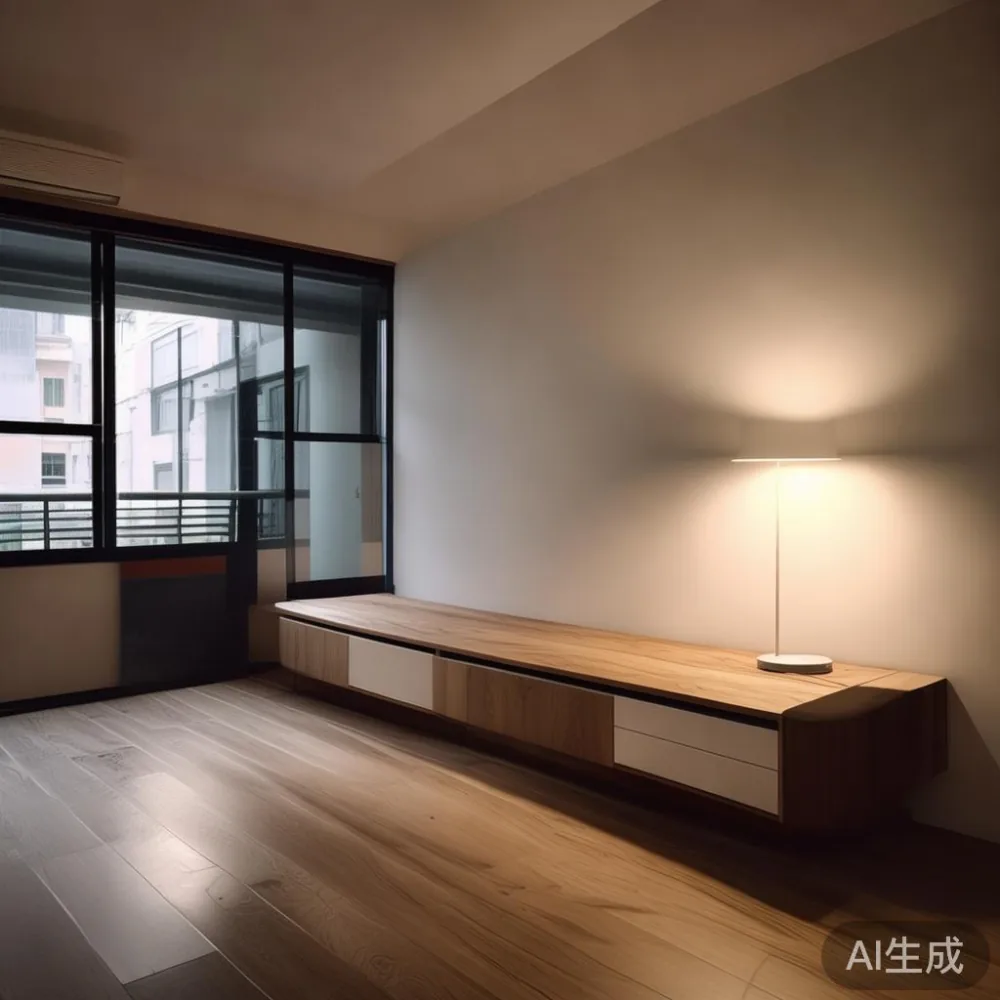
Singapore is one of the harshest indoor climates you can buy furniture for. Afternoon dew points in Punggol regularly sit between 24°C and 27°C, and many air-conditioned bedrooms in Bedok run at 22°C with 50% relative humidity, while the corridor outside is closer to 75%. That 25-point swing, day after day, is what warps MDF cores, lifts veneer seams, and slowly tightens solid wood. Whether you choose a solid wood sofa frame, a bed frame in teak, a dining table in oak, a wardrobe in ash, a nightstand in walnut, or even a marble table for the entryway, the 5-year cost picture is shaped by how the material handles that swing.
Minimalist furniture lives or dies on joinery and surface stability. A clean line of grain that runs across a chest of drawers has to stay flat, or the whole composition collapses. Over five years, both veneer and solid wood can deliver that look, but they cost very different amounts to keep looking that way. This article walks through the real numbers in SGD, with Singapore logistics, lift widths, and GST included.
What is the real 5-year price gap between veneer and solid wood in Singapore?
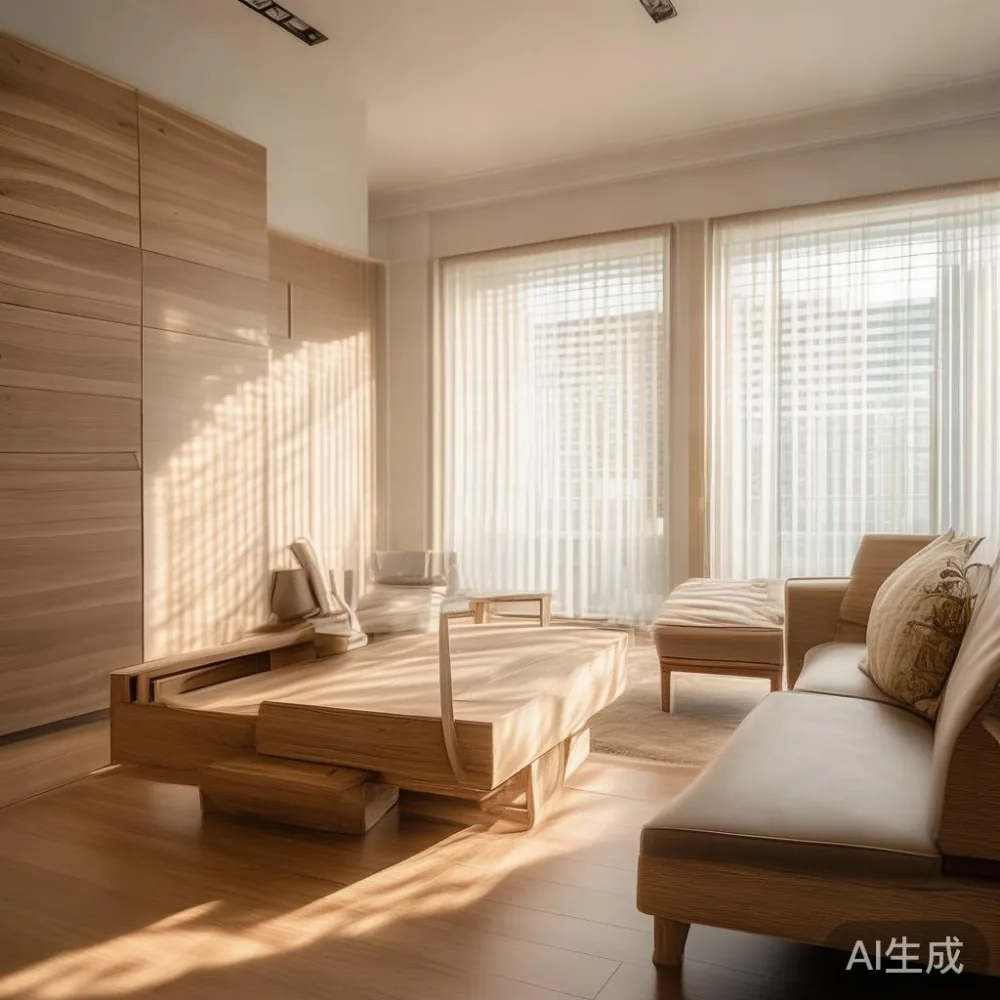
The headline gap is around 35–55%, not the 300% some showroom tags suggest. Last month I visited a friend who had just paid S$2,150 for a 1.8m veneer dining table with an MDF core, delivery included, from a local chain. The equivalent solid wood dining table in rubberwood or ash, same length, from a Foshan factory shipping direct to Singapore, landed at S$2,980 ex-GST, plus 9% GST of S$268, plus S$120 lorry delivery to her Block 642 Punggol unit. That puts the real gap at about 49% before any warranty work. Spread over five years, the gap narrows once you factor in repairs.
Veneer pieces in this tier typically last 4–6 years before a visible seam lift or corner chip appears. Solid wood pieces, particularly from factories such as MIDHILL with kiln-dried timber and tenon-and-mortise joinery, often run past 12 years with basic care. The amortised annual cost over a 5-year window looks like this:
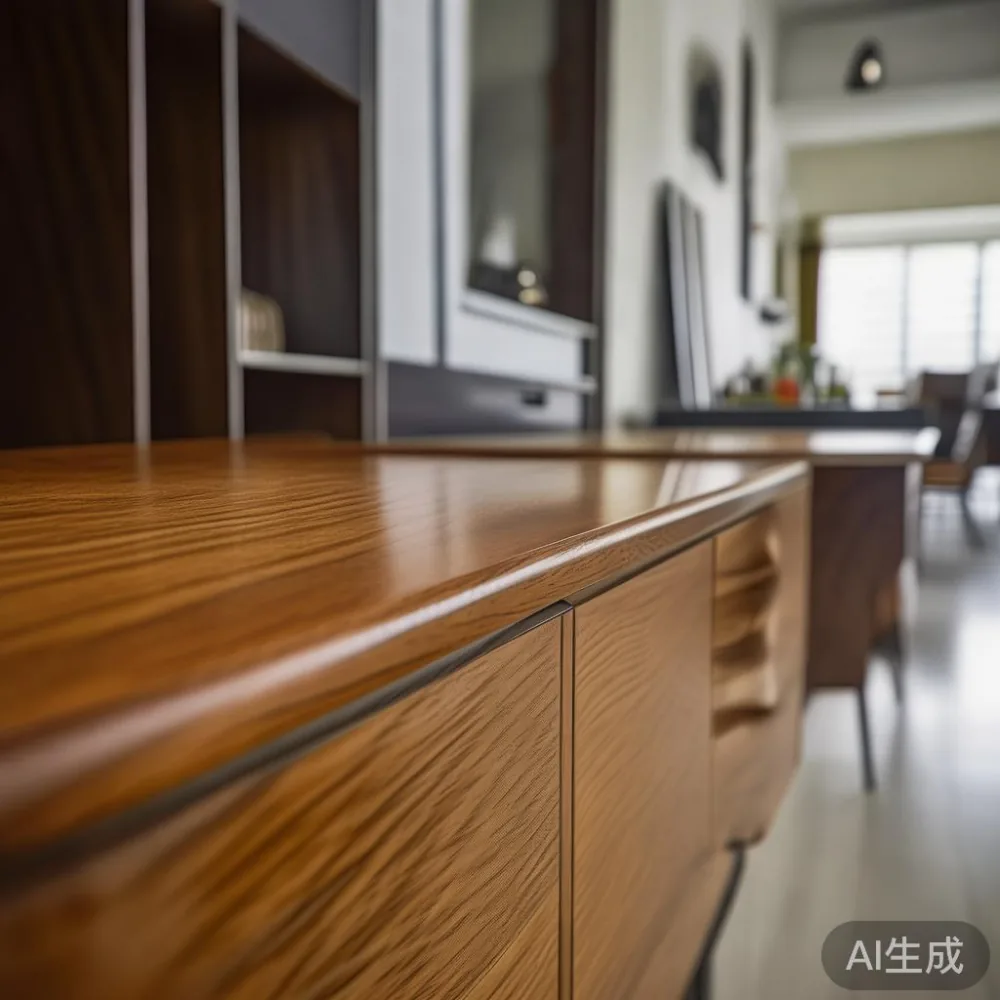
• 1.8m veneer dining set (table + 4 chairs), S$2,150: S$430/year, plus an estimated S$220 refinish at year 3, bringing the 5-year average to S$474/year.
• 1.8m solid ash dining set, S$4,120 including GST and delivery: S$824/year, with one S$180 light refinish at year 4, averaging S$848/year.
The premium for solid wood over five years is S$1,870 on this single set, or roughly S$374/year. For many HDB households, that difference buys a family grocery run for twelve weeks.
Why does humidity in Singapore punish veneer so quickly?
Singapore humidity is not a single number. It is a daily cycle. A typical Tampines flat starts the morning at 24°C and around 68% relative humidity with the windows open, climbs to 30°C and 78% by mid-afternoon, then drops sharply when the air-con kicks in at 22°C and 55% at night. That 23-point swing, repeated 365 times a year, makes any panel expand and contract. MDF, the substrate under most decorative veneer, swells roughly 0.4% across its width for every 10-point humidity rise. On a 1.6m wardrobe door, that is just under 7mm of movement per cycle.
Solid wood moves too, but it moves as one piece and tends to return to its original shape. A 2cm-thick oak plank will cup slightly, not delaminate. The finish on a well-sealed piece flexes with it. With veneer, the substrate expands faster than the surface layer, so the seam lifts, the corner chips, and the repair usually means a full re-veneer, not a patch. I have watched a colleague in our Bedok warehouse test a 60cm veneer sample by leaving it in a corridor for thirty days; the corner lifted by 1.2mm on day 14, and the sample had to be written off by day 28.
This is also why minimalist furniture in HDBs deserves a closer look at the build sheet, not just the photo. A clean, slab-front look that survives year five in Punggol has to be either genuine solid timber or a high-pressure laminate with an aluminium-banded edge. Anything else is borrowing time.
How do lift and corridor widths in HDBs shape what you can actually buy?
An HDB passenger lift in Singapore is usually 1.1m wide, 1.4m deep, with a door opening of about 0.9m. Corridor turns in older blocks like those in Bedok can be as tight as 1.6m radius. A flat-pack wardrobe box that measures 1.95m tall by 0.62m wide fits, but a fully assembled 2m solid wood wardrobe almost never does. This is the single biggest reason people in Tampines and Punggol end up with flat-pack veneer: it gets up the lift.
Smart factories solve this with knock-down joinery that does not rely on glue. MIDHILL, for example, ships most bed frame and wardrobe pieces with traditional Chinese tenon-and-mortise locks that tighten under their own weight once assembled, no metal brackets, no MDF core. A 1.8m king-size solid wood bed frame in ash can be broken down into four sub-15kg packages that any HDB lift will accept. The same logic applies to a 1.4m nightstand with a single drawer, and to extendable dining tables that ship at 1.2m and add leaves on site.
For buyers in newer Punggol condos with wider service lifts, the maths improves further. A 2.2m wardrobe in solid walnut can ride up a 1.6m-wide service lift fully assembled, saving about 90 minutes of on-site work and roughly S$140 in assembly fees. Knowing your block's lift and corridor geometry before you order will save you a redelivery fee, which in Singapore usually runs S$60 to S$90 per failed attempt.
How do I care for a sofa guide in humid weather?
A sofa in Singapore should be treated like a piece of timber, not a soft furnishing, because the frame is the part that fails first. Keep the room between 22°C and 26°C, aim for 50–60% relative humidity with a small dehumidifier set to 55%, and pull the solid wood sofa at least 10cm away from the air-con vent so cold air does not sit directly on the legs. Wipe the frame with a barely damp microfibre cloth once a week, dry it immediately, and never use pledge-style polishes on unfinished ash or oak.
For fabric cushions, vacuum the seams monthly to keep humid dust from settling, and rotate the seat pads every two months so the foam ages evenly. If you own a leather solid wood sofa, condition the leather every four months with a water-based cream, not an oil-based one, because oils go rancid above 28°C. A 3-seater sofa in solid ash with a French light luxury silhouette, slim arms, low back, fluted legs, will last 12–15 years under this routine, against 5–7 years for the same silhouette in a plywood-and-veneer frame.
What about warranty and after-sales in Singapore?
Warranty language on a price tag often hides more than it reveals. A one-year warranty on a veneer piece from a Singapore reseller usually covers manufacturing defects only, not humidity damage, and labour is rarely included. A structural warranty from a Foshan factory shipping direct, on the other hand, often covers joinery failure for ten years and includes replacement parts shipped from the factory at cost. MIDHILL, for instance, publishes a 10-year structural warranty on its solid wood ranges and offers lifetime refinishing for a small materials fee.
Translate that into real SGD. A veneer dining table with a one-year warranty that fails at year 3 costs you the full replacement, around S$2,150, plus disposal. A solid wood dining table with a 10-year structural warranty that fails at year 4 under the same humidity cycle costs you a S$180 refinish, possibly free under a lifetime refinishing scheme, plus a S$40 courier for parts. Over five years, that single line item can swing your total by S$2,000.
What does a real 5-year budget look like for a three-bedroom HDB?
Below is a worked example for a typical 4-room HDB in Punggol, furnished over five years, comparing a veneer-heavy package against a solid wood package. Prices include 9% GST, standard lorry delivery, and a S$140 assembly fee per room where applicable.
Veneer package (5-year cost):
• 3-seater sofa in plywood/veneer frame, S$1,780
• 1.6m wardrobe with sliding doors, S$1,350
• Queen-size bed frame with veneer headboard, S$980
• 1.4m dining table + 4 chairs, S$2,150
• Two nightstand pieces, S$420
• Entryway marble table with steel base, S$1,260
Subtotal: S$7,940
Year 3 corner repairs: S$420
Year 4 wardrobe re-veneer (partial): S$680
Year 5 sofa reupholstery (frame still sound): S$520
5-year total: S$9,560
Solid wood package (5-year cost):
• 3-seater solid wood sofa in ash with linen covers, S$3,240
• 1.8m ash wardrobe, three doors, S$2,860
• Queen-size bed frame in solid oak, S$2,180
• 1.4m ash dining table + 4 chairs, S$2,980 + S$268 GST + S$120 delivery = S$3,368
• Two nightstand pieces in walnut, S$680
• Entryway marble table with ash base, S$1,540
Subtotal: S$13,868
Year 4 light refinish on dining table: S$180
Year 5 linen re-cover on sofa: S$260
5-year total: S$14,308
The real five-year gap is S$4,748, or roughly S$950 a year. For households who expect to stay in the flat beyond five years, the solid wood line wins on resale and on day-to-day feel. For households who plan to move to a condo or a landed unit within 36 months, the veneer line is often the rational pick.
How does shipping and free-shipping thresholds change the maths?
Singapore import duties on finished wooden furniture are zero under the current FTA schedule, but GST is charged on the landed cost, including freight and insurance. Sea freight from Foshan to Singapore takes 8 to 12 days, plus 3 to 5 days for last-mile lorry delivery to a Punggol or Bedok address. Air freight is 3 days but adds 22–28% to the unit price, which usually breaks the budget for a full dining set.
Free-shipping thresholds matter more than people expect. A factory like MIDHILL sets its free-shipping line at around US$350, which is roughly S$475, a level reached by a single nightstand or a small marble table. Orders below that threshold pay S$60 to S$90 in courier fees, which can swing the unit economics of a small piece by 12–18%. Bundling a nightstand and a marble table into one order, even from different ranges, is usually the cheapest way to kit out an entryway.
What about design direction and resale value?
Singaporean buyers in 2025 are moving away from the high-gloss, heavily-carved look of the early 2010s. Three style threads are doing well in HDBs and mid-range condos: French light luxury, with slim profiles, brushed brass details, and pale oak; American light luxury, with deeper walnut tones, rolled arms on sofas, and shaker drawer fronts; and post-modern light luxury, which mixes a marble table top with a solid wood base and a single bold geometric lamp. All three sit comfortably inside the minimalist furniture category because the silhouettes stay clean and the ornament stays restrained.
One regional variant that is quietly gaining floor space in Punggol walk-ups is a Mid-century modern coastal style: low-slung solid wood sofa frames in white oak, slightly flared legs, and oatmeal linen covers that pair with indoor plants and pale travertine accents. Pieces in this direction photograph well for resale listings and tend to recover about 55–65% of their cost in a five-year resale, against 25–35% for heavily-styled veneer pieces of the same age.
Returns, repairs, and the realistic 14-day window
Singapore consumer law gives you certain protections, but most direct-from-factory purchases run on the seller's policy. A 14-day return window is workable only if the piece is unassembled and the packaging is intact. Once a bed frame is built and a mattress is on it, the factory cannot resell it as new, so most suppliers, MIDHILL included, will only offer an exchange or a repair. Plan your returns window around the build calendar, not around the delivery calendar.
For a queen-size bed frame, this means unbox within 48 hours of delivery, inspect every panel in the corridor before carrying it inside, and only then book an assembly slot. Defects caught at this stage are replaced free within the 14-day window. Defects caught after assembly usually fall under warranty, which is slower and may involve a S$60 call-out fee.
So which one should you pick?
If you are furnishing a Tampines resale flat that you expect to live in for seven years or more, the solid wood route is the lower-risk path. The 5-year premium of around S$4,700 for a full three-bedroom set is roughly S$67 a month, less than a typical HDB parking fee, and you keep the option of refinishing instead of replacing. Pair the solid wood pieces with a single marble table in the entryway to add the post-modern light luxury note that current resale listings reward.
If you are kitting out a Bedok rental or a Punggol BTO that you intend to flip in three years, the veneer route is the rational choice. Spend the saving on better lighting and a higher-thread-count linen cover for the sofa, which are the two upgrades that read clearly in photos and recover the most at resale. Either way, set the air-con to 23°C, run a small dehumidifier, and your furniture will outlast the lease on your flat.
Quick checklist before you click buy
• Measure the lift door width and corridor turn radius before you order any piece over 1.8m.
• Ask for the kiln-dried moisture content in writing; aim for 8–12% for Singapore.
• Check whether the warranty covers humidity-related failure, not just manufacturing defects.
• Bundle small pieces (nightstand, marble table) to clear free-shipping thresholds.
• Plan assembly within the 14-day return window.
• Budget S$200–400 for a year-4 refinish if you go solid wood.
Minimalist furniture in Singapore is less about the brand and more about the build sheet and the room it lives in. A well-made solid wood piece, properly dried and properly finished, will look better at year five than the day it arrived. A well-made veneer piece will also look good at year five, but only if the humidity is held between 50% and 60% and the substrate was sealed on all six sides. Pick the material that matches the room you actually have, not the showroom you walked through, and the five-year numbers will take care of themselves.