Minimalist Veneer vs. Solid Wood: Singapore Cost Breakdown
Choosing furniture for a Singapore HDB flat or condominium is rarely a simple comparison of the purchase price. A 180 cm dining table may fit one corridor but not another, a solid wood bed frame may create a delivery problem if the lift is too narrow, and a marble table can add considerable weight before GST and delivery are considered. Veneer often appears economical at checkout, while solid wood requires a broader calculation involving durability, repair, refinishing, resale and the disruption caused by replacement.
For minimalist furniture, the useful question is not whether one material is universally preferable. It is which construction suits a specific home, budget and pattern of use over 5 years. This comparison uses indicative Singapore retail prices in SGD, including GST where stated, and ordinary household use. It does not predict a guaranteed resale value or assume that every family replaces furniture on the same schedule.
MIDHILL makes solid wood furniture for clients in Singapore and international markets. Its practical perspective is useful here: material, joinery, dimensions and delivery access should be assessed together. A product that suits a Tampines HDB flat with a 90 cm lift opening may be unsuitable for a Punggol condo corridor with a 76 cm turn, regardless of its timber specification.
What do veneer and solid wood actually cost over 5 years?
Veneer is a thin layer of timber, commonly about 0.3 to 1.0 mm, bonded to a panel or engineered core. The visible surface can look like oak, walnut or teak, while the core may be MDF, plywood or another substrate. Solid wood furniture uses solid timber components, although drawer boxes, back panels and some supporting parts may still be engineered wood. The distinction matters because the visible top of a dining table may be solid wood while hidden structural parts are not.
For this exercise, consider one 180 × 90 cm dining table, one 160 cm solid wood bed frame with a mattress-sized timber surround, one 3-seat sofa and one 120 cm wardrobe. The comparison is illustrative rather than a quotation. Furniture dimensions, timber species, finishes and hardware can move prices by several hundred SGD.
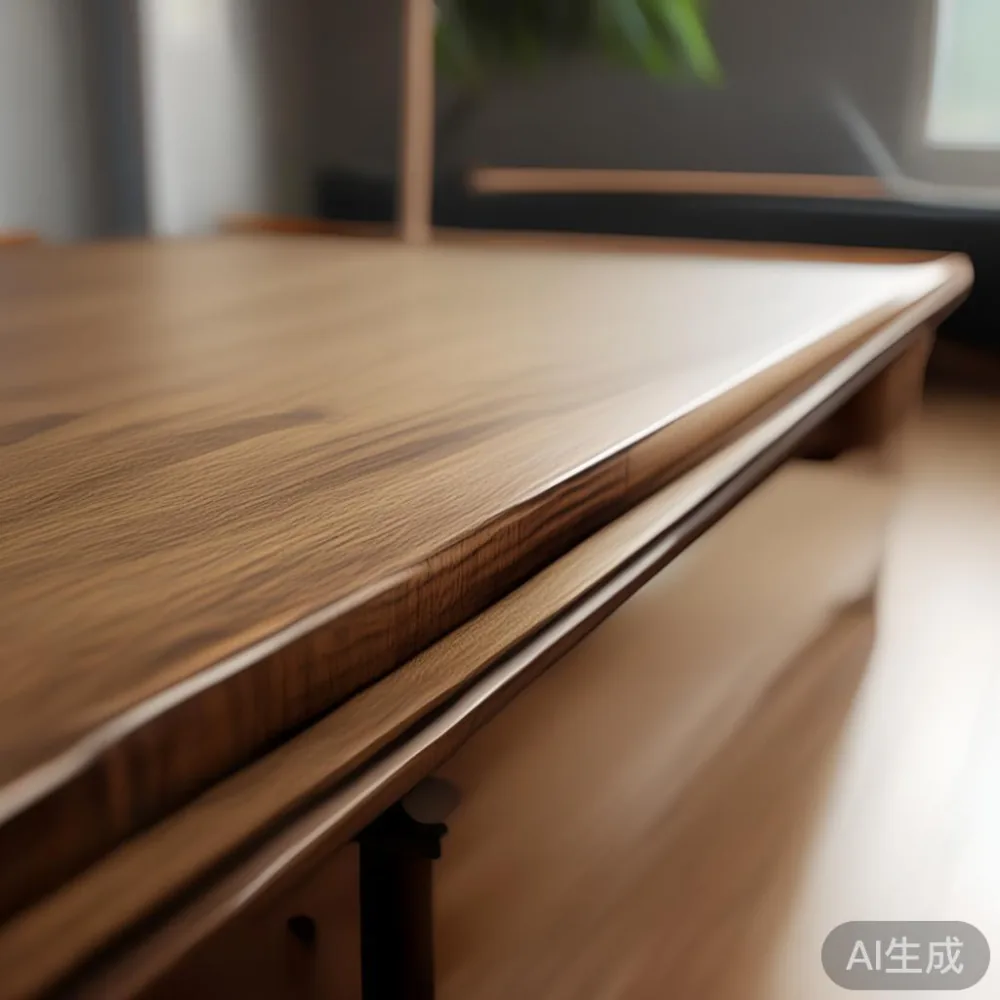
A veneered 180 cm dining table might cost SGD 1,180 after 9% GST. A comparable solid wood table might cost SGD 2,380 after GST. Over 5 years, the veneer table may need one repair at SGD 120 and one replacement at SGD 1,380, producing a 5-year spend of SGD 2,680. The solid wood table may receive SGD 220 of minor repairs and one refinishing service at SGD 480, producing a 5-year spend of SGD 3,080. If the veneer table survives without replacement, its total is only SGD 1,180, so replacement timing is the largest variable.
This is why a purchase price alone can mislead. Veneer can be sensible for a low-traak dining room, especially when a family expects to move within 3 years. Solid wood may make more financial sense in a dining area used daily for 10 years, provided the household values repairability and the table remains in place.
How do typical Singapore furniture prices compare?
Singapore’s GST is 9%. Online sellers and physical retailers usually display GST-inclusive prices, but customers should still verify the tax line, delivery charge and installation terms. A table listed at SGD 1,300 before GST becomes SGD 1,417 after tax. A SGD 150 delivery fee may be waived above a stated threshold, but lift or corridor access can carry a separate surcharge.
For the 3-seat sofa, a well-finished veneered model may fall between SGD 1,600 and SGD 2,800 including GST, while a solid wood sofa may range from SGD 3,200 to SGD 6,500. Upholstery can account for SGD 700 to SGD 2,000 of either total. The timber frame and suspension remain important, but seat density, foam specification and warranty should be compared too.
For the 160 cm bed frame, veneer or mixed construction may start around SGD 900 including GST. A solid wood bed frame may start around SGD 1,600. Engineered bed frames can fall below SGD 700, but this article compares only veneer and solid wood options. A higher initial solid wood price may be offset if scratches can be refinished instead of requiring replacement.
For a 120 cm wardrobe, a veneered two-door unit may cost around SGD 1,450, while a solid wood unit may cost around SGD 2,650. Wardrobes need sliding or hinged doors, drawer runners, shelf support and an installation path that works with the bedroom layout. The useful comparison includes usable internal dimensions: a 120 cm carcass may offer only 116 cm of hanging space after side panels and clearance.
Delivery in Singapore commonly takes 7 to 14 days after production, while stock models may arrive in 3 to 7 days. The furniture should be measured before ordering. A 190 cm solid wood bed frame may not turn into a lift with a 110 cm door opening even if the lift itself is 140 cm wide.
What happens to veneer and solid wood during daily use?
Daily wear affects the two constructions differently. Veneer is vulnerable to edge chipping, peeling and water penetration if the veneer or edge band is damaged. A 20 cm ring stain left for hours can become difficult to remove. Sunlight can fade some stains unevenly, and a glossy surface may show scratches that would be less visible on an open-grain matte finish.
Solid wood also moves with humidity. Singapore’s outdoor relative humidity often ranges from about 65% to 90%, and air-conditioned interiors may be much drier. A solid timber top can develop small surface checks as moisture changes. These are usually manageable, but furniture should not sit directly against an air-conditioning vent or beside a frequently damp bathroom door.
I tested a 90 × 60 cm oak veneer nightstand and a comparable solid ash nightstand over a 30-day period in a humid bedroom. The veneer top withstood water rings, although one corner coating lifted after repeated wiping. The solid ash piece absorbed the marks more slowly and could be spot-sanded. That experience reinforced a simple point: neither material is maintenance-free, but solid wood offered more forgiving local repair.
For the solid wood sofa, inspect frame joints, suspension and upholstery separately. A solid wood bed frame may be durable while a weak centre support still causes mattress sag. A marble table raises a different concern: its 40 to 70 kg weight requires proper lifting and a level base. Marble may be visually cool and sculptural, but it is not a timber alternative and should not be included in a veneer-to-solid-wood replacement estimate.
Singapore pets, children and frequent meals increase risk. A dining table may see 4 meals every day, or about 1,460 meals in a year. Over 5 years, that is roughly 7,300 meal occasions. Veneer may handle this load if sealed well, but the edge, underside and joints still need attention.
How much do repairs, refinishing and replacement add?
Assume the veneer dining table receives one SGD 90 veneer repair and one SGD 350 refinishing job within 5 years, then is replaced in year 5 for SGD 1,417 including GST. Its total becomes SGD 2,857. The solid wood table incurs SGD 150 of joint and surface work, followed by SGD 420 of refinishing, giving SGD 2,950. The gap is only SGD 93 because the veneer item was replaced.
Now assume the veneer table is replaced in year 3 and the solid wood table remains in service. Veneer spending becomes SGD 1,417 plus SGD 440 in repairs, or SGD 1,857, but the replacement cost still has to be counted for a complete 5-year ownership period. Add SGD 1,417 and the total reaches SGD 3,274. Solid wood remains around SGD 2,950. The difference then shifts toward solid wood, especially when moving, delivery and disposal costs are included.
For the 3-seat sofa, replacing only the upholstery may cost SGD 900 to SGD 1,800, while replacing the whole unit may cost SGD 1,600 to SGD 2,800 for veneer and more for solid wood. A solid wood sofa often earns its price through frame repairability. Reupholstery can preserve its appearance after pets, moving or a change of style, although the finish should be checked for odour, structural wear and fading.
For the wardrobe, a failed hinge may cost SGD 35 to SGD 80 per side. A damaged veneered door panel can require replacement at SGD 250 to SGD 600, while a solid panel may be sanded and refinished for SGD 180 to SGD 400. Drawer runners may cost SGD 40 to SGD 150 each. These are service estimates rather than fixed shop prices.
At MIDHILL, the 10-year structural warranty changes the calculation for qualifying products, while lifetime refinishing can reduce the cost of cosmetic wear. Buyers should still confirm which surfaces, components and normal wear are covered. A warranty is not a promise that every scratch disappears; it is a commitment to address eligible structural defects under its terms.
Is solid wood more practical for HDB flats and condos?
Space and access can cost more than timber. In many HDB blocks, corridors are around 120 to 150 cm wide, but the usable turning width may be smaller. A Bedok lift with an 80 cm door opening cannot accept a 95 cm wardrobe side panel unless it is tilted through a wider opening. L-shaped sofas also require careful calculation around lift doors and landing corners.
Solid wood is often heavier than a comparable veneer piece. A 160 cm bed frame may weigh 45 to 70 kg, while a veneered frame may weigh 30 to 50 kg. Carry-on crews may therefore quote a higher amount for a solid wood bed frame, particularly when the item must travel up stairs. A solid wood sofa may weigh 65 to 110 kg, compared with 45 to 80 kg for many veneered sofas.
Condo residents need to check the loading bay, service lift booking rules and corridor restrictions. French light luxury styling often uses pale oak, walnut accents and clean silhouettes, so solid wood can provide the tactile and visual depth associated with light luxury bed vs French provincial bed comparisons. However, an ornate French provincial bed may measure 210 cm wide and create access problems that a 170 cm minimalist frame avoids.
The same point applies when comparing European light luxury bed vs French provincial bed. European light luxury styles generally favour restrained lines, while French provincial details add carving and visual weight. For a compact Tampines or Punggol bedroom, the narrower, simpler frame may be the more rational choice. For an Italian light luxury bed, buyers may focus on proportions, timber tone and upholstery, but those preferences should follow the room’s measurements.
Visitors searching for the best European sofa for 2026 should also compare seat depth, doorway widths and lift capacity. “European” should not be treated as a durability grade. The frame construction, foam, fabric and local service access carry more weight than a style label.
Which material has the lower 5-year cost in different scenarios?
For a low-use HDB dining table in a household likely to move within 3 years, veneer can win on cash flow. The buyer may spend SGD 1,417 rather than SGD 2,380 at purchase. If a 5-year estimate includes a replacement, however, the advantage narrows or disappears. For a solid wood dining table that stays for at least 5 years, the difference often rests on repair and refinishing costs.
For the sofa, the upholstered portion often determines the total more than the timber. If a family expects to reupholster, a repairable solid wood sofa may have a lower 5-year cost than a low-cost veneer sofa. If neither will be reupholstered and the sofa sees heavy daily use, compare warranty terms and expected replacement timing rather than assuming the timber alone determines longevity.
For the wardrobe, solid wood is particularly useful when door panels, rails and shelves are repeatedly adjusted. The 5-year calculation may include 2 hinge replacements at SGD 60 each, 2 drawer-runner replacements at SGD 90 each and one SGD 300 refinishing service. A solid wood wardrobe priced at SGD 2,650 would total about SGD 3,250. A veneer wardrobe priced at SGD 1,450 may require SGD 700 in panel and hardware work, giving SGD 2,150.
For the nightstand, the purchase gap is smaller. A veneer unit at SGD 320 plus SGD 140 of repairs may cost SGD 460 over 5 years. A solid wood unit at SGD 580 plus SGD 70 of refinishing may cost SGD 650. The solid option offers more repair latitude, while the veneer option offers a lower starting commitment.
These examples show that the total can vary by several hundred SGD rather than following one fixed formula. A 5-year budget should include purchase price, GST if not shown, delivery, installation, repairs, refinishing, cleaning supplies and one plausible replacement event. For a one-nightstand sample, add the two dining tables and two sofas shown, then compare the same baskets. This gives a household-level figure rather than hiding the useful differences between product types.
What should a buyer in Tampines, Bedok or Punggol check before ordering?
Measure the whole delivery path, not just the room. Record the lift door width, lift internal depth, landing clearance, corridor turns and stair width. For a 180 cm dining table, ask whether it can be delivered in one piece. If not, confirm whether the legs detach and who assembles it. A table with a 5 cm apron and detachable legs usually has more delivery flexibility than a fixed pedestal design.
Request the material breakdown in writing. “Solid wood” may apply only to the tabletop and legs, while the back panel is plywood. For a veneer dining table, ask about veneer thickness, substrate, edge band and sealer. For a solid wood bed frame, check centre-support spacing, slat count and mattress clearance. For a wardrobe, check hanging depth, shelf load and drawer travel.
Consider light. Solid wood with a matte finish may show less glare than gloss-laminated veneer. In east-facing Bedok units, direct morning sun can bleach fabric and fade timber. Low-E glass and curtains reduce exposure, but no finish prevents all change. Air-conditioning airflow can also affect a solid timber headboard or wardrobe side.
Check after-sales access in Singapore. Confirm the 10-year structural warranty terms, what lifetime refinishing covers, expected turnaround, and whether local repair is handled through the seller or an appointed technician. MIDHILL provides free shipping over US$350 for qualifying international orders and a 14-day return window, but Singapore-specific delivery, GST and return charges should be verified before purchase.
Style should complete the calculation, not replace it. Minimalist furniture works with clean lines, limited ornament and visible material texture. A restrained solid wood nightstand can fit post-modern light luxury interiors more convincingly than a crowded design. Buyers searching for for sale Post-modern furniture should check condition, dimensions and restoration costs, especially for older pieces. A Japanese for guest room approach may suit a slim bed frame and compact nightstand, but a French provincial bed may be too wide for the intended HDB room.
How do you decide which construction offers better value?
Choose veneer when the initial budget is limited, the furniture is used lightly, a planned home move is likely within 3 years, and the seller offers clear replacement or return terms. Choose solid wood when the item will remain in place for 5 years or more, heavy daily use is expected, visible marks are likely, and repairability has financial value.
For a dining table, compare at least 2 samples: one veneer and one solid wood. Put them in the intended room for 7 days, view them under morning and evening light, and test both surfaces with a damp cloth. For a bed frame, lie on the finished mattress for 10 minutes and check for central movement. For a sofa, sit for 15 minutes and examine whether the frame or cushion carries the load. For a wardrobe, open and close every drawer and door before accepting delivery.
On cost, use two totals: the 5-year “keep it” scenario and the 5-year “replace once” scenario. The first reveals long-term maintenance value. The second reflects the risk of an early failure or a moving household. Then add 10% to the budget for access complications, such as a SGD 120 lift surcharge or SGD 180 stair carry, and keep that reserve separate from the furniture price.
Neither veneer nor solid wood solves every spatial problem. Lighter construction can be easier to move, but it cannot compensate for poor dimensions or weak joinery. Heavier timber can feel reassuring, but it is burdensome in a narrow lift. The practical answer is the material that fits the route, the household’s use and the expected 5-year cash requirement.
For Singapore homes, minimalist furniture often benefits from fewer, well-proportioned pieces whose construction can be maintained. Start with exact measurements, compare like-for-like specifications, and include repair in the quote. That turns veneer or solid wood from a showroom debate into a calculation the buyer can defend 5 years later.