Styling a Small Singapore Apartment Without Making It Feel Crowded
Walk into a 60 square metre HDB flat in Tampines or Bedok and the first thing you notice is the geometry: a 900 mm wide corridor, a lift door that swings open at 800 mm, and a living room that has to do the work of three rooms in a landed house. Most owners I speak to want the apartment to feel like a hotel suite, not a storage unit. The answer is rarely "buy less." The answer is to choose furniture that breathes. That is the quiet promise of minimalist furniture: each piece earns its footprint, then steps back so the room can speak.
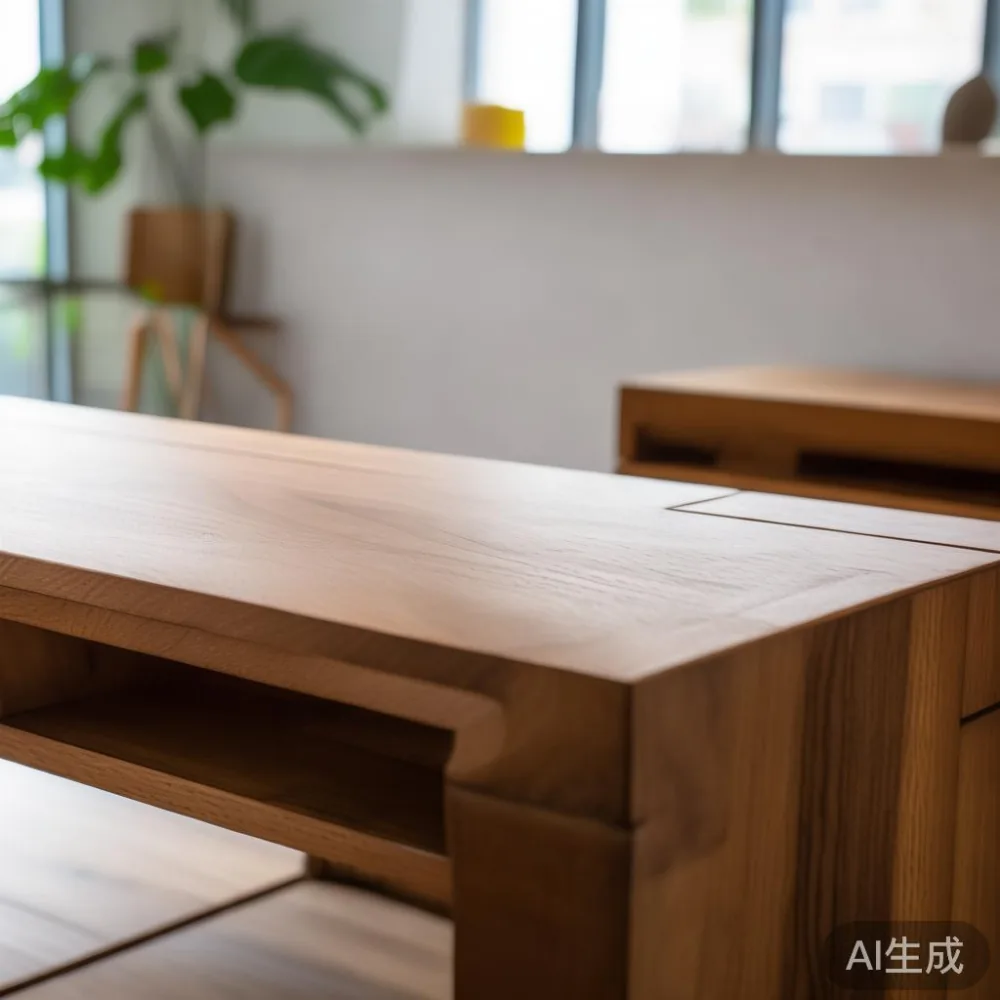
I visited a 4-room BTO in Punggol last month with my colleague, who had just moved in with two suitcases and a stack of IKEA wishlists. We spent an afternoon measuring every wall, every doorway, and every switch plate. The lift in her block accepted a flat-pack carton only up to 1.8 m tall. We discovered that a 2.2 m wardrobe would not even fit through the service entrance. After two hours and three tape measures, we had a real plan. This guide is built around what we learned that day, plus nine years of helping Singapore owners ship solid wood pieces through narrow corridors without a scratch.
Why a small flat punishes the wrong proportions
Most small flats in Singapore measure between 45 and 75 sqm. The living room is often 3.0 m by 3.6 m, and the master bedroom rarely exceeds 12 sqm. Pack a 2.4 m American-style sectional into that footprint and you lose a third of the floor to the sofa. The ceiling height in HDB blocks runs from 2.4 m to 2.7 m, which means any tall piece needs vertical breathing room above it.
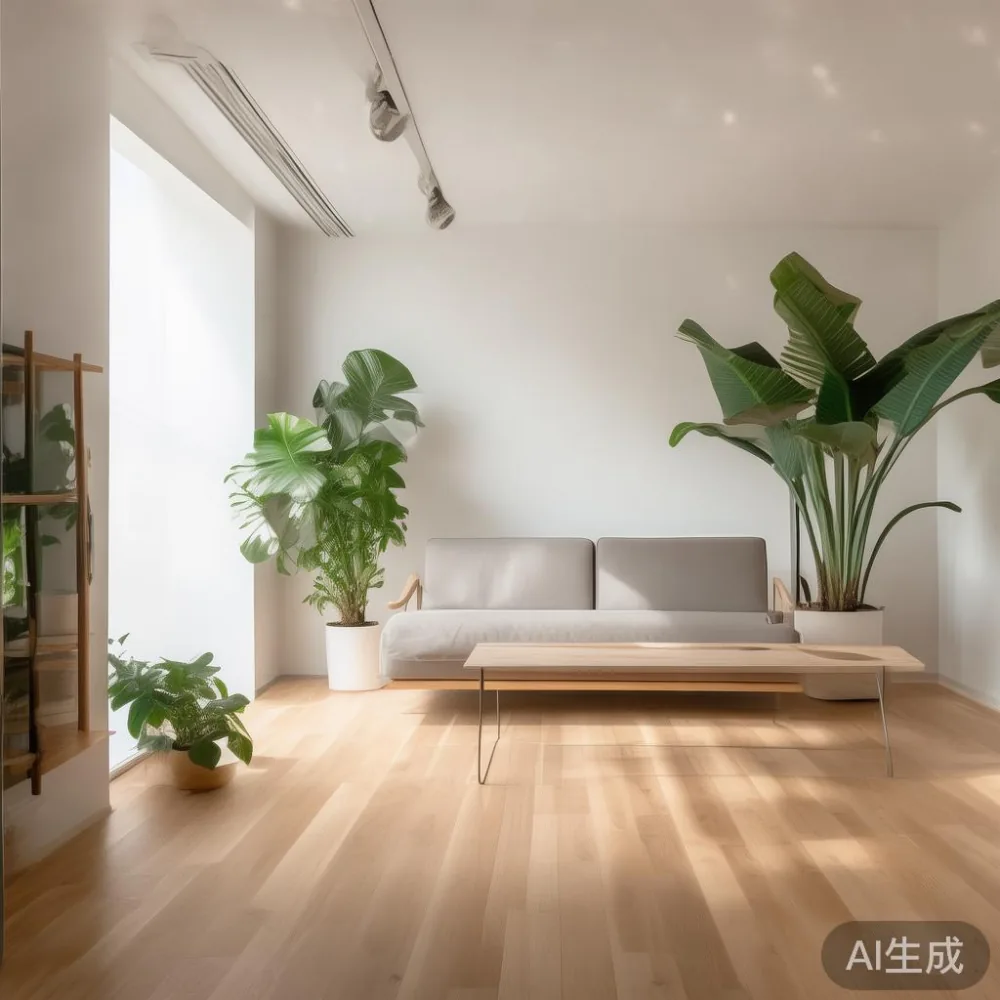
Three numbers drive every decision I make for clients: door width, corridor width, and lift diagonal. Standard HDB doors measure 0.9 m wide. Service doors on older blocks drop to 0.8 m. Cargo lifts in newer condos such as Treasure At Tampines or Rivertrees Residences accept a maximum internal depth of 1.6 m. If a solid wood sofa ships in a 1.9 m carton, you cannot get it to the 18th floor without disassembly.
This is also why MIDHILL ships dining tables in two cartons: a 1.2 m tabletop and a 0.4 m leg bundle, so the package clears every lift in a Punggol or Bedok tower without tipping sideways. That kind of detail rarely shows up in product photos, but it is the difference between a smooth Sunday delivery and a Monday carpentry workshop in the corridor.
Start with a footprint, not a wishlist
Open your HDB or condo floor plan on your phone. Mark the wall lengths, the door swings, and the window positions. Then take a roll of painter's tape and outline each piece of furniture on the actual floor. A 200 cm by 90 cm dining table takes up more visual space than the number suggests, because you need at least 80 cm of pull-back room on every chair.
For a typical 4-room BTO living room of about 10 sqm, the safe furniture footprint is roughly 5 to 6 sqm, or about 55 percent of the floor. Anything above 65 percent and the room starts to feel crowded. I use this rule of thumb: subtract the circulation area first, then spend the remainder on pieces you can see, touch, and use daily.
That is also why minimalist furniture wins in small flats. A solid wood bed frame with a 5 cm thick headboard reads as architecture, not as furniture. The eye registers it as part of the wall. A 12 cm thick upholstered headboard, by contrast, eats 7 cm of clearance on each side, and you feel it every time you walk past the bed.
The four-piece skeleton of a calm flat
Every well-styled small apartment I have seen in Singapore runs on the same four pieces: a sofa, a dining table, a bed frame, and a wardrobe. Add a nightstand and a marble side table and you have the full kit. Pick each one well and the flat feels composed. Pick them badly and the flat feels like a sample sale.
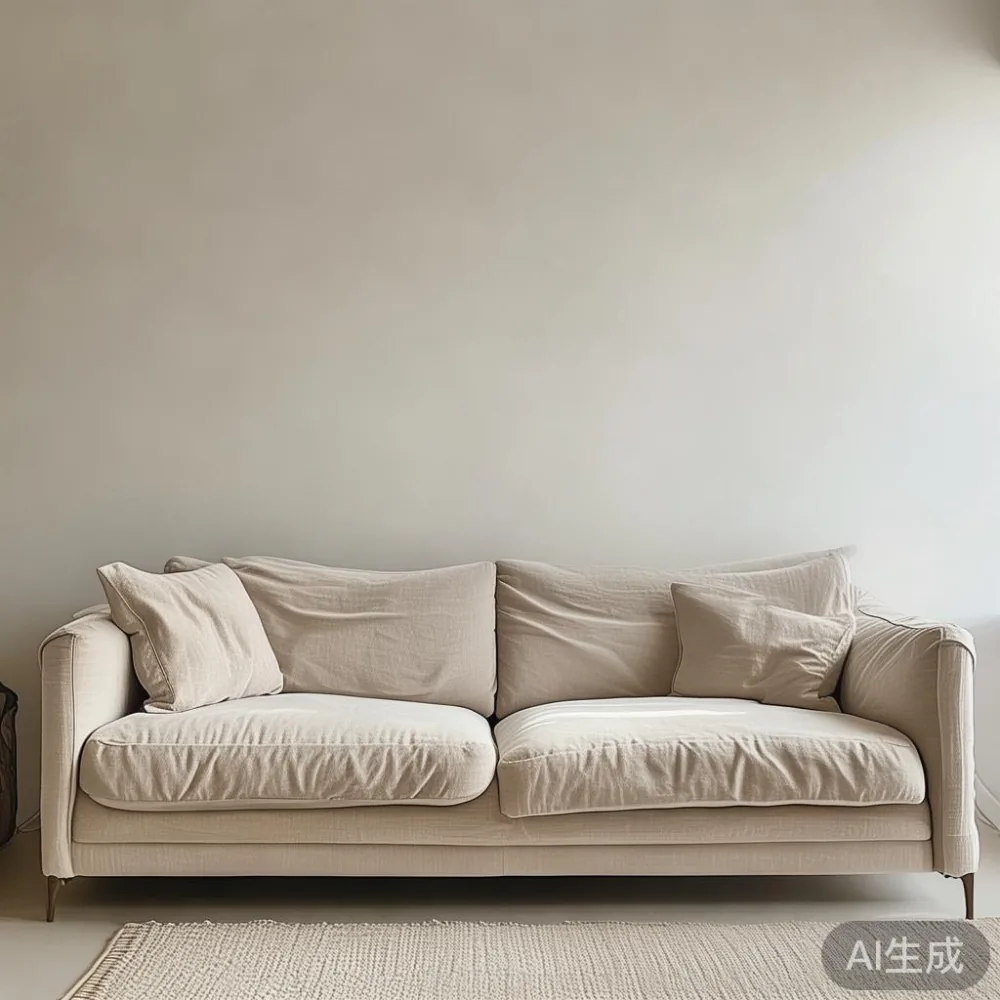
For the living room, a 180 cm to 210 cm solid wood sofa seats three adults without eating the room. Look for a seat depth of 55 cm to 60 cm. Anything deeper pushes your knees past the coffee table edge, and you will bump the table every time you stand. The height of the backrest matters more than most people think. A 78 cm back reads as a chair, a 90 cm back reads as a room divider. In a 3 m wide living room, choose the lower back.
The dining table is where owners get emotional. A 140 cm by 80 cm solid wood dining table seats four comfortably and leaves 80 cm of walking room on the long side. Round tables save more space than rectangular ones because they have no corners to work through. A 110 cm round dining table fits a 3 m square dining corner with room for a four-person family and one high chair. At MIDHILL the standard round tops are 90, 100, 110, and 120 cm, all built on kiln-dried ash or walnut frames.
The bed frame should sit low. A 25 cm platform with a 5 cm mattress gives you a 30 cm seat height, which is the ergonomic sweet spot for getting in and out of bed without a stool. For a 10 sqm master bedroom, a 1.5 m queen bed leaves 70 cm on each side, enough for a 45 cm wide nightstand and a 50 cm walking lane. Push the bed against the longest wall and float the nightstands; do not anchor them to corners.
The wardrobe is the silent giant. A 1.8 m wide three-door wardrobe holds about 240 litres of clothing, which covers two adults for a year. If your bedroom ceiling is 2.6 m, run the wardrobe to the ceiling in two tiers and add a 60 cm overhead cabinet for suitcases. Skirting the wardrobe 5 cm off the floor lets you run an LED strip underneath, which doubles as a nightlight and stops the piece from looking like a wall.
Can light luxury actually work in a 60 sqm HDB flat?
Yes, but only if you treat light luxury as a finish, not a vocabulary. French light luxury in a Tampines flat looks like a fluted oak nightstand with a 12 mm Carrara marble top, not a gilded console. American light luxury reads as a walnut bed frame with brushed brass pulls and a tailored 240 cm sofa. Post-modern light luxury sits between the two: cleaner lines than French, warmer woods than American, often a single curved corner on a dining table or marble table that softens the room.
The trick is to limit yourself to two light-luxury moments per room. A marble coffee table with a brass base in the living room, and a brushed brass reading lamp in the bedroom. If you add more, the room starts to feel like a furniture showroom, and a 10 sqm bedroom cannot carry that weight. I have seen owners spend S$4,200 on a sideboard, then wonder why the room feels smaller. The sideboard was not the problem. The problem was that every surface now competed with every other surface.
If you are shopping online, narrow your search to European light luxury for dining room terms that describe material rather than mood. "Ash veneer on solid beech" reads honest. "Inspired by Parisian salons" reads as marketing copy. One describes the wood. The other describes the brochure.
Measure twice, ship once: the Singapore delivery reality
Most owners in Tampines, Bedok, and Punggol order from overseas because the local selection of solid wood minimalist furniture is thin. The savings are real: a 200 cm solid wood dining table in ash runs about S$1,400 to S$1,800 landed, against S$2,600 to S$3,200 for a comparable piece at a local retailer. The risk is also real: a 35 kg carton that does not fit through your service door costs you a delivery fee of S$80 to S$150 and a three-week re-order.
Ask the supplier for the carton dimensions in centimetres and the gross weight in kilograms. A 200 cm dining table should not exceed 60 kg per carton. A 180 cm solid wood sofa with a kiln-dried ash frame usually ships at 85 kg in two cartons, well within the 150 kg per carton limit that most Singapore cargo lifts accept. MIDHILL sends every order with a packing list that lists each carton's length, width, height, and weight, which makes the corridor rehearsal a five-minute job instead of a guessing game.
Free shipping over US$350 means a typical dining-table order clears that threshold, but the SGD conversion on your card statement will reflect the day-of-rate. Add 9 percent GST on the landed value for any CIF shipment above S$400. Customs usually clears a Foshan-origin furniture shipment in four to six working days, then another two to three days for last-mile delivery in Singapore. Plan a 10 to 14 day window from order to unpacking.
Two extra days of patience beats a scratched tabletop that no warranty can replace.
What about returns, warranty, and the long tail?
A 14-day return window is fine for mattresses and small accents, but it does not help with a dining table. What you actually need is a structural warranty that runs at least a decade. MIDHILL offers a 10-year structural warranty on every solid wood frame, which covers joint failure, wood cracking, and finish delamination under normal residential use. A lifetime refinishing service is rarer than the warranty. After eight to ten years, when the tabletop has picked up the patina of Singapore humidity, you can ship the top back to Foshan and have it sanded, re-oiled, and returned for a fraction of the replacement cost.
For owners who plan to stay five years or more, that lifetime refinishing is worth more than the discount you might find on a flash-sale platform. A S$1,500 dining table refinished once at S$220 lasts another decade. A S$900 flat-pack dining table replaced once at S$900 lands at S$1,800 over the same span, with two moves and two disposal headaches in between.
If you are browsing for Scandinavian furniture for sale listings, weigh the warranty terms as carefully as the wood. A solid ash frame with a 10-year structural warranty is a quieter investment than an oak-veneer piece with a 1-year limited warranty, even when the oak-veneer piece is cheaper on day one.
How do you style a guest room without wasting square metres?
Most Singapore apartments do not have a true guest room. They have a study, or a second bedroom that doubles as a guest room six nights a year. Treat it as a flex room, not a guest suite. A 90 cm wide solid wood daybed with a 12 cm thick mattress seats one adult for the night and reads as a reading nook the rest of the week. Add a 35 cm wide nightstand with a drawer for chargers, and a single pendant light hung at 150 cm from the floor.
Style the daybed with two bolsters and a single throw. Keep the wall above the daybed empty, or hang one 60 cm by 80 cm print. If you want to flex the room into a nursery later, swap the daybed for a 120 cm by 200 cm bed frame, and the room still works.
For owners who want to lean into a Nordic for guest room look, choose unfinished ash, oatmeal linen, and one wool rug in slate grey. Skip the candles, the fairy lights, and the gallery wall. The Nordic palette does its best work with restraint. Two textiles and one piece of wood carry the room.
The wardrobe question most owners ask too late
By the time owners ask me about wardrobes, they have already booked the carpenter and committed to a custom layout. That is fine, but it means missing out on the best Vintage wardrobe for 2026 ranges that several solid wood makers now ship as flat-pack kits. A vintage-inspired wardrobe in walnut or ash, with three soft-close doors and a single internal drawer stack, costs about S$1,800 to S$2,400 landed. A custom carpenter build of the same footprint costs S$3,200 to S$4,500, and you lose the refinishing option because the carpenter will not come back to sand the piece five years later.
The trade-off is assembly time. A flat-pack wardrobe takes four to six hours to assemble, against one to two days for a carpenter. If you enjoy building furniture, the flat-pack route pays off. If you do not, the carpenter route pays off. The mistake is to assume the carpenter route is always cheaper. It rarely is.
What about an industrial edge in a small dining room?
Industrial furniture gets a bad name in small flats because owners picture black steel shelving and exposed pipe fittings. That look eats visual space. A softer Industrial for dining room palette, though, works well: a reclaimed-elm dining table on a blackened steel base, paired with two leather dining chairs in tobacco and two upholstered chairs in oatmeal. The mix of one hard material and one soft material keeps the room from feeling like a warehouse.
For a 3 m square dining corner, choose a 140 cm by 70 cm table, which seats four without crowding. The steel base should be no more than 60 cm wide at the floor, so you can pull a chair out without kicking the leg. A 6 mm tempered-glass top reads lighter than a 4 cm wood top, but it shows every fingerprint, and in Singapore humidity you will wipe it twice a meal. The wood top is the quieter choice.
Putting it all together: a 65 sqm Tampines flat in one paragraph
Imagine a 65 sqm flat in Tampines with a 10 sqm living room, a 9 sqm master bedroom, and a 6 sqm dining corner that opens to the kitchen. The owner chose a 200 cm solid wood sofa in ash, a 110 cm round marble coffee table, a 140 cm by 80 cm ash dining table with four chairs, a 1.5 m queen bed frame in walnut, a 1.8 m three-door wardrobe in ash, two 45 cm nightstands with marble tops, and a single 90 cm daybed in the study. Total furniture footprint: about 18 sqm, or 28 percent of the apartment. The room breathes. The lift handled the cartons on the first try. The warranty is filed in a kitchen drawer. That is what minimalist furniture looks like when it is done with restraint rather than budget.
A short checklist before you click pay
Measure every door, corridor, and lift in centimetres. Confirm the carton dimensions and gross weight per piece. Choose wood that is kiln-dried, not air-dried, because kiln-dried ash and walnut move less in Singapore humidity. Pick two light-luxury moments per room, no more. Run a wardrobe to the ceiling if the room allows. Float the nightstands by 5 cm from the wall to soften the room. Keep the dining table round if the room is square, rectangular if the room is rectangular. Add one plant per 10 sqm of floor, no more. Step back, breathe, and let the room do the talking.
If you are still circling between Scandinavian, European light luxury for dining room ranges, French, and post-modern options, the shortest path is to shortlist two makers, request two sample cartons, and live with the wood swatches in your actual afternoon light for three days. The right piece reads quiet from across the room. The wrong piece reads loud from the doorway. Trust the quiet one.