Small Singapore Apartments, Big Style: How to Use Minimalist Furniture Without Crowding the Room
I still remember my colleague's 4-room HDB flat in Bedok. She had lived there for eight years and the living room had shrunk, piece by piece, until the only clear floor space was a 60 cm strip between the sofa and the TV console. Last month I visited her after she had finally committed to minimalist furniture, and the same 18 sqm living room felt almost twice as large. She had not knocked down a wall. She had not renovated. She had simply replaced a chunky 3-seater with a slim solid wood sofa, swapped a 1.8 m wardrobe for a 1.5 m floor-to-ceiling one, and added a single round marble table instead of a heavy rectangular dining set. The corridor outside her flat, just 1.2 m wide, was the only thing that reminded me her home was a typical Singapore HDB.
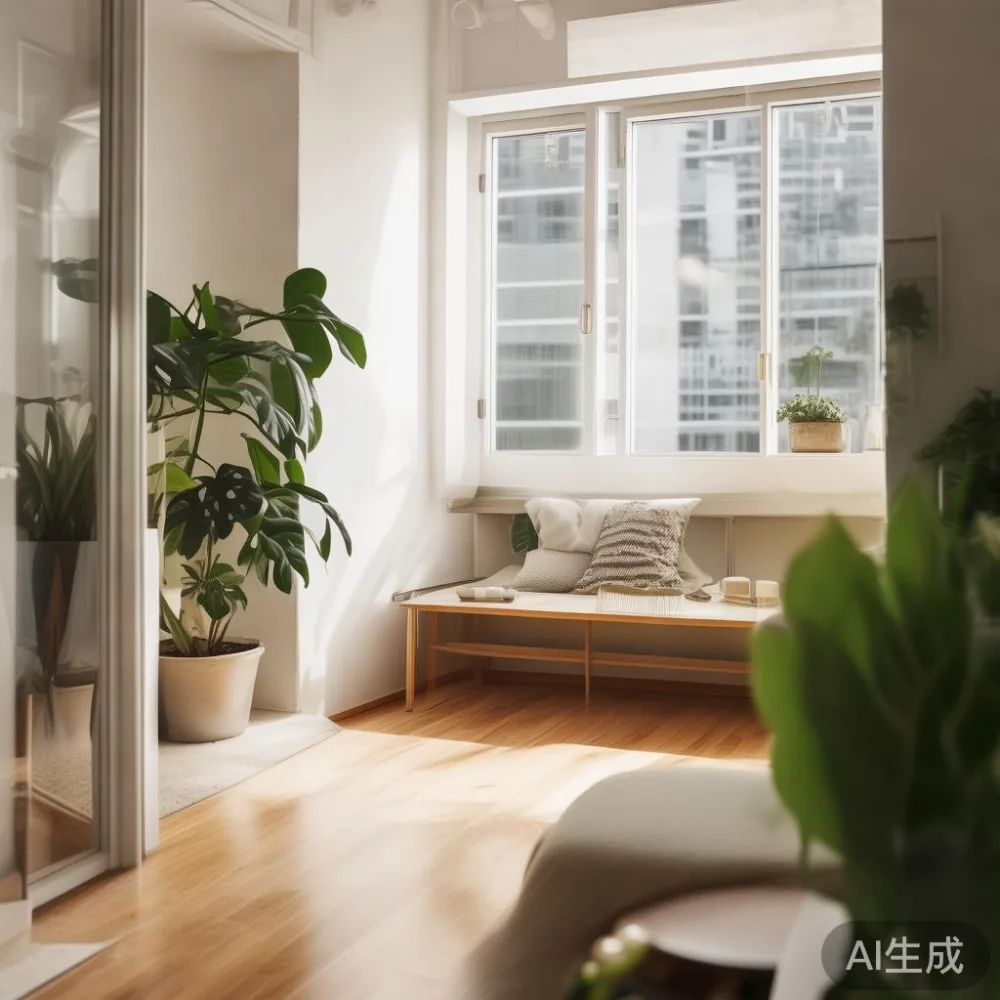
This guide is written for anyone who lives in a Tampines, Punggol, or Bedok flat, anyone who has measured the lift opening (about 1.0 m wide and 2.1 m tall) and worried whether a sofa will actually fit, anyone who wants style without sacrificing the ability to swing a cat, if there were room for one. We will work through hard numbers, local delivery realities, and how light-luxury pieces can sit comfortably in a compact home. Along the way I will reference MIDHILL, a Foshan factory that has shipped solid wood furniture to Singapore for more than fifteen years, and explain why their sizing discipline tends to suit our local corridor widths better than most.
What Does "Minimalist Furniture" Actually Mean for a 60 to 90 sqm Flat?
Minimalist furniture is not emptiness. It is a discipline of proportion. A minimalist piece has a clear silhouette, exposed solid wood rather than carved ornament, and a footprint you can measure in centimetres and predict on a floor plan. In a 60 sqm two-bedder in Punggol, a 1.4 m solid wood sofa with a 78 cm seat depth leaves 65 cm of walking space behind it, which is the minimum a grown adult needs to pass without turning sideways. The same rule applies to your dining table: a 1.2 m version seats four comfortably and keeps the room's circulation path intact, while a 1.6 m version usually forces you to push the chairs in before anyone can reach the kitchen.
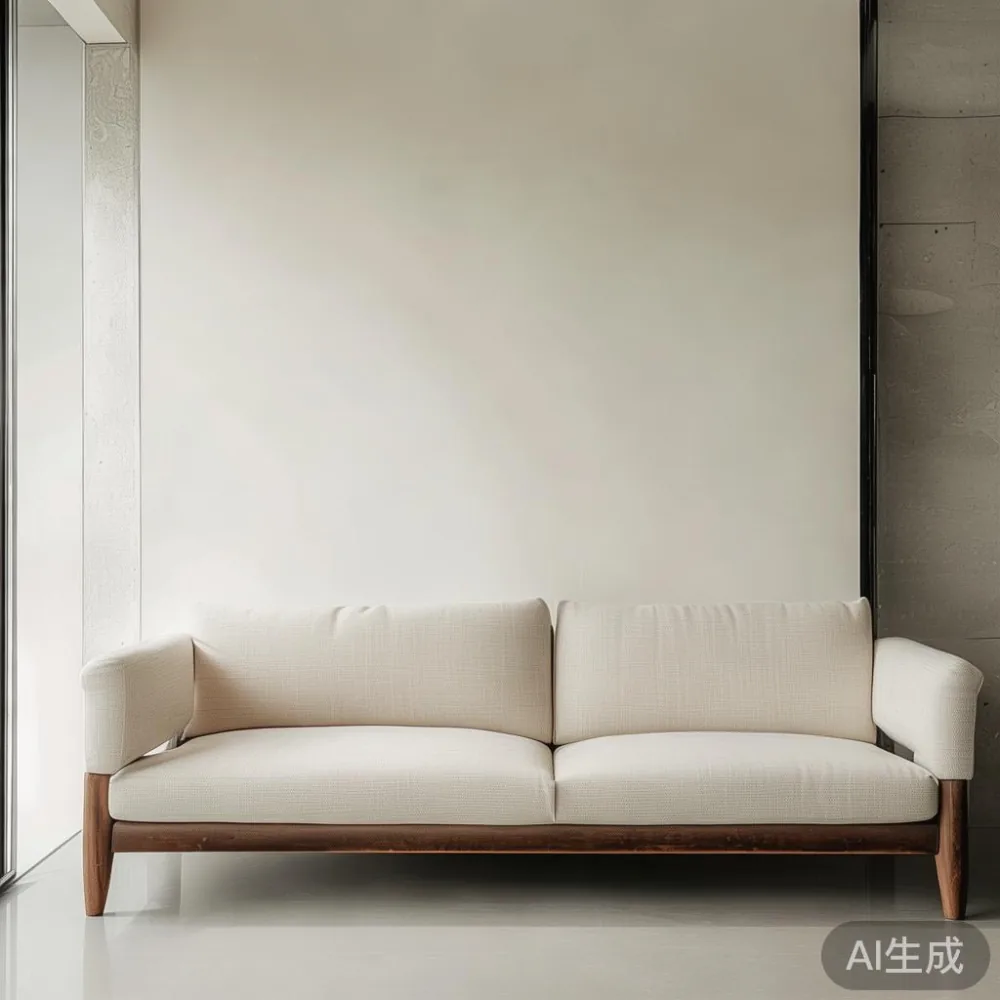
The pieces worth prioritising are the ones that earn their floor space every single day. A solid wood sofa with washable covers, a bed frame with under-storage, a dining table that can extend from 1.2 m to 1.6 m, a wardrobe that reaches the ceiling, and a nightstand that doubles as a charging station. Skip the cabinet that only holds four books, skip the bench that nobody sits on, skip the sideboard that blocks the corridor. Minimalist furniture is closer to subtraction than to buying more.
How Do You Measure Your Room Before Anything Gets Delivered?
Grab a tape measure, a piece of A4 paper, and a pencil. Measure every wall in cm, then mark the door swing, the window, the air-con trunking (usually runs 30 cm below the ceiling in Singapore flats), and the power points. Photograph the lift lobby and the corridor. If your corridor is under 1.2 m wide, anything deeper than 65 cm will not pivot around the corner on the way to your unit. If your lift opening is 1.0 m wide, a 1.1 m solid wood sofa in its packaging needs to be tilted vertically, and you should confirm the box dimensions, not just the assembled dimensions, before you pay.
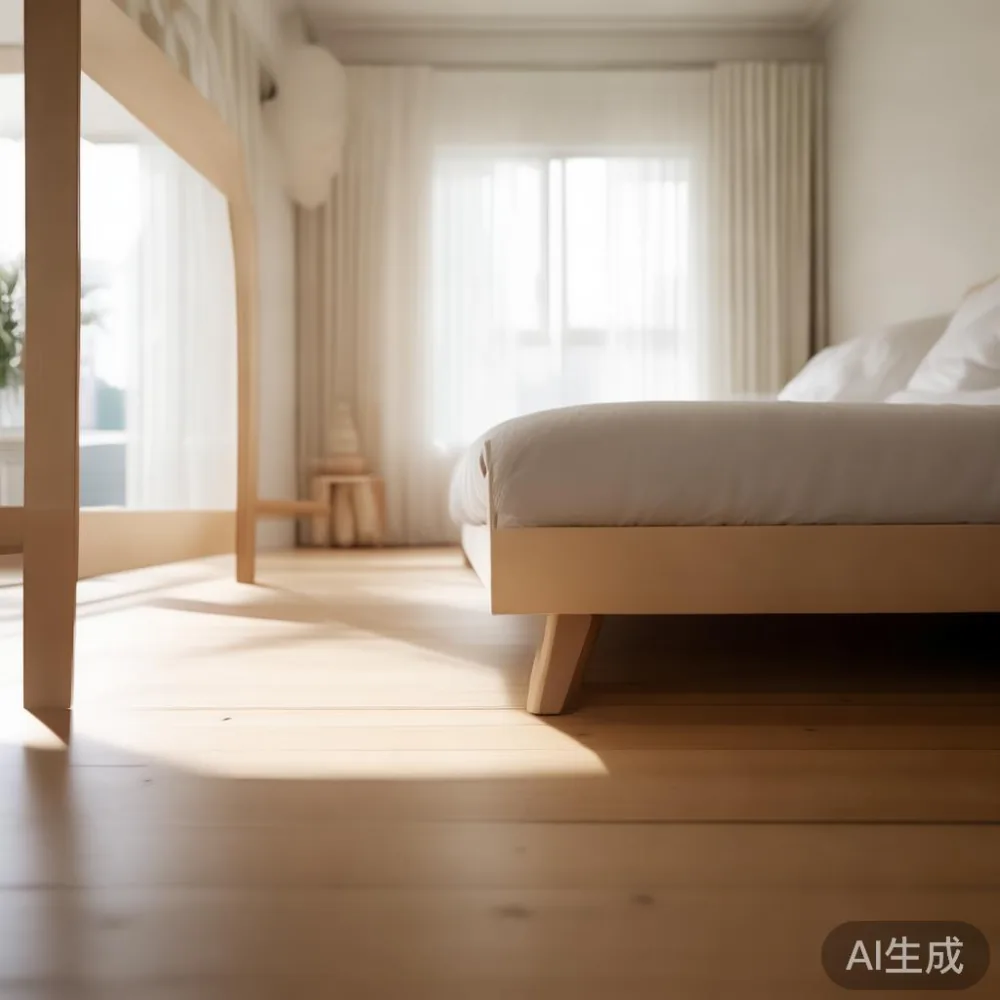
For the bedroom, leave at least 60 cm on each long side of the bed frame. A queen bed is 152 cm wide and 203 cm long, so a 2.4 m wall will give you 60 cm of walking space on one side and 80 cm on the other, which is workable but tight. A super-king at 183 cm wide needs a 2.7 m wall, and most HDB master bedrooms cannot offer that. Decide the bed first, then build everything else around it.
How Do You Style a Japanese-Inspired Sofa So It Works in a Singapore Bedroom?
I get asked this often: how to style Japanese sofa in bedroom without it looking like a dorm room crash pad. The trick is height. Pick a sofa with a seat height of 38 to 42 cm, which matches the typical Singapore mm height of a Singapore cm Japanese-style bed frame platform, so the two pieces read as one composition. Keep the sofa 20 cm shorter than the bed frame so the eye knows which piece is the hero. A 140 cm solid wood sofa in oak or ash, paired with a queen bed frame in the same wood, gives you a calm, low-slung reading corner at the foot of the bed without crowding.
Skip scatter cushions thicker than 12 cm. They visually inflate the piece and undo the low silhouette. Use one linen throw folded into a neat rectangle, not crumpled. If you can spare 20 cm of wall space behind the sofa, hang a single 60 cm wide framed print, centred over the sofa, no gallery wall. The less you do above the sofa, the more the wood grain becomes the artwork.
How Should You Choose a European Light Luxury Guest Room That Still Feels Like Home?
European light luxury for guest room styling is about restraint rather than grandeur. The look borrows the proportions of Parisian apartments in the 6th arrondissement, where a single antique-look chair sits against panelled walls and that is the entire scheme. Translate that into a 9 sqm guest room in a Tampines condo: one 120 cm European-style bed frame in white oak veneer, one 45 cm nightstand with a slim drawer, one wall sconce instead of a floor lamp, and a single full-height mirror leaning against the wall to bounce the window light.
How to choose European bed for that guest room? Start with the slat system. A solid beech slat with a centre rail will outlast a strung-cord base, and on a 120 cm frame you want at least 12 slats so the mattress does not sag between supports. Check that the headboard is no taller than 110 cm, otherwise it competes with the room's air-con trunking. The colour story should stay in two families: the wood tone and one soft neutral, either oat, putty, or chalk white. Add a third colour and the room reads busy in a 9 sqm footprint.
How Do You Pick a Wardrobe That Actually Fits the Lift and the Wall?
How to choose European wardrobe starts and ends with three numbers: the lift opening, the corridor corner, and the wall height. Singapore HDB ceilings run 2.6 to 2.8 m, but the wardrobe itself should stop at 2.4 m to leave a clean shadow line. A 1.5 m wide, 60 cm deep, 2.4 m tall wardrobe gives you 2.16 cubic m of storage, which is enough for two adults' seasonal wardrobes if you use the full height with a slim 30 cm top shelf for luggage.
Doors matter as much as the box. Sliding doors save 60 cm of swing space, which can be the difference between fitting a nightstand on the side wall or not. Hinged doors look more European light luxury but only if your bedroom wall has at least 65 cm clear in front of the wardrobe. When MIDHILL ships a 1.5 m wardrobe to Singapore, the flat-pack box is usually 158 cm long, 65 cm wide, and 22 cm thick, which slides into a 1.0 m lift without tilting, and that kind of packaging discipline is worth asking any supplier about before you pay a deposit.
Where Does Scandinavian Fit in a Singapore Dining Room?
Scandinavian for dining room design has always been about warmth at small scale, and that is exactly what a Singapore dining corner needs. A round marble table at 110 cm diameter seats four without corners to bruise shins, and the white or grey marble top reflects the overhead downlight so the ceiling feels higher. Pair it with four solid wood chairs in beech or oak, seat height 45 cm, and you have a dining set that occupies about 1.3 m of footprint yet holds a family of four plus one extra guest on a public holiday.
Keep the room's other furniture low. A sideboard that sits 80 cm tall is the visual ceiling of the dining area; anything taller starts to feel like a wall. If your dining corner shares a space with the living room, repeat the same wood tone on the dining chairs and the sofa legs so the two zones read as one apartment, not two competing ones.
What About a French Provincial Accent Without Making the Room Heavy?
Modern French provincial furniture can work in a Singapore flat if you treat it as a single accent rather than a full theme. One piece, perhaps a carved-leg nightstand or a linen-upholstered headboard with a soft curve, is plenty. The rest of the room should stay straight-lined so the French piece has space to speak. I have seen a 4-room flat in Punggol where the owners placed a single French-style marble table by the window, 70 cm round, as a breakfast spot for two, and the rest of the living room stayed in clean oak. The contrast was the charm.
When you bring French provincial into a small flat, check the carving depth. Anything deeper than 1.5 cm will cast a heavy shadow and make a 3 m wall read smaller. Aim for 0.8 to 1.2 cm relief, which still reads as craftsmanship under raking light but does not weigh the wall down.
What Does a Real Delivery Day Look Like for a Foshan-to-Singapore Order?
From a Foshan factory to a Singapore HDB, expect 28 to 38 days by sea freight, plus 3 to 5 working days for last-mile delivery after the container clears at PSA. Add another 1 to 2 weeks if your unit is on a high floor during a lift maintenance period, because delivery teams usually refuse to carry a 50 kg wardrobe box up the service staircase. Total landed time is roughly 6 to 8 weeks from order to assembled furniture in your room. Plan around that window: order the bed frame and wardrobe first, the marble table and nightstands second, the sofa last so you can match the fabric to what is already on your floor.
GST is payable on the landed value, currently 9 percent in Singapore, and the supplier should show this line on the invoice before you pay. Free shipping thresholds above US$350, roughly SGD 470 at today's rates, mean a single dining set or a sofa-and-table bundle will usually clear the threshold without you having to top up. Ask whether the supplier offers lifetime refinishing on solid wood pieces; in our humidity, a refinish every 5 to 7 years keeps oak and ash looking new, and that service is rare outside of dedicated factories.
How Much Should You Budget for a Full Minimalist Set in SGD?
For a realistic 4-room HDB starter set, plan around SGD 4,200 to SGD 6,800 before GST, depending on whether you go all solid wood or mix one or two veneered pieces for cost. A typical split: a 1.4 m solid wood sofa at SGD 1,350 to SGD 1,950, a queen bed frame at SGD 850 to SGD 1,400, a 1.2 m extendable dining table at SGD 720 to SGD 1,100, four dining chairs at SGD 280 to SGD 480, a 1.5 m wardrobe at SGD 1,100 to SGD 1,650, and two nightstands at SGD 180 to SGD 260 each. A marble table accent runs SGD 480 to SGD 820 depending on whether the top is real marble or a 12 mm sintered stone slab.
That is a serious budget for a young couple, but spread over five years of use, with a 10-year structural warranty, it works out to under SGD 1.40 a day for the full set. Add refinishing at year six for around SGD 320, and you have furniture that will outlast two HDB leases.
Will All of This Actually Make a Small Apartment Feel Bigger?
Yes, and the reason is measurable. In my colleague's Bedok flat, after the swap, the visible floor area grew by about 4.2 sqm because the new pieces had smaller footprints and sat on visible legs rather than flush-to-floor panels. The ceiling height read taller because the dining table's marble top reflected the downlight. The corridor outside her door no longer gets blocked when her brother visits with his family, because the new sofa fits through the lift on its side without a second trip. None of this is magic; it is the slow, careful work of choosing minimalist furniture piece by piece, with a tape measure and a floor plan, and trusting solid wood over MDF when the budget allows.
If you are starting from a flat that already feels crowded, do not renovate. Edit. Replace the one piece that blocks the most light with a slimmer solid wood equivalent. Repeat next year. By the third replacement, the flat will feel like a different home, and you will not have lost a weekend of your life to hacking walls.