Small HDB, Big Calm: A Singapore Guide to Minimalist Furniture That Doesn't Crowd Your Space
My colleague's 4-room HDB in Punggol looked like a storage unit masquerading as a home. Two dining chairs hooked over a four-seat dining table, a faux-leather bed frame pressed against the wardrobe, and a coffee table so wide that walking past it required a sideways shuffle. Three months later, after swapping out eight pieces, the same floor plan reads as a quiet, breathable apartment where the floor is visible in long uninterrupted stretches. The difference was not square footage (still 92 sqm) and not a renovation budget (under S$3,000). The difference was a disciplined approach to minimalist furniture and a refusal to fill every corner.
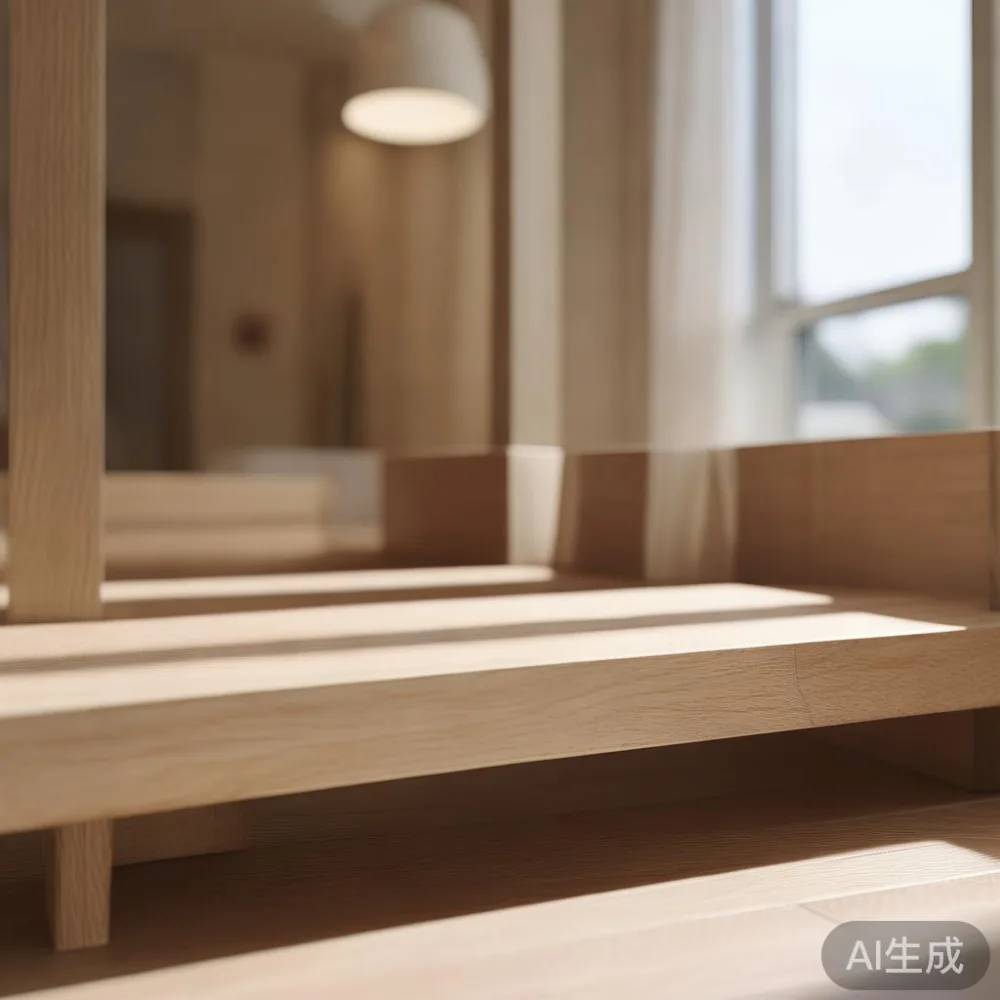
Below is the exact playbook, written for Singapore flats where lift openings measure roughly 0.9 m wide, corridor manoeuvres start at 1.2 m, and every imported centimetre costs you in delivery surcharges. All pricing in SGD, inclusive of the current 9% GST where applicable.
Why small Singapore flats punish overfurnishing
A typical Tampines or Bedok 3-room resale sits between 65 and 75 sqm. After the kitchen, bathroom, and a structural column claimed by the developer, you are left with roughly 38-44 sqm of truly flexible living area. A standard 3-seater sofa is 200-220 cm wide; a queen bed frame runs 160 cm across, with the mattress adding another 12-18 cm; a six-seat dining table demands 180 cm minimum, plus 90 cm on each side just to pull a chair back. Add those three footprints together and you have already absorbed 9-10 sqm of walking room that you never planned to lose.
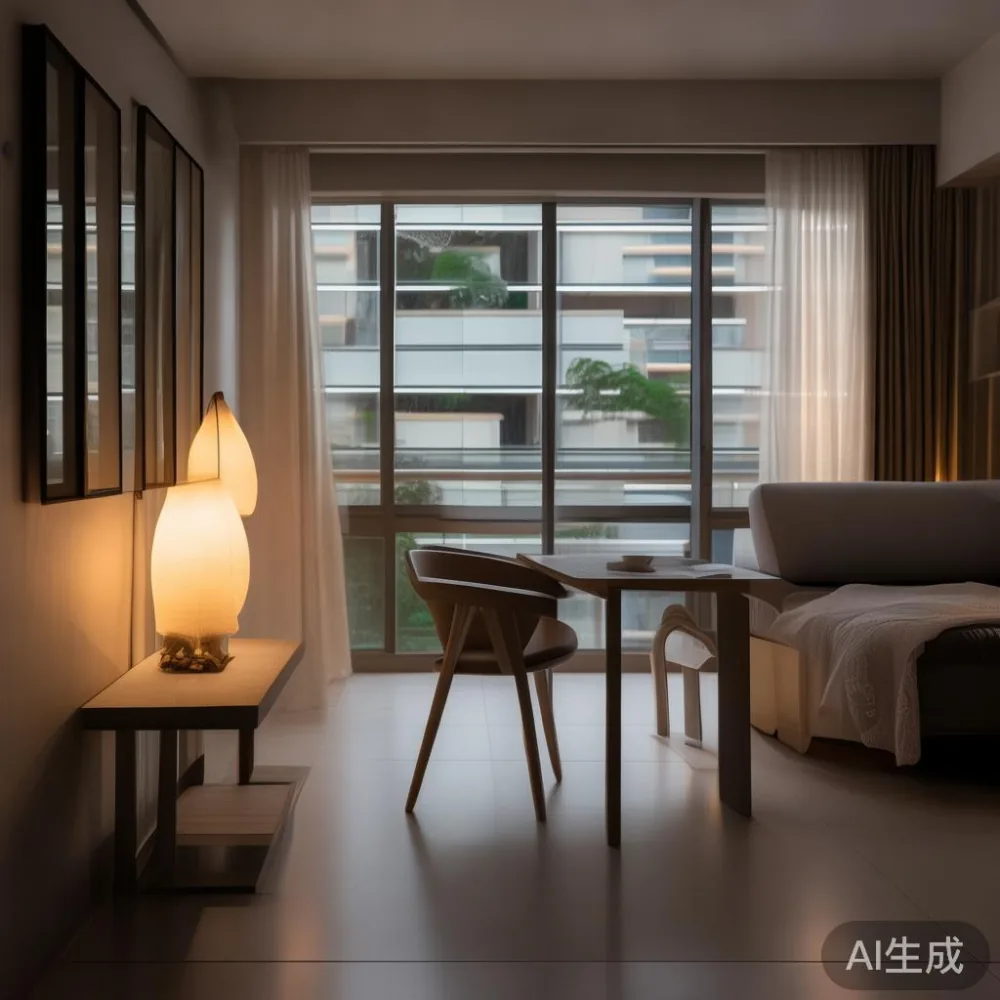
The lift issue is real and worth a paragraph. Service lifts in HDB blocks typically measure 1.1 m wide by 1.5 m deep, with a diagonal of about 1.9 m. A 240 cm wardrobe will not fit diagonally, and a 200 cm sofa will not fit straight in. Pieces ordered from overseas retailers sometimes arrive on pallets wider than 120 cm, triggering a S$60-120 hoisting surcharge per floor. Stick to pieces under 180 cm in their longest dimension and you save that surcharge every time you move.
This is why minimalist furniture is not a style preference for compact HDB living; it is a structural necessity. The whole category is built around thinner profiles, exposed legs, and negative space between objects.
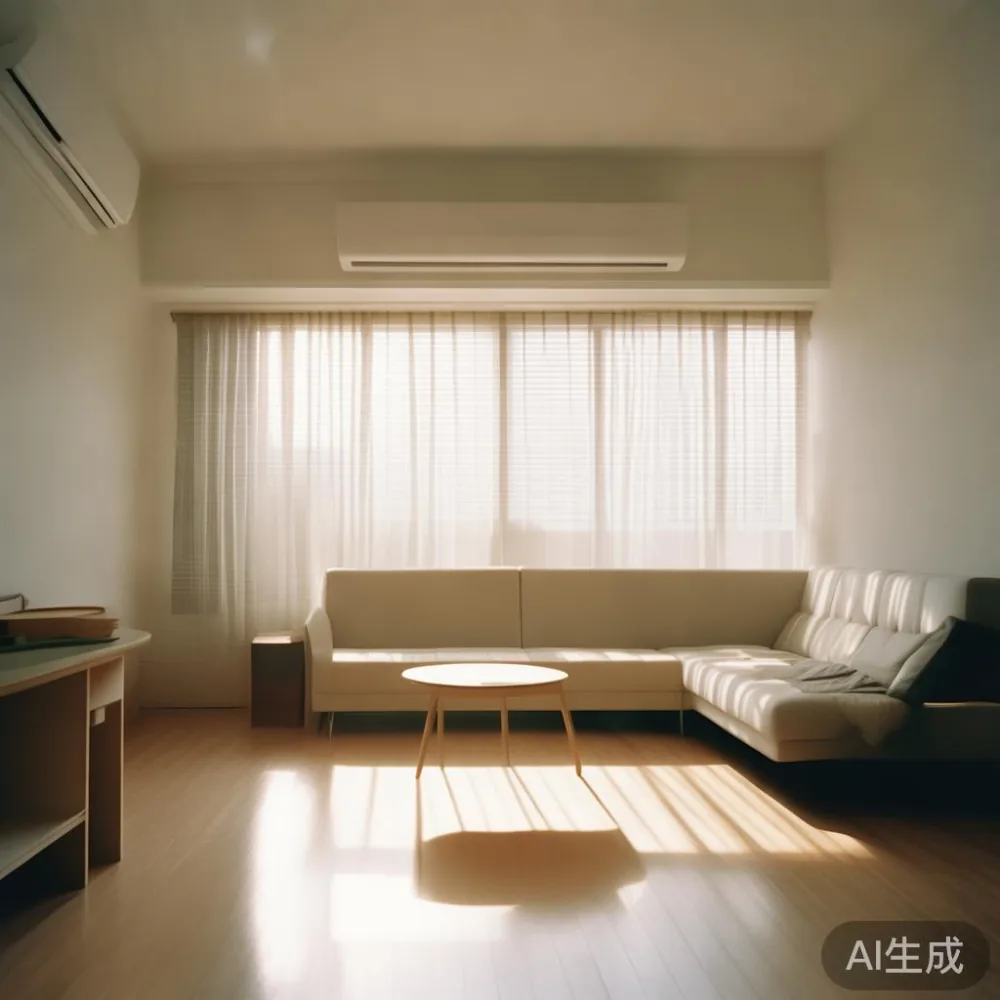
The first rule: subtract before you add
Before you spend a single dollar, walk through the flat with a roll of painter's tape. Mark the footprint of every existing piece on the floor. Then mark the walkway paths you actually use: from the bedroom door to the bathroom (about 90 cm wide is comfortable), from the kitchen to the dining spot, from the entrance to the sofa. Anything in those taped paths either moves or gets smaller.
My colleague taped out a 180 x 90 cm rectangle for the old dining table. The new dining table from MIDHILL, a 140 x 70 cm solid wood piece in light oak, sits inside a smaller outline and still seats four comfortably because the chairs are armless and fit flush under the tabletop. He recovered about 0.7 sqm of walking space, which sounds trivial until you live with it.
This is the core idea of minimalist furniture: every piece earns its footprint by being slimmer, lighter visually, or both.
Is Italian light luxury master bed furniture worth it?
Yes, but only for buyers who treat the bed as a long-term anchor piece, not a decoration, and who measure their room twice before falling in love with any product photo. Italian light luxury master bed furniture typically delivers a low platform profile (12-18 cm from floor to top of slats), a 145-180 cm headboard with subtle channel stitching, and a base in solid ash or beech rather than chipboard. In a Singapore master bedroom measuring 3.2 x 3.8 m, that low, clean-lined silhouette preserves ceiling sight lines and stops the bed from feeling like a cargo crate.
The reasonable price band is S$2,400 to S$4,800 for a queen set including headboard and slatted base. Anything under S$2,000 is almost always MDF wrapped in leatherette; anything over S$6,000 adds a designer name more than material. The honest test is weight: a genuine Italian light luxury queen base should weigh 55-75 kg, and you should feel solid timber when you tap the side rail with a knuckle.
I visited a friend's Punggol condo last month where they had bought a queen Italian-style bed for S$3,200. The lift fit was tight at 1.05 m wide and required a 15-degree tilt, which the delivery team handled free of charge under the same-day contract. That kind of delivery grace matters in a HDB corridor.
Sizing every principal piece to Singapore room realities
The sofa. A 2-seater at 160-170 cm wide works for most 4-room HDB living rooms, where the usable width between the TV console wall and the opposite wall is often 2.8-3.2 m. A solid wood sofa in ash or white oak with a 12-15 cm leg clearance gives you two practical wins: the eye sees floor underneath, and a robot vacuum (typically 33-35 cm tall) can pass beneath without crashing into the base. Budget S$1,600 to S$2,800 for a good 3-seater in solid wood; budget S$1,100 to S$1,800 for a 2-seater.
The dining table. Four people need 120 cm of table length minimum. Six people need 160-180 cm. If you only host four most nights and occasionally entertain six, choose a 140 cm extendable table. MIDHILL's extendable oak dining table runs 140 cm normally and extends to 190 cm, with a self-storing leaf in 18 mm solid hardwood. Closed, it occupies 1.0 sqm; opened, 1.33 sqm. That 0.33 sqm is the price of hosting your in-laws for a steamboat dinner about four times a year. Worth it, in my opinion.
The wardrobe. For two sharers, a 180 cm wide three-door wardrobe is the sweet spot. Anything wider is hard to move through the corridor. Sliding doors save the 60 cm of swing clearance that hinged doors demand; in a 3 x 3 m bedroom, that 60 cm is the difference between fitting a nightstand or not.
The nightstand. Aim for 40-45 cm wide and 50-55 cm tall, matching bed-frame height. A pair costs S$320-580 in solid wood with one drawer and an open shelf.
The accent. A marble table for the entryway or the corner beside a reading chair, 50-60 cm in diameter, costs S$380-650 and reads as a deliberate focal point rather than clutter.
Materials, finishes, and what ages well in a tropical climate
Singapore averages 82-86% relative humidity year-round. That single number rules your material choices. MDF swells; laminated chipboard peels at the edges within 18-24 months in a non-air-conditioned bedroom; vinyl-wrapped doors delaminate near the kitchen.
Solid wood is the quiet winner here. White oak, ash, and teak all handle humidity swings better than engineered boards, provided the joinery allows the timber to move. Look for frame-and-panel construction on wardrobe doors, dowel-and-mortise joints on bed frames, and tongue-and-groove on dining table tops. Kiln-dried timber that has been acclimatised in a Singapore warehouse for 30-60 days before assembly is the safest bet; otherwise expect 4-8 mm of seasonal movement in the first monsoon cycle.
Finishes should be either hardwax oil (reapply every 18-24 months) or a low-VOC water-based lacquer. Avoid glossy polyurethane in bedrooms; it yellows and looks dated within two years. A matte or satin finish forgives dust and the occasional fingerprint, both of which you will have plenty of.
Upholstery fabrics in this climate should be removable, washable, and ideally solution-dyed so fading from the east-facing window is gradual and even. A light grey or oat boucle is forgiving, while pure white linen looks elegant for about three weeks before the reality of two adults and a Teh Tarik habit sets in.
Light luxury positioning: French, American, and post-modern variants explained
You will see the phrase light luxury attached to furniture more times than you can count, and the three common sub-styles behave differently in a small flat.
French light luxury leans into curves, cabriole-inspired legs (straightened into contemporary slim profiles), and soft champagne or muted pastel palettes. It photographs well and forgives slightly imperfect walls because the eye is attracted to the silhouette. The risk in a 65 sqm flat is that two or three French pieces make the room feel like a curated showroom rather than a home.
American light luxury is straighter, with deeper seat depths (60-65 cm versus the European 55 cm) and lower backrests. It suits Singapore HDB living rooms because the proportions are designed around relaxed lounging, and the chunkier cushions visually anchor a flat-screen without competing with it.
Post-modern light luxury is the most disciplined option for tight footprints: geometric bases, asymmetric shapes, and contrast trim rather than ornate detail. A post-modern light luxury dining table might pair a 6 mm sintered stone top with a blackened steel or solid ash base. In a 4-room HDB, one post-modern piece is plenty. Layer two or three and the room tips into trying-too-hard.
Pick one direction and let the rest of the pieces echo it quietly. Mixing all three in one 38 sqm living room looks like a furniture catalogue rather than a home.
Delivery, warranties, and the unglamorous logistics
The piece you love and the piece that actually arrives at your door can be two different products. Singapore-specific delivery constraints deserve attention before checkout.
Most Foshan factories ship from China port to Singapore port in 18-28 days by sea, plus 5-9 days for customs clearance and local delivery. White-glove delivery that includes carry-up to your unit typically adds S$80-180 per order. Hoisting surcharges for items that cannot fit the lift range from S$60 per floor for small items to S$220 per floor for large wardrobes; ground-floor units pay nothing.
MIDHILL includes GST, free delivery above US$350 (about S$470), a 14-day return window, and a 10-year structural warranty on solid wood frames. The lifetime refinishing promise is rarer than it sounds; most importers cover finishes for 12 months only. If you have children or pets, that longer coverage is the kind of boring-but-real benefit you should weigh as heavily as the price tag.
Always confirm three things in writing before paying a deposit: the exact packed dimensions of each carton, the assembled dimensions of the largest single piece, and the route plan for entry (which lift, which staircase, any turns that need navigation). Reputable suppliers answer these within a working day. Anyone who deflects is signalling trouble.
How do you style a small apartment without it feeling crowded?
By treating emptiness as a feature rather than a failure. Three rules cover most cases.
One: keep the longest wall mostly empty. A single horizontal line of furniture along a 3.5 m wall makes the room feel twice as wide as the same wall loaded with a console, a bookshelf, and a sideboard.
Two: pick one material per room and let it repeat. If the dining table is oak, the nightstand is oak, and the TV console is oak, the room reads as calm and intentional. If those three pieces are walnut, teak, and pine, the room reads as chaotic even if every other choice is right.
Three: limit contrast. Use two neutral tones plus one accent across the entire flat. Beige, off-white, and a single dark colour (deep green, oxblood, navy) works in every HDB resale I have seen. Adding a fourth colour, particularly a bright one, is the most reliable way to make a small space feel cluttered.
Light luxury styling responds well to brass or matte black hardware, a single piece of framed art per room (60 x 80 cm is the sweet spot), and one plant per 10 sqm. More than that and the room crosses the line from curated to crowded.
A worked example: furnishing a 4-room Punggol flat for under S$10,000
Concrete numbers help more than any other section of an article like this, so here is a realistic budget I wrote up for a 92 sqm Punggol 4-room HDB.
Solid wood queen bed frame with slatted base and headboard, oak, Italian light luxury lines: S$3,200. Two nightstands in matching oak: S$460. 180 cm three-door wardrobe with sliding doors and internal drawer stack: S$2,150. 160 x 80 cm solid wood dining table in ash with four armless chairs: S$1,680. 180 cm 3-seater solid wood sofa with washable cushions: S$2,450. 50 cm round marble side table for the corner: S$420. Wall-mounted TV console 150 cm in oak: S$580. Lighting (one floor lamp, two table lamps): S$380.
Subtotal: S$11,320. Adjustments: dropping the sofa to a 2-seater at S$1,950 and the wardrobe to a 150 cm two-door at S$1,640 brings the total to S$9,070 with no functional loss for a single occupant or a couple. White-glove delivery across all items: roughly S$460 combined since the supplier consolidates the shipment. Add 9% GST on top of the goods value, leaving you at about S$10,420 all-in including delivery.
For a more compact 3-room resale, the same list minus the wardrobe (use a built-in instead) and the TV console lands at about S$7,650 all-in.
Common mistakes that ruin the minimalist effort
The single most common mistake is mixing wood tones without a plan. Walnut bed frame, pine wardrobe, oak dining table, teak shoe rack: four different tones in one flat. Pick two adjacent tones and stay there.
The second mistake is over-using the word "minimalist" to justify cheapness. A S$280 chipboard bedside table from a marketplace app is not minimalist; it is just thin. Real minimalist furniture relies on quality and proportion, not on the absence of substance.
The third mistake is treating negative space as a container for more objects. The whole point of minimalist furniture is that the empty area around it stays empty. Every new piece should pass the question: does this clear at least 70 cm of walking path or open floor area on the surface it occupies?
The fourth mistake is ordering a heavy or oversized piece because the price was attractive. A king-size bed frame in a 3.2 x 3.6 m master bedroom leaves you 60 cm of walking room on one side and 90 cm on the other. That asymmetry will bother you for years.
Finally, consider a Nordic chaise lounge korea angle when you are choosing the secondary seating. A slim-lined oak chaise for a small study nook is about 150-160 cm long, fits against a single wall, and provides the kind of daily-use furniture that visually relaxes a flat without competing with the main sofa.
A short checklist before you click pay
Confirm the three longest dimensions of each carton and the assembled dimensions of the largest piece. Confirm the lift width and the corridor tight point on your floor. Confirm the warranty in writing: structural coverage (10 years is generous, 5 years is acceptable), finish coverage (lifetime is rare and meaningful, 2 years is standard). Confirm the return window (14 days is the Singapore norm; less than 7 days is a red flag). Confirm the lead time end-to-end, because a 6-week wait is normal and a 3-week promise is sometimes fiction.
And finally, walk the room once more after delivery and remove anything you do not actually use within seven days. That seven-day rule is the simplest minimalist furniture filter ever invented. If you have not touched an object in a week, you will not touch it in seven years. Pass it on, and let the room breathe.