How Southeast Asian Humidity Shapes the Lifespan of Minimalist Furniture
I learned this lesson the hard way last October. A family in Tampines bought a beautiful solid wood dining table from a local retailer, and within nine months the panels had cupped 2 mm along the seams. They called me in to look at it. The retailer had sourced the table from a kiln that dried the wood to roughly 8% moisture content, perfectly fine for a cold European warehouse, but completely wrong for a 9th-floor HDB flat in Singapore where ambient relative humidity sits between 70% and 85% for most of the year. The wood tried to equalize itself with the room, and the geometry of the table paid the price.
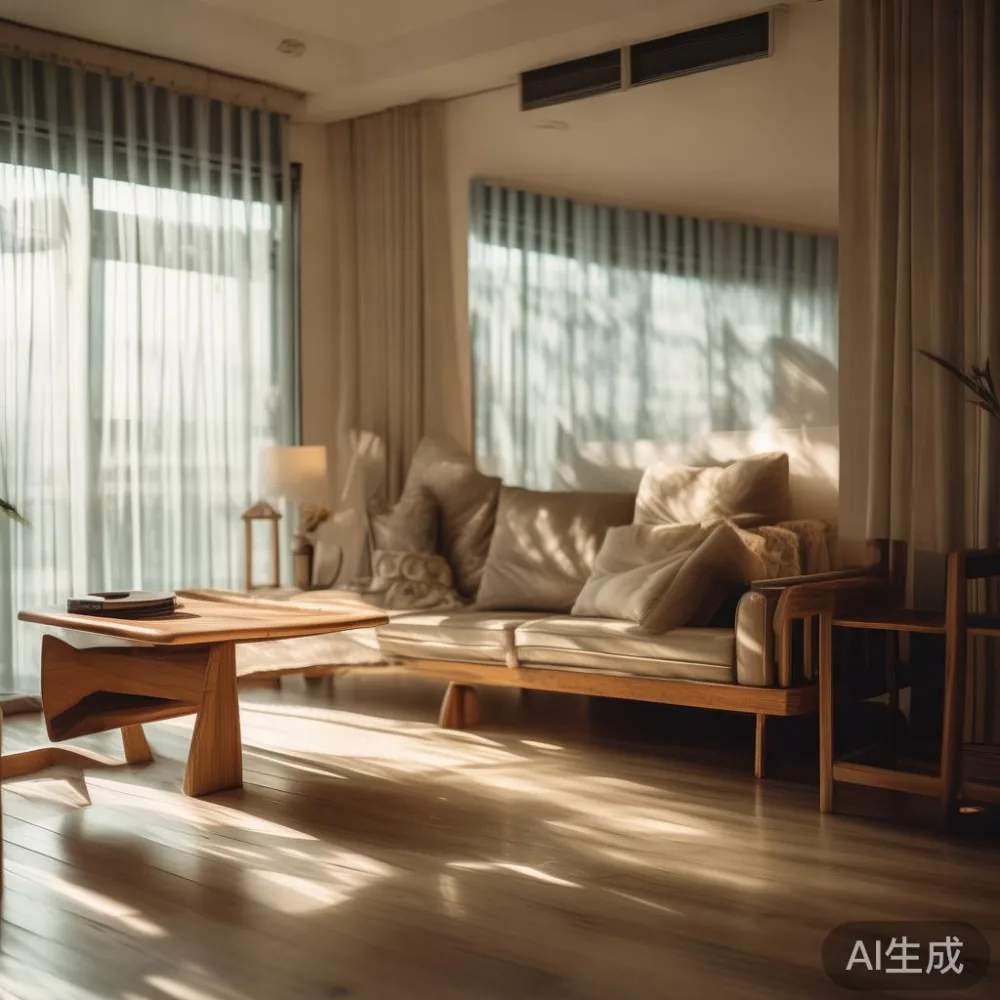
Why Does Southeast Asian Humidity Wreak Havoc on Solid Wood?
Wood is hygroscopic. It absorbs and releases moisture until it reaches equilibrium with the surrounding air, and along the way it expands across the grain (roughly 2-3% tangentially, 1% radially per 4% change in moisture content for oak, ash, and walnut). In Singapore, bedrooms without air-conditioning often sit at 28°C and 80% RH, which pushes wood to an EMC (equilibrium moisture content) of around 16-18%. Furniture built for drier climates, say 10% EMC, will swell when it lands here. Over 12 months, a 200 cm wide solid wood dining table top can gain 4-6 mm in width, and that movement concentrates at the weakest joint.
This is exactly the problem that good design solves. The frame on a quality bed frame should be built from boards that have been acclimated and joined with allowance for seasonal movement: floating tenons, elongated pocket-hole slots, breadboard ends with slotted holes for the long grain. When I visited the MIDHILL workshop last month, their stock for Southeast Asian orders was resting in climate-controlled rooms at 20°C and 65% RH for a minimum of 21 days before assembly, which brings the EMC closer to 13% and dramatically reduces the gap between factory and customer.
Does Singapore HDB Layout Make the Problem Worse?
HDB corridors are 1.2 m wide, lifts are typically 1.0 m deep with 2.0 m heights, and doors measure 0.9 m wide by 2.1 m tall. These tight dimensions work against you if you order an oversized solid wood sofa or a wardrobe that has not been modularly designed. A 2.4 m wardrobe will not fit through a HDB door diagonally, but a modular wardrobe assembled from three 0.8 m sections will. This is why minimalist furniture built for export markets is usually engineered in modules of 60-90 cm: it survives the lift, the corridor, and the staircase.
I toured a Punggol condo recently where the owner had measured his lift opening at 0.95 m before ordering a 1.0 m marble table top. The table refused to enter, and the mover charged SGD 180 for an aborted trip. The math is unforgiving. Always measure the lift depth, the corridor turning radius (usually 1.5 m at corners), and the front door before placing the order. A good brand will publish exact carton dimensions and a delivery plan that flags access issues.
What Is the Difference Between American Headboard and Modern Furniture?
An American headboard is a large, upholstered or solid-wood panel, usually 140-180 cm wide and 110-130 cm tall, designed to sit against a king or queen mattress frame and serve as the visual anchor of a master bedroom; modern minimalist furniture, by contrast, rejects the decorative, the heavy, and the ornate in favor of thinner profiles, exposed joinery, and natural materials at 30-50 kg per bed frame rather than 70 kg.
The split between the two styles is real and it matters in Singapore. American-style headboards tend to be 8-12 cm thick, which traps humidity against the wall and creates a black mold risk in a 3-room HDB. Slim modern headboards, often 3-5 cm thick with ventilation gaps, breathe. If you want the visual weight of an American headboard without the mildew, look for designs that use solid ash or walnut slats rather than fabric over foam, and hang the panel 2 cm off the wall with concealed spacers.
What Minimum Specifications Should a Humidity-Tolerant Sofa Have?
Look for kiln-dried hardwood frames with moisture content between 10-12%, mortise-and-tenon joints reinforced by corner blocks, and sinuous spring or high-resilience foam at 32-35 kg/m³ density. The fabric should be a solution-dyed olefin or a treated linen with a Martindale rub count above 30,000 cycles for daily use. A 3-seater solid wood sofa in this category typically weighs 65-85 kg and supports 110-130 kg per seat, which is plenty for a household that includes visiting parents during Chinese New Year.
In a Tampines 4-room flat, I watched a team deliver a 2.1 m three-seater through a 1.0 m lift by tilting the frame at 45 degrees and removing the legs. The reassembly took 12 minutes with an Allen key. This is what a proper logistics partner looks like: white-glove delivery with on-site assembly rather than curbside drop-off, especially for larger pieces where HDB corridors force creative angles.
How Can You Live Daily With Minimalist Furniture in a Humid Climate?
Run the air-conditioner or a dehumidifier to maintain 50-55% RH in living areas and 45-50% in bedrooms. A 12L/day dehumidifier costs roughly SGD 0.30 per hour to run and pulls the room down by 15-20% RH within four hours. Wipe spills within 15 minutes, rotate dining tables 180 degrees every 3 months so UV exposure stays even, and oil natural wood surfaces twice a year with tung oil or a hard wax oil. Keep solid wood pieces 15 cm away from exterior HDB walls, which can sweat during monsoon bursts and push localized humidity above 90%.
Minimalist furniture is forgiving in this regard. Fewer carvings, fewer inlays, and fewer seams mean fewer places for moisture to hide. A modern light luxury armchair japan inspired silhouette, low and wide with exposed wood rails, will tolerate 10 years of HDB living better than a heavily carved traditional piece, simply because there is less geometry to distort. The same principle applies to a marble table paired with a metal base: the marble is dimensionally stable, the base does not swell, and the piece holds its line.
Why Does Refinishing and Warranty Matter More Here Than Elsewhere?
Sun, salt air from open windows near the coast (East Coast, Pasir Ris), and 30°C ambient temperatures fade and dry wood 2-3 times faster than furniture kept in temperate climates. A solid wood nightstand that would last 25 years in Geneva might need refinishing after 8-10 years in a Bedok resale flat. A 10-year structural warranty on frames and a lifetime refinishing service are therefore not luxuries; they are baseline expectations in this market.
When a brand offers free refinishing, the surface is sanded back 0.5-1 mm, re-oiled, and returned within 14-21 working days. That single service can reset the clock on a piece and save 60-70% of the cost of replacement. Brands that export to 15 or more countries tend to have standing relationships with local workshops and can offer pickup and redelivery for around SGD 80-120 per piece, which is far cheaper than buying new.
What Pricing Benchmarks Should You Use for Quality Minimalist Furniture in SGD?
For context, a 1.8 m solid wood bed frame in ash or walnut runs around SGD 1,400-2,200 delivered; a 2.0 m six-seater dining table in similar materials, SGD 2,800-4,500; a 2.4 m three-door wardrobe, SGD 1,800-3,200; a nightstand pair, SGD 600-900; a solid wood sofa in three-seater configuration, SGD 2,200-3,800; a round marble table 120 cm across, SGD 1,500-2,400. These are workable ranges for light-luxury positioning, which is to say pieces built around quality joinery and natural materials without the markup of designer labels.
Free shipping thresholds above US$350 typically translate to free delivery above roughly SGD 480-500 in Singapore, once GST (9% as of 2024, moving to 8% in stages through 2028) is included. Always confirm whether the advertised price is pre-GST and factor that into the comparison. A 14-day return window is enough time to check the piece for moisture damage, joint tightness, and finish consistency, as long as you keep the packaging intact.
How Should You Vet a Brand Before You Order?
Ask for the kiln-dried certificate, the EMC reading taken at the time of crating, and a sample of the wood species in your hand. Confirm that the joinery is visible in product photos and that major panels float rather than being glued rigidly across the grain. Check whether the brand offers on-site assembly, what its lead time is from Foshan to Singapore (typically 18-28 days by sea, 7-10 days by air for an extra SGD 200-400), and whether its warranty honors wear-and-tear refinishing in this climate. Brands like MIDHILL publish their process openly and welcome factory tours, which is a good sign that the supply chain is built for export rather than for showrooms alone.
Finally, think about the room before you buy. A Bedok 5-room flat with morning sun on one wall will punish dark walnut differently than a north-facing Punggol unit with consistent indirect light. A light-luxury post-modern palette in white oak or ash will forgive more sins, hide dust better, and pair with the kind of clean lines that minimalist furniture does best. Choose once, choose well, and the same solid wood bed frame or marble table will still look composed ten years and three coats of oil from now.