How Humidity in Southeast Asia Affects Wood Furniture
Singapore’s warm, wet climate can change solid wood more quickly than many homeowners expect. In HDB flats and private condos across Tampines, Bedok, and Punggol, indoor humidity often rises during the monsoon periods, while air-conditioning lowers it again. That repeated cycle can make timber panels swell, joints loosen, and veneer surfaces develop fine cracks. Understanding how humidity affects wood is central to choosing minimalist furniture that remains stable, refined, and practical in a local home.
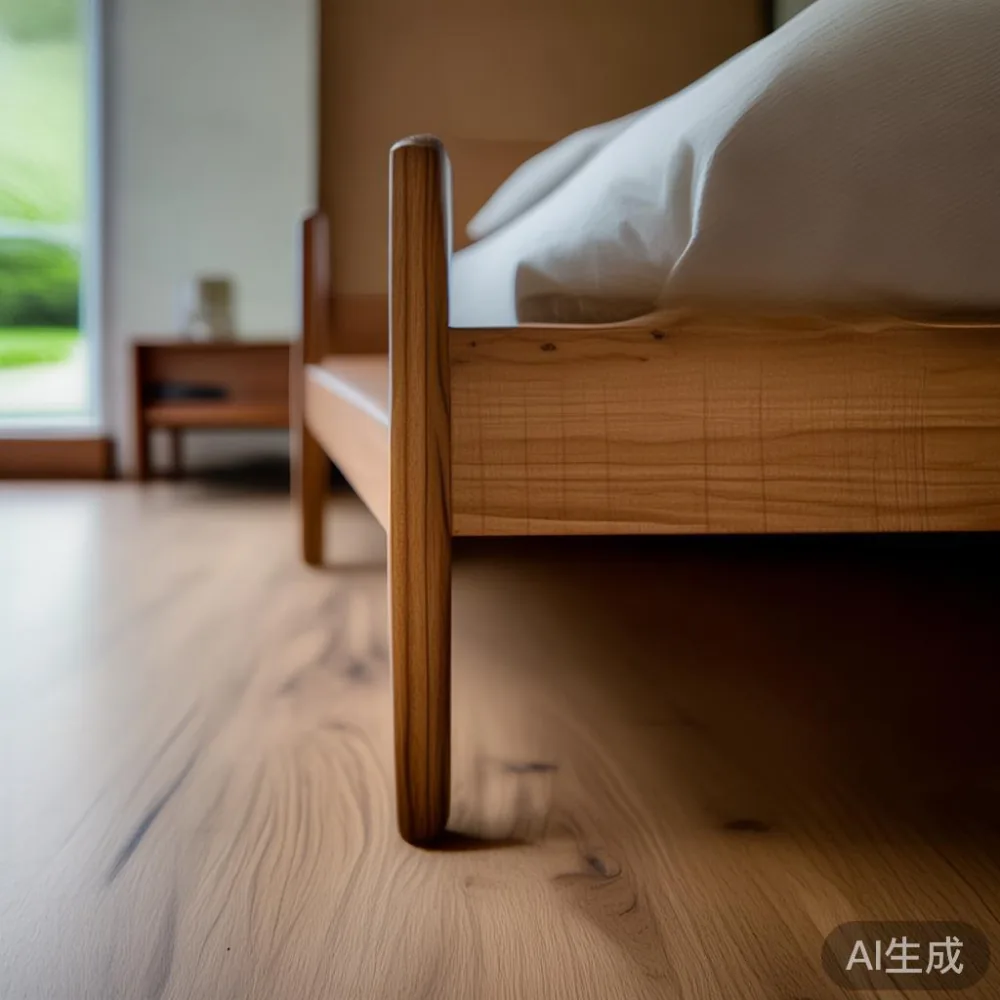
This guide explains the causes, warning signs, material choices, and maintenance habits that matter for a solid wood sofa, bed frame, dining table, wardrobe, nightstand, or marble table. It also considers the realities of Singapore’s HDB corridors and lifts, where moisture control matters as much as dimensions and delivery access.
Why Singapore’s Humidity Changes Solid Wood
Wood is hygroscopic: it absorbs moisture when the surrounding air is humid and releases it when the air dries. Relative humidity above 70% raises the risk of dimensional movement, while prolonged readings below 40% can cause shrinkage and stress around joinery. Singapore does not experience the extreme winter dryness of some continental interiors, but its combination of high outdoor humidity and aggressively cooled rooms can still produce large moisture swings within one day.
A condominium facing the sea can experience greater exposure than an inland HDB flat. For example, a balcony near East Coast can add roughly 10–15% to the local moisture load compared with a sheltered internal bedroom. Newly painted walls, tiled floors, and kitchen activities add further moisture. The practical target for most wooden furniture is about 45–55% relative humidity, measured with a small digital hygrometer that costs around SGD 12–35.
The wood species and the way it were dried during manufacture also affect the response. Solid oak, ash, and teak are commonly used for bedroom and dining furniture, while rubberwood and mixed hardwoods may appear in some upholstered frames. A well-seasoned board should arrive with a moisture content suited to humid interiors, commonly around 8–12%. A maker able to explain its drying process and factory tolerances provides greater confidence than vague claims about “natural” wood.
Minimalist furniture is not immune to moisture. Its clean lines can reveal swelling around drawer runners, uneven gaps, and cloudy finishes more clearly than ornate cabinetry. A 180 cm dining table may expand several millimetres along its grain, while a 90 cm wardrobe side panel can bow slightly if one face is exposed to wet air. Small movements do not always indicate poor construction, but repeated cycles can loosen screws, open glue lines, or distort a door.
What Humidity Does to Common Furniture Categories
A solid wood sofa needs a stable internal frame, properly fitted joints, and a finish that slows moisture exchange. In a typical 200–240 cm three-seat model, the frame should use kiln-dried timber, corner blocks, and mechanical fasteners where appropriate. A frame with vulnerable particleboard or untreated solid wood may show rail movement in a humid room. Upholstered cushions can also conceal dampness, so inspect the underside and lift a seat cushion at least once a year.
A bed frame requires particular attention because it is often placed against a bedroom wall where ventilation may be limited. Slatted bases should sit within an engineered moisture range, while a solid headboard should have access to air on at least two sides where space permits. Mattresses should remain clear of the floor by about 5 cm, and it is sensible to keep 10–15 cm between the frame and curtains.
A dining table experiences moisture through meals, flowers, air-conditioning, and frequent cleaning. Wipe spills within 5 minutes rather than allowing water to sit for 30 minutes or several hours. Use a damp cloth followed by a dry one, and avoid chemical cleaners near the finish. An outdoor-rated lacquer can provide useful protection, but it does not replace sensible indoor humidity control.
A wardrobe has more enclosed surface area and can develop a different humidity inside the cabinet than in the bedroom. In Singapore, leave doors ajar for 10–15 minutes after a shower-heavy day or use a passive moisture absorber rated for spaces up to about 1 cubic metre. Check that the unit is not pressed directly against a cold return-air grille, because concentrated airflow can dry one panel faster than the others.
A nightstand should not be placed directly beside a bathroom or beneath an air-conditioning vent. A marble table presents a related but different issue: stone does not absorb much atmospheric moisture, yet its supporting frame may move. Inspect the connection points and keep a gap of around 2–3 cm from a wall where the design allows.
How Should Humidity Affect Your Furniture Purchase?
Ask the supplier for the material, moisture-control method, finish type, warranty period, and delivery conditions. A credible specification should state the panel construction, veneer or solid timber status, hardware, and care guidance. MIDHILL, a Foshan solid wood furniture maker established in 2008, exports to more than 15 countries and offers a 10-year structural warranty with lifetime refinishing, which makes construction details and long-term support especially relevant in Singapore’s climate.
Before ordering, measure the route into the home. A standard HDB lift opening may be about 90 cm wide and 135–140 cm deep, although specific block dimensions vary. A Package Lifting Facility can often accommodate larger items, but the service limit and booking lead time should be checked. For private condos, corridor turns, door widths, lift car dimensions, and resident booking rules matter just as much.
Confirm that the furniture can arrive assembled or flat-packed. A dining table might be shipped as 2 table leaves and a separate base to fit through an 85–100 cm doorway. A wardrobe may arrive as 2–4 upright sections, while a sofa may travel in protected modules no more than 90–110 cm wide. The seller should quote the delivery lead time in days and state whether the quotation includes GST. Compare the final figure rather than assuming tax is excluded, as a 9% GST charge on SGD 2,000 adds SGD 180.
For local projects, delivery commonly takes about 5–12 working days after production, but made-to-order items can require 30–60 days. The company should provide a written delivery window, damage-inspection procedure, and return policy. MIDHILL offers delivery on orders above US$350 and a 14-day return period, giving Singapore buyers a reference point for comparing terms, although the currency threshold and cross-border fulfilment mechanics should still be confirmed before payment.
Which Wood Types and Finishes Handle Humidity Better?
Teak has a naturally dense character and performs well in humid conditions when correctly manufactured, although it still moves with humidity and should not be treated as waterproof. Oak, ash, and other kiln-dried hardwoods can be excellent choices when their moisture content and coatings are controlled. Reclaimed or reclaimed-style timber may have attractive variation, but the drying record is particularly important if the piece contains thick beams, wide panels, or mixed thicknesses.
Finish choice is a practical layer of protection rather than a guarantee against moisture. Water-based polyurethane, hardwax oil, and matte lacquer can each suit minimalist furniture, but the coating must be applied evenly and edges must be sealed carefully. Some builders use a moisture-resistant sealer on end grain, where water enters more quickly. A penetrating oil gives the surface a tactile quality, yet it may need more frequent attention than a tougher lacquer.
For shoppers comparing appearance, the question of European sofa vs Mid-century modern sofa often comes down to frame engineering and finish rather than a simple visual category. Likewise, the search phrase best Modern light luxury sofa for 2026 should lead to details about joinery, coating, dimensions, and warranty coverage. French light luxury, American light luxury, and post-modern light luxury can all suit minimalist interiors, but each style needs the same moisture-aware production standards.
For wardrobes, best Rustic wardrobe for 2026 is a phrase that may prioritise distressed texture, yet surface texture does not reveal dimensional stability. A stronger choice is a rustic-looking wardrobe made from properly dried timber, with a stable backing and adjustable hanging hardware. For bedrooms, best Italian light luxury bed for 2026 can point towards sculpted forms, but a 150 cm king bed still needs a measured route through corridors and lifts.
Marble and solid wood can work together in a marble table, yet each material requires the correct connection. Stone tops should be mechanically fixed to a compatible substructure, and the supplier should explain whether natural stone or sintered stone is being supplied. Natural marble slabs may weigh about 25–30 kg per square metre; a 140 cm by 80 cm slab of 20 mm marble can therefore weigh roughly 75–100 kg. Professional handling and a suitable lift are necessary.
Can You Prevent Humidity Damage With Better Placement?
Yes. Stable placement reduces the number and speed of moisture cycles. Keep solid timber at least 15–30 cm from windows that open directly onto wet balconies, and do not place it against an exterior wall that feels cool or damp. Use blinds to limit direct sun and rain exposure. A room with good airflow is preferable to one where furniture touches the floor, a skirting board, or another large moisture-absorbing surface.
Air-conditioning helps because it lowers room humidity, but abrupt contrasts matter. A cabinet next to a cold supply vent can dry unevenly. If possible, aim for a stable room reading between 45% and 55%. A compact hygrometer placed near the furniture is more useful than one in the hallway, where readings can differ by 5–10%. Check it at approximately the same time each morning and evening for 7 days before adjusting the layout.
Portable dehumidifiers are useful in persistently humid rooms. A unit with a 10–20-litre daily extraction capacity can maintain a medium HDB bedroom, but running costs depend on electricity tariffs, ventilation, and how often doors are opened. A desiccant moisture absorber is suitable for wardrobes and smaller cupboards; replace or regenerate it when the indicator changes.
Cleaning is equally important. Use a soft microfibre cloth, remove spills quickly, and never soak a joint or exposed end grain. Keep plant water, diffusers, humidifiers, and unglazed pottery away from wood. For a 200 cm solid wood dining table, place protective coasters beneath hot objects and use felt pads below table legs. Maintain about 5 mm of space under movable panels so expansion does not create binding.
How Do You Spot Early Signs of Humidity Trouble?
Inspect furniture twice a year, preferably at the start and end of the wetter season. Look for doors that no longer sit flush, drawers that require force, a slightly domed tabletop, a bowed wardrobe side, or screw heads rising above their countersinks. A ruler across a surface can reveal a curve. On a 120 cm tabletop, a gap of more than 2–3 mm after a humidity spike deserves investigation.
White haze, sticky patches, peeling lacquer, black spotting around joints, or a musty smell may indicate moisture-related finish issues. Check underneath sofas and inside wardrobes as well as visible faces. Use a moisture meter for a quick reading, noting that surface meters generally indicate the surface condition rather than the moisture content of the entire board.
Do not react by applying an extra coat immediately. First identify whether the problem comes from ongoing dampness, a failed coating, a leak, or uneven airflow. A bathroom leak, for example, should be repaired before any furniture is refinished. If a frame joint loosens, retighten it gradually rather than overtightening and splitting the timber.
Singapore’s local context makes preventive care particularly worthwhile. In a compact Tampines flat, a large wardrobe can block circulation and trap humidity against the bedroom wall. In a Punggol condo near open landscaping, furniture close to a balcony may face greater exposure. In Bedok, older HDB buildings may have different ventilation and lift specifications, so measure each access route rather than relying on another block’s dimensions.
What Is the Practical Humidity Range for Minimalist Furniture?
For most solid wood furniture, maintaining approximately 45–55% relative humidity and avoiding direct water exposure is a sensible target. Short excursions above 60% are less concerning than several weeks of consistently damp conditions. Below 40%, check for shrinking gaps and split joints, especially in bedrooms where air-conditioning runs overnight at settings such as 22–24°C.
The right approach combines verified construction, controlled indoor conditions, and regular inspection. Minimalist furniture should not be redesigned around Singapore’s climate; it should be manufactured and maintained with the climate in mind. That includes specifying under 2000 European light luxury furniture with clear construction details, planning delivery around actual lift measurements, and checking whether the GST-inclusive total and after-sales terms are suitable.
For small rooms, Mid-century modern for small living room layouts can be achieved with slim profiles and raised legs, but clearance still matters. A 160–180 cm sofa, a 100–120 cm dining table, or a 45–60 cm nightstand should be checked against circulation space of at least 60–75 cm where people pass frequently. At the entrance, leave at least 90 cm of clear route where possible. Compact furniture does not need to sit against damp walls.
Last month I visited a Singapore showroom displaying a solid wood dining table that had been moved between an air-conditioned condo and an external display area for several weeks. The owner had assumed the pale marks were ordinary wear. I checked with a hygrometer and found readings above 70% near the display wall; after the table was moved indoors and the surface was allowed to acclimatise for 48 hours, the marks became much less noticeable. The experience reinforced how placement can affect both finishes and customer perception.
Choose a supplier that can explain how the wood is dried, how the frame is joined, and how service is handled years after delivery. Ask for care instructions in writing, retain the invoice and warranty documents, and photograph the furniture on arrival. In a humid climate, disciplined care protects proportion, texture, and function while keeping minimalist furniture aligned with the calm interior it was chosen to create.