Wood Furniture in Singapore: Working through Southeast Asian Humidity
Humidity is rarely the first thing Singapore homeowners think about when buying minimalist furniture. A bed frame, dining table, wardrobe or solid wood sofa looks simple in a showroom, but its timber continues to respond to the room around it after delivery. Warm, moisture-laden air enters through windows, open doors and common corridors. Air-conditioning removes much of that moisture, yet the contrast between a cool living room and a humid balcony can still be sharp.
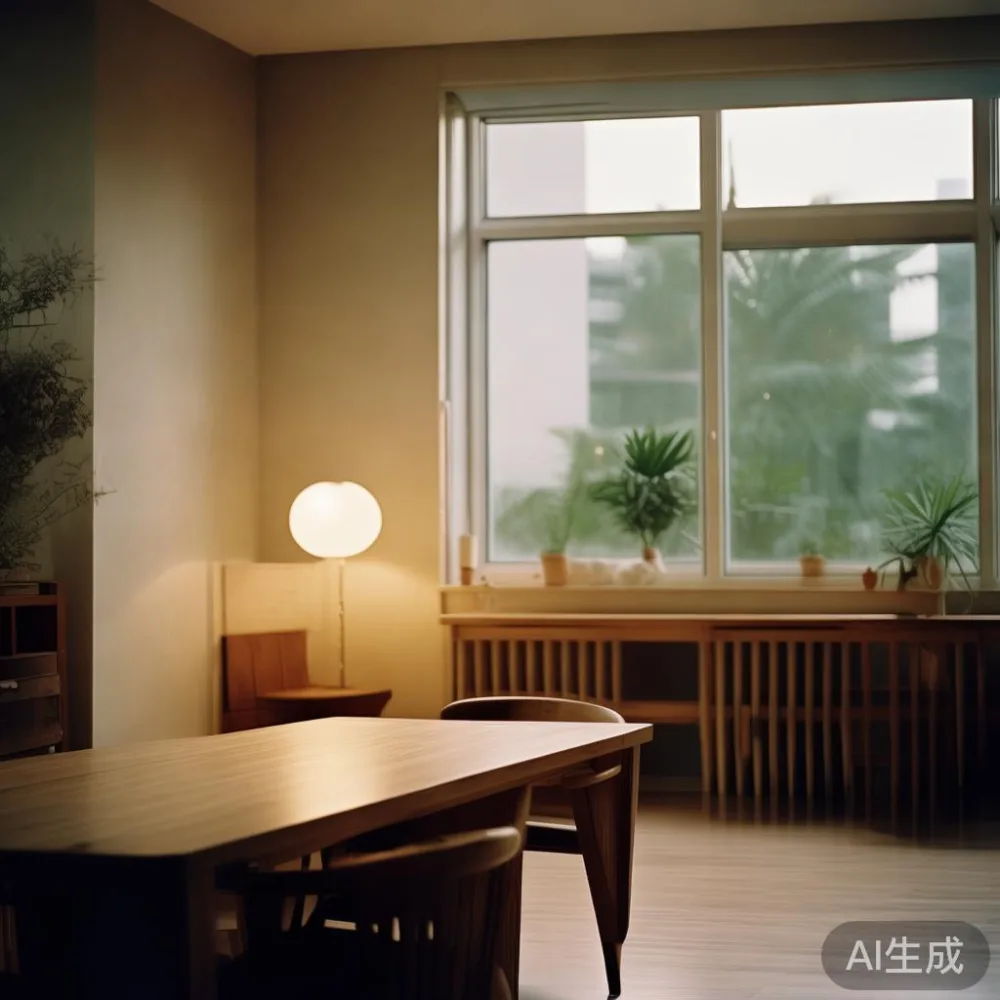
For residents of HDB flats and condominiums in Tampines, Bedok and Punggol, the practical issue is not only seasonal rain. It is the combined effect of tropical humidity, balcony temperatures, enclosed corridors, building orientation and frequent air-conditioning. Good furniture selection accounts for those conditions without turning the home into a workshop full of devices.
This guide explains how relative humidity changes solid wood, how moisture can appear as swelling, joint movement or surface marks, and what buyers should ask before ordering. It also covers delivery planning for narrow HDB lift lobbies, the value of a 10-year structural warranty, and why light-luxury solid wood pieces need careful care rather than careless uniformity.
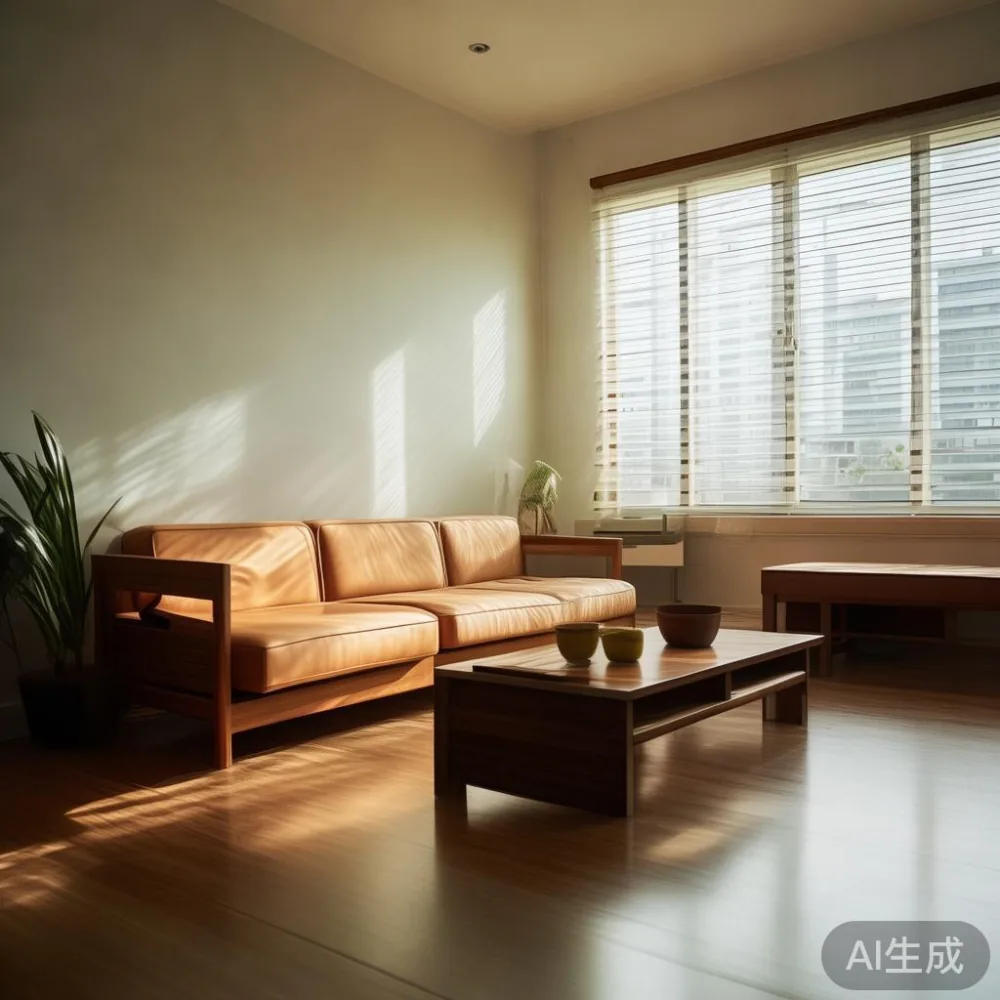
How much humidity is normal in Singapore?
Singapore’s annual relative humidity commonly ranges from about 65% to 85%, with readings sometimes exceeding 85% during wet periods. A comfortably conditioned interior often sits between 45% and 60% relative humidity. That does not mean every home must remain on one exact setting. It means wooden furniture should not swing repeatedly between a damp 80% environment and a very dry 40% environment.
Humidity is the amount of water vapour in the air, while wood moisture content describes how much water the timber itself contains. When the air is humid, wood tends to absorb moisture. When indoor air becomes dry, it gives some of that moisture back. The visible result is not usually dramatic damage. It may be a drawer that feels tighter, a wardrobe door that no longer sits perfectly, or a table top with faint clouding caused by rapid surface change.
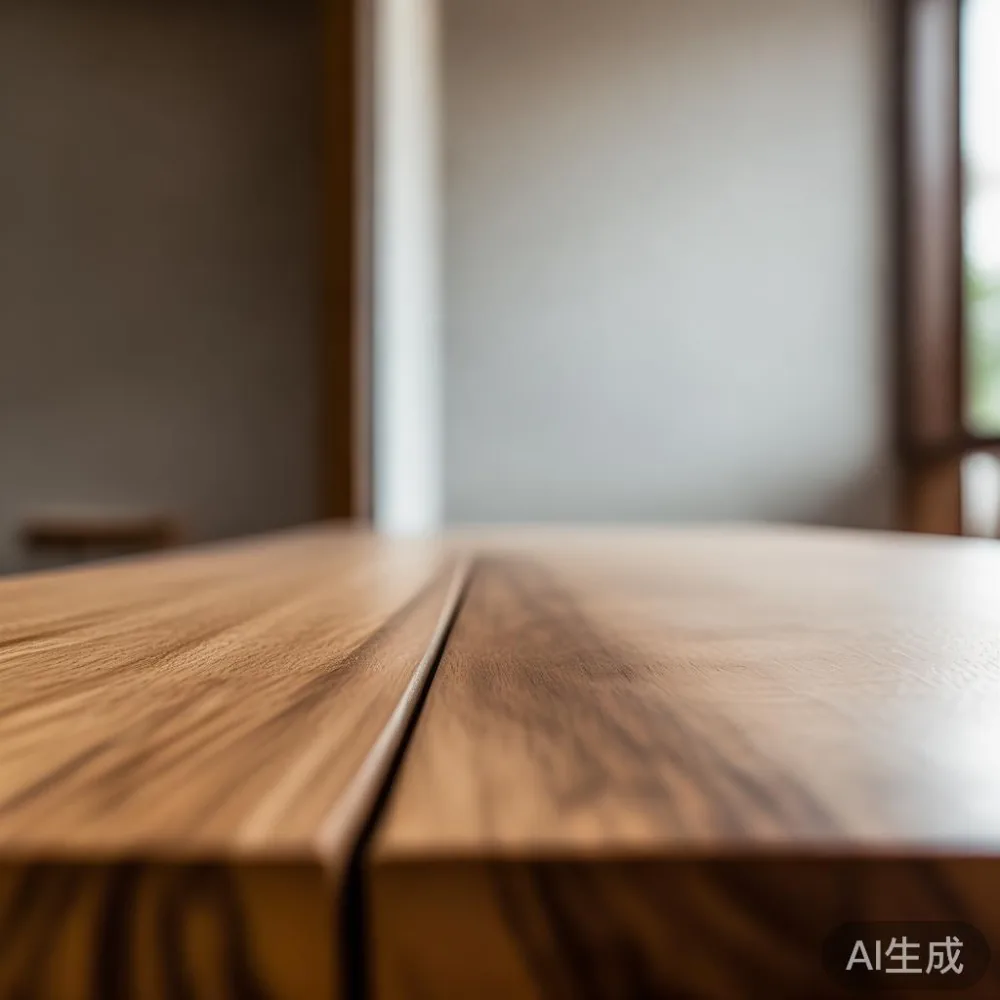
My colleague visited a HDB flat in Tampines last month to inspect a solid oak dining table delivered during a particularly wet week. The table had been kept beside an open balcony door for 3 hours before the homeowner moved it into the dining area. A moisture meter showed the exposed edge at 12.2%, while the sheltered centre measured 8.7%. After the table was moved and the room conditioned for 7 days, the difference narrowed to 0.6%. The minor movement did not ruin the table, but it showed why indoor placement and gradual acclimatisation matter.
One factor alone rarely causes a failure. A stable indoor environment, sensible placement and regular care make a larger difference than reacting to a single humid afternoon.
Why tropical humidity moves solid wood
Solid timber is hygroscopic: it exchanges moisture with the surrounding air. Hardwoods such as oak, ash and walnut have different movement rates, but each responds to relative humidity. The practical movement over a year can be measured in millimetres rather than centimetres. A 180 cm dining table may vary by roughly 2 mm to 4 mm across its width under moderate household humidity changes. A solid wood sofa with a timber base may show tiny shifts beneath its cushions, while a 120 cm wardrobe may develop gaps of 1 mm to 3 mm around doors if the unit is repeatedly exposed to damp air.
The movement is not random. Timber expands across the grain when it gains moisture and contracts when it dries. A solid wood bed frame may tighten slightly at its joints during humid nights. A nightstand may rock by less than 2 mm when its side is near an air-conditioning vent. Fine checks can also appear if a lacquered surface is heated quickly, because the wet timber beneath it changes faster than the coating.
Engineered wood is not immune. A plywood or MDF panel can remain dimensionally stable, but its edges, screw points and veneer can still react to moisture. Solid wood is not automatically wet-room furniture, and neither is a moisture problem automatically a manufacturing defect. The distinction lies in exposure, movement and whether the maker has designed the joints for normal movement.
Singapore’s kitchens and bathrooms create separate humidity peaks. Kitchens may reach 70% relative humidity while cooking; bathrooms can exceed 80% during and after bathing. A marble table with a polished stone top does not absorb moisture like timber, although its metal hardware and adjacent wooden cabinet can. Keep freestanding furniture outside these wet zones unless its construction explicitly suits the location.
Can air-conditioning damage solid wood furniture?
Air-conditioning is more likely to cause dry wood than wet wood. A system that lowers a room to 22°C can also pull the relative humidity below 45%, particularly while the building envelope remains warm and humid. When timber contracts in such conditions, joints can loosen slightly and lacquer may develop fine stress marks.
A 24°C setting combined with moderate fan speed is generally a sensible starting point for occupied rooms. Useful indicators include an inexpensive digital hygrometer placed near, not directly against, furniture. Readings around 45% to 60% relative humidity are easier to maintain than repeated swings from 75% to 35%.
Do not place a wardrobe or bed frame directly beneath a ceiling vent. Airflow should be gentle and distributed. If a cabinet stands against a sunlit external wall in Bedok, leave about 5 cm to 8 cm of ventilation space where the design permits. For a nightstand beside an air vent, rotate its position periodically rather than leaving one edge exposed all day.
Rag damp cloths should be wrung out properly. A cloth that leaves visible water on the surface can create a darker patch, especially on light oak. Wipe and dry the timber immediately. Use a slightly damp cloth for routine cleaning, followed by a soft dry cloth. Oils and waxes can slow moisture exchange, but their application should follow the finish instructions rather than a fixed internet timetable.
Will humidity cause mould, cracks or a swollen dining table?
Mould requires sustained surface moisture, poor ventilation and a suitable surface. Humid air by itself does not mean mould will appear on a finished dining table. Lift the table or wardrobe slightly off an exterior wall, and clean the floor beneath it every 2 weeks. Remove water spills within 5 minutes. In a Punggol unit facing an open laundry yard, where ventilation is good but humidity is often above 70%, check the underside of loose mats and skirting boards as well as the furniture joints.
Deep cracks are more commonly connected with excessive drying, an impact, a concealed split or an unsuitable joint design. Swelling is rarely dramatic in controlled domestic conditions. If a 200 cm solid wood dining table develops a 1 mm to 2 mm seasonal movement, that can be normal. A sharp split, a joint pulling completely apart or a door that will not close should be documented with dated photographs and referred for assessment.
Wardrobes need more clearance than many buyers expect. A freestanding unit often needs 3 cm to 5 cm behind it for airflow and service access. A 60 cm deep wardrobe placed flush against a bathroom wall can trap humidity and complicate cleaning. Bed frames should have space around their perimeter, but most require only 5 cm to 10 cm from a wall for ventilation and making the bed.
MINHILL-style care is not about keeping timber sealed in plastic. The aim is stable conditions, sensible placement and prompt attention to changes.
What should I look for when buying solid wood furniture?
Ask how the maker expects the product to behave in a tropical climate. Look for solid timber in structural areas, sound joinery and finishes suited to indoor furniture. Also check whether the warranty covers structural integrity rather than promising that timber will never move. A 10-year structural warranty can provide useful recourse for a genuine joint failure; it should not be mistaken for a guarantee against seasonal dimensional change.
Price is only one comparison point. In Singapore, include GST when comparing quotations. A dining table listed at SGD 1,580 before GST becomes SGD 1,738 at the current 9% rate. A bed frame at SGD 1,280 becomes SGD 1,395.20. A solid wood sofa at SGD 2,490 becomes SGD 2,714.10. These figures make budgeting clearer, especially when delivery, assembly and care products differ between suppliers.
Product descriptions should state dimensions in centimetres and weight in kilograms. A dining table that is 180 cm long and 85 cm wide has a different footprint from a 220 cm version. A 120 kg solid wood dining table may need a team of 2 to 3 people and a stair-climbing service in an older HDB block. A light-luxury bed frame weighing 48 kg may be manageable for 2 people but awkward through a 70 cm doorway.
MIDHILL was established in 2008 and exports to more than 15 countries, so familiarity with climate and packing should be part of the conversation. Its 10-year structural warranty and lifetime refinishing service provide a clearer ownership framework than vague statements such as “moisture resistant”. Ask for the exact scope of the refinishing service and any conditions attached to it.
How do HDB lifts and narrow corridors affect delivery?
Measure the route before ordering. HDB blocks commonly have lifts measuring around 90 cm by 140 cm, though older or atypical units differ. Corridors and door openings can be narrower than the lift itself. Compare the packaged bed frame with the lift’s narrowest internal width and height. If the carton is 48 cm wide, 22 cm deep and 165 cm long, it may enter diagonally, but turning space remains the issue.
A condensed laminated-wood bed frame can be more practical for a compact HDB bedroom than a thick solid timber frame. A 160 cm mattress may need a unit with a 165 cm external length, while a larger 180 cm mattress needs different clearances. Solid wood sofa modules should also be checked individually. A 3-seat sofa may arrive as 2 cartons weighing 42 kg and 28 kg, allowing the building’s loading area to be used without forcing a heavy parcel into a lift.
Delivery timing matters because movers may cancel when rain creates access problems. Allow 5 to 10 delivery days for standard Singapore orders, and longer if the maker is arranging a special-access appointment or international consolidation. MIDHILL offers free shipping on orders above US$350, although the local checkout should still confirm the final SGD amount, GST treatment and the date of arrival.
Customers also have a 14-day return window under the stated policy. Before accepting a large wardrobe or dining table, inspect its finish, dimensions and access route. Keep the wrapping for 7 days if possible, because a piece may look fine in a corridor but need adjustments once positioned in the living room.
Which minimalist furniture works best in a humid Singapore home?
Minimalist furniture reduces visual clutter, but humidity still follows the building. Choose fewer, useful pieces with stable construction rather than treating every room as a showroom. A solid wood dining table with a restrained straight edge is easier to maintain than one with deep mouldings that trap dust. A flat-front wardrobe reduces projections around joints, while a solid wood sofa on a sound timber base should sit on level flooring.
For a compact Tampines flat, Italian light luxury for small living room is less about ornament and more about proportion, texture and careful spacing. A 160 cm solid wood sofa may leave only 45 cm to 55 cm on either side in a narrow living room, which can make the room feel compressed. A smaller 140 cm model with 82 cm depth often creates a more usable walkway. In a Punggol condo with generous windows, minimalist furniture can use the same restrained profile while allowing larger gaps from glazing.
When comparing the European light luxury bed vs French provincial bed, consider storage, humidity exposure and room dimensions rather than style labels alone. European light luxury tends to favour clean lines, while a French provincial bed often introduces shaped headboards and carved details. For a 330 cm HDB bedroom, a European queen bed at 160 cm by 200 cm leaves about 85 cm of total width around it; a 180 cm king at 180 cm by 200 cm leaves 75 cm. Those combined clearances must still accommodate wardrobes and bedside access.
The phrase European light luxury bed vs French provincial bed is useful only as a design comparison, not a technical moisture test. Joinery, finish and placement remain more practical. Likewise, light luxury bed vs Japandi bed usually comes down to visual character: light luxury can use subtle upholstery and refined detailing, while Japandi emphasizes simpler oak tones and functional forms. A Japanese-inspired room should still use stable hardware and allow ventilation around the frame.
For shoppers researching the best Coastal sofa for 2026, coastal styling works with pale upholstery and relaxed proportions, but “best” should be judged through room fit and construction. A solid wood sofa with removable cushion covers is easier to clean than one with fixed fabric-heavy joints. Confirm that the covers can be washed according to their care label and keep the sofa at least 30 cm from an exterior wall if the wall often feels damp.
How should I care for a bed frame, nightstand and wardrobe?
Begin by keeping furniture away from persistent dampness. Use a digital hygrometer for 2 weeks during the first month, checking living rooms and bedrooms at roughly 8 am and 8 pm. If readings repeatedly exceed 65%, improve ventilation, relocate damp items and review air-conditioning settings. If they repeatedly fall below 40%, avoid direct vents and consider a more moderate setting rather than adding moisture-producing appliances.
For a bed frame, inspect the centre rail and leg joints every 6 months. Tighten loose fittings only if the maker’s instructions permit. Do not force seasonal movement by wedging the headboard tightly against a wall. For a nightstand, use a coaster under a cup and keep damp laundry out of its lower shelf. A 45 cm-wide unit may hold 8 kg of magazines safely only if its shelf and joints are designed for that load.
Wardrobe doors need airflow behind them and around the carcass. Vacuum accessible tracks with a narrow brush every month. Check the rear panel for moisture marks twice a year, especially in a Bedok flat that faces the wetter side of the building. Do not wash a veneered interior with a soaking cloth.
For a marble table, use a neutral pH stone cleaner and dry the top promptly. Marble is less prone to absorbing humidity than wood, but acids and moisture at the edge can affect adjacent materials. On a dining table, place hot dishes on trivets and wet objects on mats. Apply a compatible finish every 12 to 24 months if the surface appears dull, following the maker’s maintenance guidance.
Questions about how to choose European light luxury bed usually include frame width, centre support, drawer mechanisms and mattress clearance. For a MIDHILL bed, confirm those specifications and the warranty terms before purchase. A practical checklist also covers how to style Japanese bed in bedroom: use 2 to 3 low-profile accessories, keep the headboard area uncluttered and leave ventilation gaps rather than filling every surface.
What should a Singapore furniture warranty include?
A useful warranty separates structural failure from ordinary care and movement. Ask whether it covers cracking, loosening and defective joinery, and whether it applies to residential use in Singapore’s climate. A 10-year structural warranty indicates longer-term confidence, while a lifetime refinishing offer can help restore a surface after years of use. The exact definition of “lifetime” should be confirmed in writing.
Keep the invoice, product dimensions, finish details and dated photographs. If a dining table develops a mark, note the room’s humidity reading, whether it was near a window and when the issue first appeared. These facts help distinguish finish damage, local moisture exposure and a structural concern.
Buyers should also understand aftercare availability over 1, 3 and 5 years. A company operating since 2008 and serving more than 15 countries is likely to have an established process, but the document—not the claim—should state how claims are submitted and how replacement parts are handled.
Humidity in Southeast Asia does not make solid wood furniture unsuitable. It makes environmental control and informed product selection more important. Stable indoor conditions, clear dimensions, sound joinery and a realistic warranty create a better outcome than a promise that wood will never move.