How to Check a Sofa’s Usability Before It Reaches Your HDB Flat
A sofa can look restrained, balanced and very convincing in a catalogue photograph while remaining strangely unusable. Its seat may sit too high, its depth may swallow an adult, its arms may block a doorway and its frame may flex under two people. In a compact Singapore home, those faults appear quickly: a 228 cm corridor narrows at the lift, a 90 cm dining passage leaves little room to turn, and a sofa that cannot be sat on properly becomes expensive furniture occupying valuable floor space.
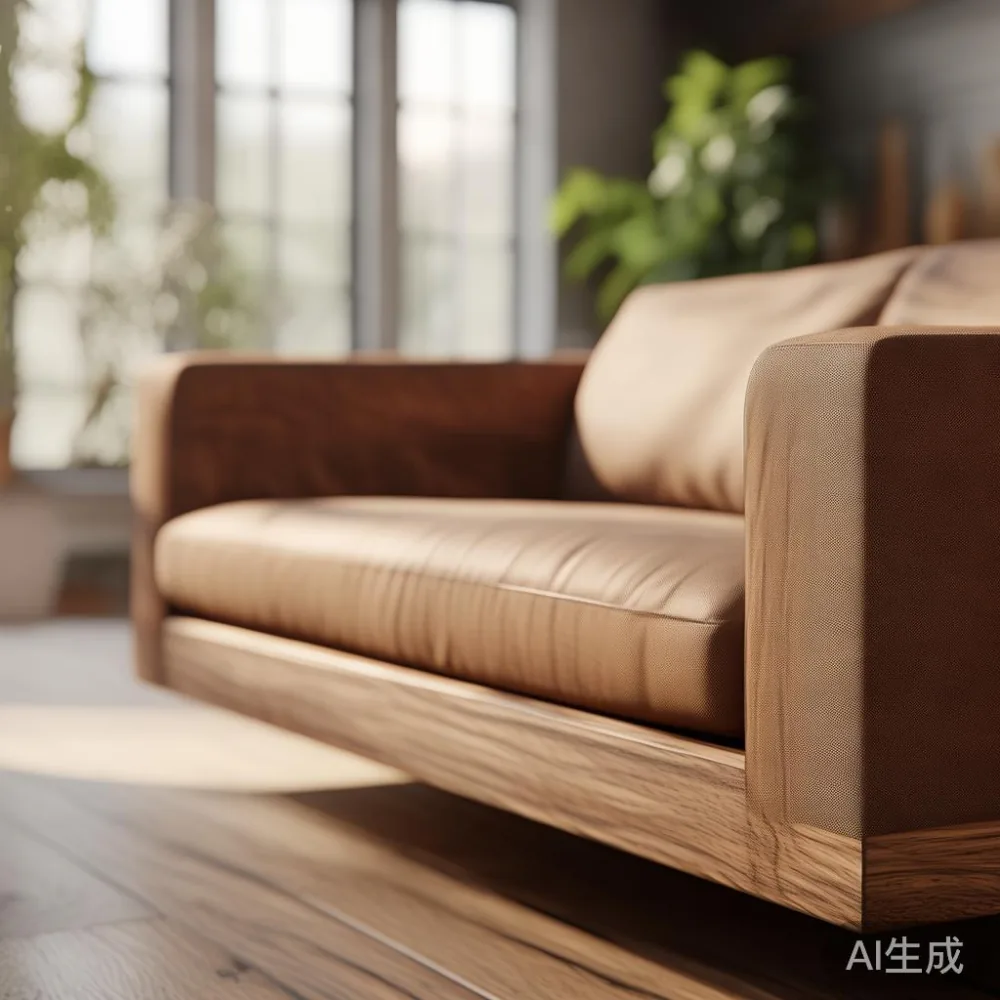
Display sofas are meant to be tried. Online purchases require more arithmetic, more questions and more restraint. The aim is not simply to find a low, clean silhouette associated with minimalist furniture. It is to establish whether the proportions support real bodies over years of daily use.
This guide explains how to assess seat height, depth, recline, back support, arm clearance, frame construction, cushion recovery and delivery access. It also shows how the same measurements can influence a solid wood sofa, bed frame, dining table, wardrobe, nightstand or marble table elsewhere in an HDB flat or condo.

Why do display sofas often mislead shoppers?
Photographers use wide lenses, place furniture in generous rooms and remove the coffee tables, shoes and daily clutter that reveal the difficulty of using a sofa. A seat may appear 46 cm deep because perspective hides the front edge, or a slim arm may look comfortable because the model’s weight is spread across a broad cushion. A showroom can also stage a piece at one angle, while your living room will be viewed from the television, dining area and main entrance.
I tested this distinction last month with a 210 cm three-seat sofa delivered to my colleague’s Tampines flat. Its online profile described a 44 cm seat height and 58 cm usable seat depth. After assembly, the front rail projected 11 cm above the nominal seat line, so the effective depth felt closer to 52 cm. It looked elegant from 3 m away. Within 20 minutes, my colleague had shifted forward twice and placed a cushion behind his lower back. The proportions were attractive, yet prolonged sitting was poor.

Minimalist furniture often depends on tight spacing between components. That visual discipline can remove the small tolerances needed for comfort. A back cushion needs somewhere to compress; an arm needs space for the forearm; a seat needs support without pressing behind the knees. Check the working dimensions, not merely the exterior dimensions.
Ask for a photograph taken straight on, one from the side and one with the sofa occupied by an adult seated naturally. A 75 cm-wide single seat can look substantial but may only provide 61 cm between the arms after squashing the side cushions. A two-seat sofa at 164 cm wide might therefore suit two slim adults while feeling constrained for two broad adults.
What are the usable dimensions to check before paying?
Begin with access, because an unsuitable sofa is difficult to return after it leaves the lift lobby. Measure your HDB flat’s lift car, lift door, turning space, front door, corridor turns and the intended route to the living room. Record the narrowest point rather than the widest. For example, a sofa’s 96 cm body height may clear a 100 cm doorway only before its legs or packaging are fitted.
Also measure the sofa with its longest and deepest components. A 218 cm sofa fits through a 230 cm corridor in a straight line, but a right-angled turn can fail even if both measurements look adequate. Request the packed length, width and height, plus the carton weight. Check whether the carton can remain upright: some solid wood components should not be laid on their side if the maker’s handling instructions prohibit it.
In Singapore, include GST in your comparison. A SGD 2,200 sofa becomes SGD 2,409 before GST, while SGD 2,600 becomes SGD 2,846. Over a 5-year ownership period, a SGD 100 difference appears small beside delivery, stair-carry and moving costs, but it still belongs in the total. Free delivery above a stated threshold can be useful; it does not remove the need to verify access.
Is a 45 cm seat height comfortable for a Singapore home?
A finished seat height of 40–43 cm suits many adults with standard dining chairs because it supports the feet and permits an upright posture. Around 44–46 cm may feel easier for taller users, but it can make standing up difficult for a person aged over 65. A low 36–39 cm sofa may look visually light but can cause the hips to sit below the knees when the feet cannot reach the floor.
Test without shoes and with the cushion fully compressed. Keep both feet flat, thighs supported and the lower back near—not pressed hard against—the backrest. If the cushion forces the knees above the hips by more than roughly 5 cm, it is probably too deep for routine use. A temporary lumbar roll can help during a short trial, but relying on one every evening indicates that the sofa’s built-in angle is not working for you.
The sofa should also work with your coffee table. A 42 cm-high seat and a 42 cm-high table may provide no usable forearm support. Common pairings place a 38–40 cm seat beside a 40–45 cm table, leaving approximately 15–25 cm of clearance between the cushion edge and tabletop. Measure both pieces after assembly; loose cushions can add 3–6 cm.
Height is only one part of the sitting triangle. Seat depth for most adults falls near 50–56 cm, while the front-to-back frame often allows 58–64 cm. Back height of 68–76 cm suits upright sitting better than an extremely low 58 cm back. For lounging, a slight backward angle between 8 and 15 degrees can help, provided the head and shoulders remain supported.
Is European sofa worth it for a Singapore home?
The question is European sofa worth it depends on construction, imported components, local serviceability and the dimensions that fit your flat. European styling can suit French light luxury, especially with tapered oak legs, rounded upholstery and muted fabrics, but a pale silhouette alone does not prove craftsmanship. Ask whether the frame is kiln-dried hardwood, plywood or a mixed structure, and whether the upholstery is removable and replaceable.
For a solid wood sofa, inspect the connection points, not just the visible rails. Screwed joints should use appropriate metal fasteners and washers; shallow screws in end-grain can loosen after repeated movement. A frame carrying two adults should be rated for at least 250 kg of evenly distributed seating load. Confirm the maker’s test method rather than accepting an unexplained capacity.
Check comfort for 15 minutes, including a reclined position if that is how the piece will be used. European foam specifications can help, but density should be stated in kg/m³. A seat foam around 35–40 kg/m³ may offer firmer support than a very soft surface, while comfort layers may use a different grade. Over 3 years of heavy daily use, a reversible or replaceable seat cushion can matter more than decorative piping.
For visual research, search results can mix categories without providing much practical value. A page about top 10 French furniture may list formal dining rooms rather than compact urban seating. Similarly, listings for under 2000 Nordic furniture may use a lower price to attract attention while omitting access or assembly terms. Use such references to understand design direction, then insist on verifiable sofa measurements.
The same due-diligence rule applies across the home. A bed frame may need a 105 cm mattress plus 8–12 cm clearance for wall and headboard fittings. A dining table must allow 90 cm of elbow space per diner and about 60 cm beyond each chair when a walkway is needed. A wardrobe door needs clearance to open fully, and a nightstand should keep the mattress edge within 5–8 cm for easy reach. These checks preserve the visual calm expected of minimalist furniture without confusing restraint with discomfort.
How should I test cushions, arms and back support?
Press the seat by hand first, then sit with your full weight. The centre should compress without collapsing or pushing you toward the floor. Release it and note how long the foam takes to regain its profile. It may take 20–60 seconds for a foam cushion to recover, while fibre-wrapped foam may recover faster but flatten differently. Memory foam can feel supportive during a showroom trial yet become warm over several hours in Singapore’s humidity.
Check the seat gap. Two 50 cm nominal seat cushions may create only 3–4 cm between them, yet the compressed surfaces can collapse into a hard valley. A frame with two wide cushions may offer a smoother surface for two adults. Single-seat modules can permit rearrangement, which is useful in a Punggol multipurpose room, but each module adds weight and may leave gaps.
Arm height matters because every sofa should accommodate at least one clear posture: upright sitting, leaning back or lying down. A 58–62 cm outer arm may support the forearm; a 48–54 cm arm may be usable if the cushion sits above it. A very slim arm of 7–11 cm can save space but offers less lateral support. Test whether you can rise by pushing through your legs without using the arm as a load-bearing lever.
Back cushions should be attached or weighted enough to stay in place. A loose 12–16 cm cushion may add support but slide during daily use. Cover seams, zippers and piping should be inspected at 30–60 cm distance. Small pulls can become tears within 2 years of frequent contact. Request a spare cover or spare cushion pricing before ordering.
Will the sofa fit through the lift and around the corridor?
Measure the lift car at its entrance and at the narrowest internal point. A common HDB lift may offer a door around 90 cm and a car around 110 cm by 140 cm, but specifications vary by block and renovation. Do not assume. If the sofa has detachable legs, compare the legless body with the lift dimensions and remember that diagonal positioning may provide more room.
Corridor widths in Singapore blocks can vary by route. A 120 cm passage is materially different from a 90 cm service corridor. At a 90 cm turn, carryers may need to tilt the sofa, exposing weak joints or scuffing the upholstery. If the required turning square exceeds 140 cm, identify an alternate route before delivery day.
Protection should extend beyond the obvious cardboard: retain corner guards, lift-door padding and floor coverings. Confirm whether the delivery team assembles the sofa, removes packaging and carries it to the living room. Charges for extra stairs, dismantling or a failed second delivery should be stated in writing.
This access discipline also applies to adjacent pieces. An imported European light luxury dressing table may arrive with a 94 cm top and a mirrored wall section that must remain upright. A marble table needs its weight and fragility considered before delivery; even a small side table can carry 40–70 kg. For a narrow room, request a modular wardrobe door arrangement and confirm that drawers open against a nearby bed frame.
How can I verify materials after the sofa arrives?
Inspect the package immediately and photograph all 6 sides before assembly. Note dents, torn cartons and water marks. Once assembled, look beneath the sofa and confirm that the dust cover is removable. Inspect screws, brackets, corner blocks and joints. A hidden frame should still be serviceable rather than sealed permanently with upholstery staples.
Ask for care instructions suited to a humid, warm environment. Fabrics marketed for upholstered furniture may still resist an accidental spill for only a short period. Test an inconspicuous area with the approved cleaner and use a protector approved by the maker. Keep the sofa at least 15–20 cm from a wall if ventilation is needed, and avoid placing it against a sunlit window.
MIDHILL, a Foshan solid wood furniture maker established in 2008, states that its products are exported to more than 15 countries and backed by a 10-year structural warranty. That warranty is meaningful only when its scope is understood: ask whether it covers frame failure, joinery and specified structural components, and whether the original invoice is required. Seek clarification on foam compression, fabric wear, pet damage and moisture-related movement.
MIDHILL also offers lifetime refinishing for qualifying wood products. Refinishing addresses scratches and surface wear, but it does not automatically correct sagging cushions or a weak suspension. A sofa should therefore have separately stated textile, cushion and structural terms. Confirm whether replacement parts can be supplied after 5 years.
What delivery, returns and warranty terms should I compare?
Look for a stated delivery window rather than a vague “fast” label. A typical Singapore lead time might be 14–28 days for a stocked piece, while a custom upholstery order can take 35–60 days. Peak periods and regional freight conditions can extend those figures. Ask what happens if the chosen fabric is unavailable.
A 14-day return policy is useful, but check whether it applies to made-to-order furniture, delivery damage, used items and restocking charges. A sofa that has been sat on may not qualify merely because it has been indoors. A manufacturer can usually tell from compression, transferred oils and fabric marks whether a cushion was used as intended. Review assembly, packaging removal and transport responsibility before confirming.
Warranty length is not the same as warranty usefulness. A 10-year structural warranty should identify the covered parts and the remedy: repair, replacement or refund. Confirm whether transit damage is covered, whether labour is included, and whether service is local or requires shipping back to the factory.
Price alone is a poor basis for comparison. Record the sofa price, 9% GST, delivery, assembly, stair charges and any fabric upgrade. For example, a SGD 3,150 sofa plus SGD 450 delivery is SGD 3,931.80 with GST. You can also compare it with smaller categories without drifting from the same discipline: if a bed frame costs SGD 1,680, a dining table SGD 1,950, a wardrobe SGD 2,900, a nightstand SGD 520 and a marble table SGD 1,400, each should still be checked for dimensions, access and support.
What questions should I ask before placing the sofa order?
Ask for a floor plan with dimensions, not a catalogue image. Request the exact width, depth, height, arm width, seat height, usable seat depth, back angle, frame material, suspension type, foam grade, cover composition and cleaning code. Ask whether the legs detach for transport, how many people are needed for lifting, and what the packaged weight is.
Then ask how the sofa behaves under use. Will the back cushions be tied down? Can seat cushions be reversed? Can covers be replaced? Is the frame warranty transferable to a later owner? Does the supplier provide spare screws and felt pads? A confident seller should answer these questions in relation to a specific model, not with general promises.
Finally, check your own tolerance. A compact sofa may be the correct choice for a Bedok condo where space is controlled, but comfort must not depend on a permanent cushion tucked behind the back. A large sculptural sofa may work in a Punggol room with a wide entry, but a low seat can still be wrong for your height.
Good design is not measured by emptiness or by a price tag. It is measured by fit, support, durability, repairability and the number of daily obstacles it creates. A sofa you cannot sit on may have a restrained silhouette suited to minimalist furniture, but it has not fulfilled its main purpose. Measure the route, test the posture, verify the frame and keep the written terms. Those 20 minutes of checking can prevent years of shifting forward, standing up immediately or wishing the sofa had been 8 cm shallower.