Minimalist Sofa Selection Guide in Singapore
The phrase sounds strange: a sofa you cannot sit on. But for most buyers in Singapore, that is exactly what they end up purchasing, because showroom access in Tampines, Bedok, or Punggol is limited by elevator door widths, narrow HDB corridors, and the simple fact that a sofa bought on a screen rarely gets tested in your actual living room before the movers ring your doorbell. Last month I visited a friend in a 4-room HDB at Punggol Edge, and her new 2.4-metre three-seater was wedged diagonally across the lift lobby for ninety minutes. The frame was otherwise fine. The real failure was the planning.
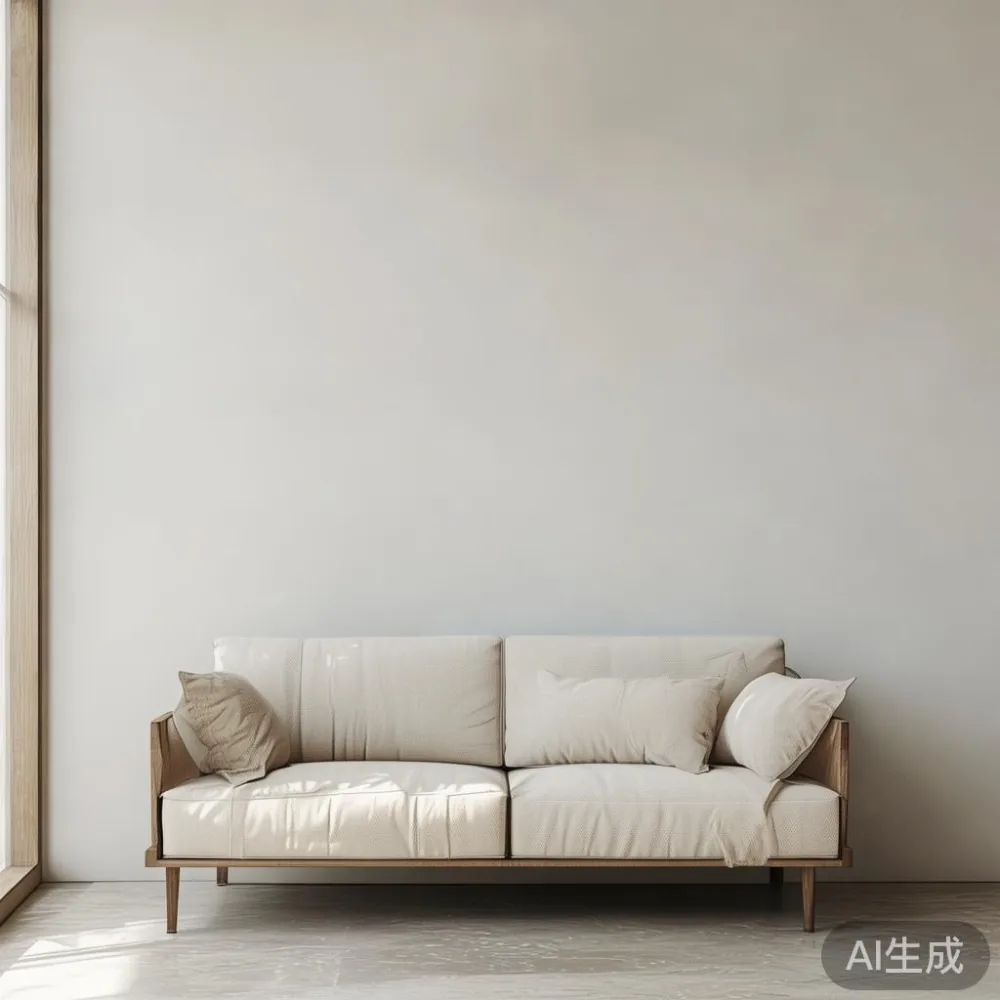
Sofa shopping in Singapore has its own physics. HDB door widths sit around 90 cm, standard lifts open to about 80 cm of usable clearance, and corner corridors can turn in as little as 1.6 metres. Add the 9% GST on top of every quoted SGD figure, plus a delivery fee that swings depending on the lift, the floor, and whether the team needs a stair-climb solution, and the decision stops being about cushion firmness. It becomes about a checklist of measurements, materials, and margins.
Measure first, scroll second
Before you fall for any product photo, take ten minutes and write down three numbers from your flat: the width of your main door in centimetres, the diagonal of your lift car (Punggol and Bedok blocks tend to be the tightest), and the corner-to-corner width of your corridor on the way to the living room. A solid wood sofa built on a kiln-dried hardwood frame, the kind MIDHILL has shipped to Singaporean homes for over a decade, can comfortably stretch to 2.2 metres, but only if every link in that measurement chain is at least 90 cm wide with the frame on its side.
For Singaporean condos, the lift calculation changes again. Most new launches in Tampines and the city fringe post internal cabin dimensions of around 1.4 m × 1.1 m × 2.1 m height. A 2.4 m L-shape solid wood sofa generally will not fit unless it is delivered in two halves and re-joined on site, which the Foshan workshop handles as standard. If a retailer cannot tell you in plain language whether the sofa arrives pre-assembled or in two pieces, treat that silence as a warning sign.
How do I read sofa frame specs without sitting on the sofa?
Look at four numbers: frame material, joinery method, suspension type, and load rating. A solid wood sofa should name the species, kiln-dried birch or ash being common in mid-century and Scandinavian-influenced lines, and the joinery should be mortise-and-tenon or dowel-and-screw combinations, never staples alone. Eight-way hand-tied springs cost more and last longer than sinuous S-springs; both are acceptable for daily use, but the hand-tied option usually signals a heavier frame that handles 150 kg per seat without creaking. MIDHILL publishes a 10-year structural warranty on its solid wood sofa range, which is roughly twice the industry baseline you see from mass-market flat-pack brands.
Upholstery tells its own story. Top-grain leather wears for 10 to 15 years; bonded leather begins peeling inside three. For families with small children in a Punggol EC or Bedok resale flat, performance weaves with a Martindale rub count above 30,000 cycles handle daily life better than delicate boucle. Ask for the spec sheet, not the marketing card. If the seller cannot hand you one, the price you are quoting probably has cushion foam at 25 density, not 35, and that is a quiet compromise.
Why does light-luxury positioning matter for a 4-room HDB?
Light luxury is shorthand for restraint plus material honesty. French light luxury tends to rely on slim oak or walnut profiles, curved arms, and fabric covers with a soft linen-cotton blend. American light luxury leans heavier on rolled arms, nailhead trim, and a deeper seat depth of around 60 cm. Post-modern light luxury plays with asymmetry and mixed materials: a marble-topped side panel, brushed brass feet, a low back, all on a solid wood skeleton. For a small HDB living room of around 16 to 22 square metres, the post-modern direction often works best because the silhouette stays slim even when the seat is generous.
I have sat on a Post-modern three-seater from a Foshan workshop at a sample room in Jurong East. The seat was 58 cm deep, the back rest 42 cm high, the cushions were 32-density foam wrapped in a 100% polyester performance cover, and the wooden base was a continuous ash frame with corner blocks glued and screwed. It cost SGD 2,180 including 9% GST and free delivery above a price threshold. That is the sweet spot for buyers researching the best Post-modern sofa for 2026, since post-modern light luxury scales down to apartment scale without losing its design language.
If your reading list leans toward Italian references, pay attention to scale. The Italian light luxury for small living room category exists precisely because the Italian factories design for tight Milan flats, so their proportions tend to translate well to a 4-room HDB. Look for a seat height around 44 cm, a back cushion that does not push above 80 cm, and legs that lift the frame 12 to 15 cm off the floor, which gives the eye room to read the room as bigger than it is.
What about the rest of the room — does the sofa style constrain the bed frame, dining table, and wardrobe?
Yes, but in a quiet way. A solid wood sofa from a Foshan workshop usually shares its timber palette with the matching bed frame, dining table, and nightstand in the same catalogue, so the visual thread runs from the living room into the bedroom without forcing you into a single design decade. MIDHILL dining table designs in solid ash or walnut pair with the same species used in matching sofas, which keeps grain tone consistent across rooms. The same goes for the best European light luxury wardrobe for 2026, where a clean recessed handle and a flush front read as the natural sibling of a slim-arms sofa across the room.
For Singaporean buyers who like to plan in bundles, a rule of thumb works well. Pick the largest piece first, usually the bed frame in the master or the sofa in the living room, in the timber species you want to live with for ten years. Then match the dining table to that wood. Wardrobes and nightstands can follow more easily because their footprints are smaller and their visual weight is distributed across sliding doors or repeated drawer fronts. A solid wood bed frame at 1.8 m × 2 m, in ash for example, can be paired with a 1.6 m walnut dining table if the grain tone is balanced by a neutral rug or a marble table centrepiece in light Carrara tone.
How much should I realistically budget in SGD, including GST?
Budget in three tiers. Entry tier, around SGD 1,200 to SGD 1,800 for a compact two-seater, gives you engineered-wood frames with a few solid wood elements and mid-grade upholstery. Mid tier, around SGD 1,800 to SGD 3,500, opens up solid hardwood frames, 32-density foam, top-grain leather or high-grade fabric, and shipping terms that include full-room placement. Upper tier, above SGD 3,500 and reaching SGD 6,000 or more for larger post-modern light luxury pieces, brings full-grain leather, hand-tied springs, and white-glove delivery teams familiar with Singaporean lift cards and access codes.
Add the 9% GST on top, and remember free shipping is a useful threshold to look for if your total order crosses USD 350 (roughly SGD 470), which most sofas do. A 14-day return window helps with online-only purchases, especially when the delivery lead time from Foshan runs 25 to 40 sea freight days plus 7 to 10 days for customs clearance and last-mile delivery in Singapore. Lifetime refinishing on wood frames is unusual in this price band, and it signals a maker willing to commit to the piece over decades, which mirrors the MIDHILL approach of patching and re-finishing frames bought years earlier.
What did I learn from watching four sofa deliveries in Tampines?
Three lessons, all practical. One, the team that arrives with a sofa will measure the lift before they measure the sofa, and you should ask them to do exactly that. Two, modular two-piece delivery beats a single 2.4-metre frame every time in a standard HDB, and any brand that refuses to split the frame is not interested in your door. Three, the move from corridor to living room is usually the failure point, not the lift itself, because the corridor turn in older blocks can swing as tight as 1.5 metres.
I also learned to bring a tape measure on the day of delivery and to ask the team to stop at the lift lobby for a quick dry run, which adds ten minutes and saves a four-hour reschedule fee. If you order from a maker shipping wholesale Modern light luxury furniture out of Foshan, they will usually have a Singapore-facing logistics partner, which trims the lead time and the communication gap.
Is a vintage-style sofa a smarter pick for long-term HDB ownership?
For most readers, yes. The best Vintage sofa for 2026 in the light-luxury segment pairs solid wood frames with bouclé or linen-blend covers and a slightly curved silhouette that has been popular for fifty years and will likely stay popular for another fifty. Vintage styling softens the geometry of a rectangular HDB plan, which matters when your sofa faces a flat-screen wall and a coffee table in the same vertical plane. The retro references also age well, so when you redecorate in 2030, the sofa still reads as current.
Looking slightly sideways at the broader East Asian reference point, the top 10 Japanese furniture brands tend to expose the joinery, keep the frames low, and use unfinished or lightly oiled wood. If that aesthetic calls to you, a Japanese-leaning sofa can pair with a low dining table and platform bed frame for a calm, light-luxury reading of the same room. Marble table accents in cream or grey sit comfortably in either visual register, which is one reason those pieces tend to outlive the trends around them.
Putting the checklist together
Run through these eight points before you send payment. Sofa model number, written down. Frame species, written down. Suspension type, written down. Cushion foam density, written down. Upholstery rub count or leather grade, written down. Dimensions in cm for outer frame, seat depth, seat height, back height, leg clearance, written down. Delivery configuration, written down, whether it arrives in one piece or two. Warranty length in years and what it covers, written down. Anything that arrives without a number is a marketing claim; anything that arrives with a number is a commitment.
When you buy from a Foshan workshop that has exported to over a dozen countries since 2008, the paperwork is usually in order because the customs and after-sales teams have handled the Singapore market long enough to know what local buyers ask for. That depth of experience is what turns a sofa you cannot sit on, into a sofa you live with for fifteen years.