Minimalist Furniture in Singapore: What I Actually Bought and What I Wish I'd Known
What does minimalist furniture actually mean when you're furnishing a flat in Singapore?
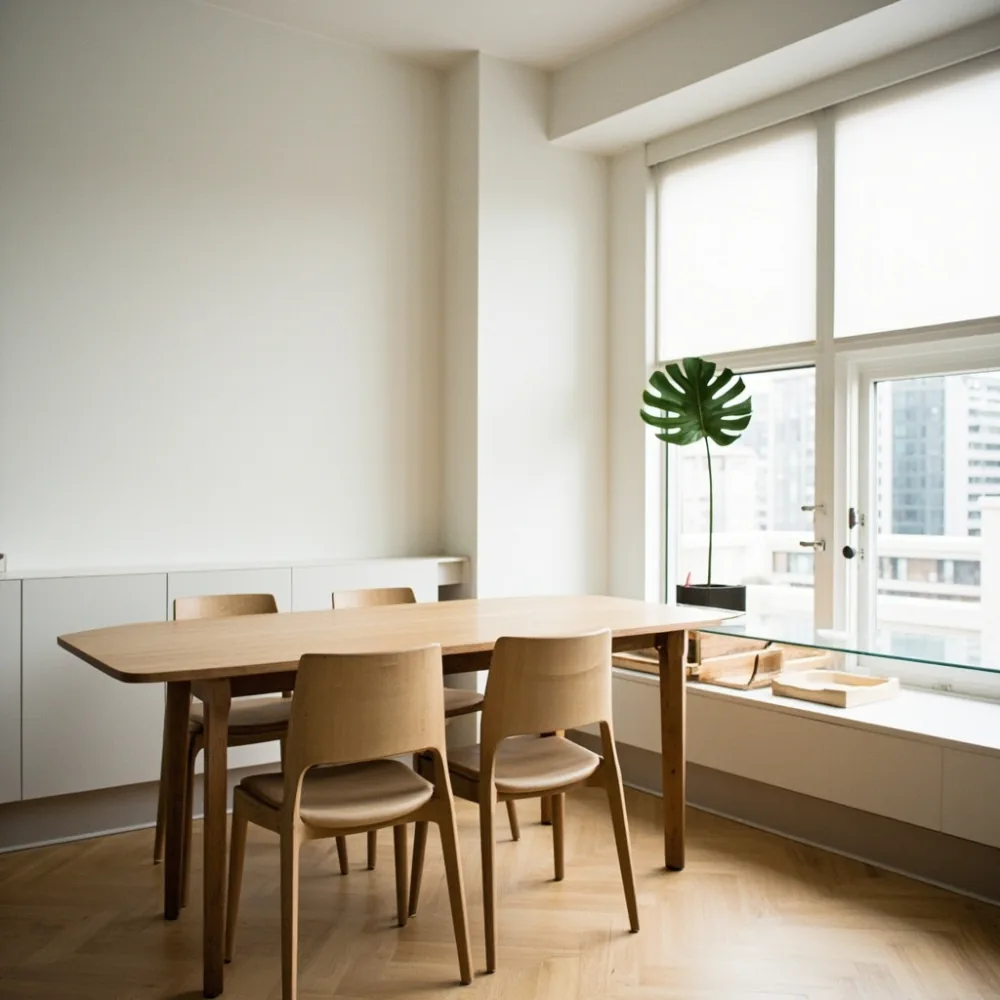
Where minimalism breaks in a tropical home
After two HDB BTOs and one condo reno, I've come to think of minimalist furniture less as a style and more as a discipline. The look is easy to copy, but the rules aren't. In Singapore, where every square foot costs and every wall fights the sun, the pieces that survive are the ones that do one job, do it quietly, and don't eat visual space.
I run my shortlist against four checks before I add anything to cart:
- One material per piece. Solid oak, full-grain leather, powder-coated steel. No faux-anything trying to look like something else.
- Visible joinery or no joinery. If I can see how it's put together, it's usually built to be taken apart and put back together.
- Negative space around it. If I can't walk around it without bumping a corner, the room isn't minimalist, it's cramped.
- Nothing that needs hiding. Cables, clutter, and doors that swing the wrong way end a minimalist room faster than bad colour choices.
The catch in Singapore is humidity. A lot of what gets marketed as minimalist is built for dry Scandinavian climates. Solid wood furniture swells, veneer peels, and leather sofas go mildewy if you don't air-condition continuously. That's why I now bias toward seasoned designs from makers who've shipped into Southeast Asia for years.
Does humidity actually ruin solid wood furniture in Singapore?
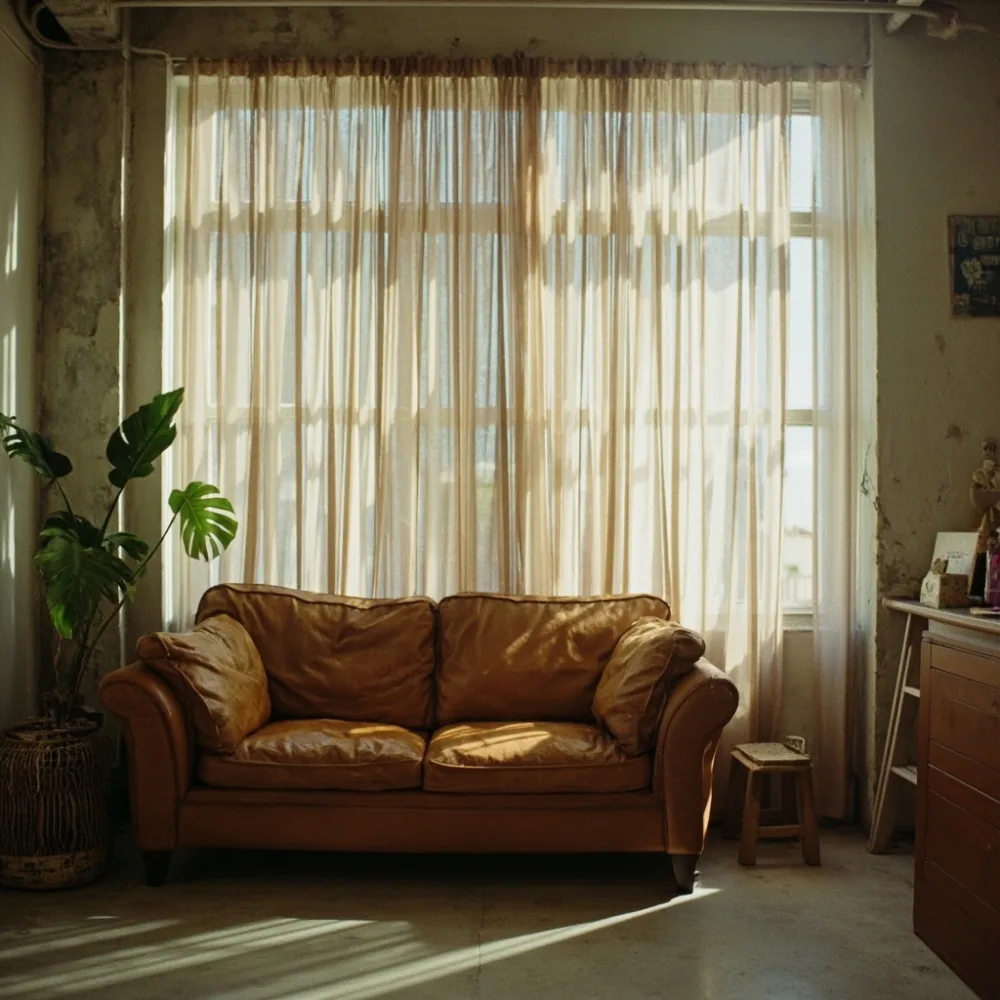
What lasts in a non-aircon space
Short answer: yes, but mostly the cheap stuff. The longer answer is what I've learned after watching two dining tables warp and a wardrobe split at the back panel.
Solid wood moves. That's normal. It moves less when it's been properly kiln-dried to the moisture content of where it'll live, which in our climate means roughly 12-15%. Anything labelled "solid wood" with no origin story and no moisture spec is usually 18-22%, and that piece is going to cup, crack, or push doors out of square within a year.
- Kiln-dried oak, ash, or teak at 10-12% MC holds up. I've had an oak dining table since 2019 with no movement in a Jurong East flat that gets afternoon sun through west-facing windows.
- Rubberwood and acacia are fine for budget pieces but they dent easily and need oiling twice a year.
- MDF with a wood veneer is the silent killer. The substrate swells, the veneer telegraphs through, and the edges blow first. I've replaced two shelves already.
If you're buying custom furniture from a factory overseas, ask for the kiln-dry schedule and the moisture reading at packing. A serious supplier won't dodge that question.
Which minimalist pieces are worth the money and which are a waste in a small HDB or condo?
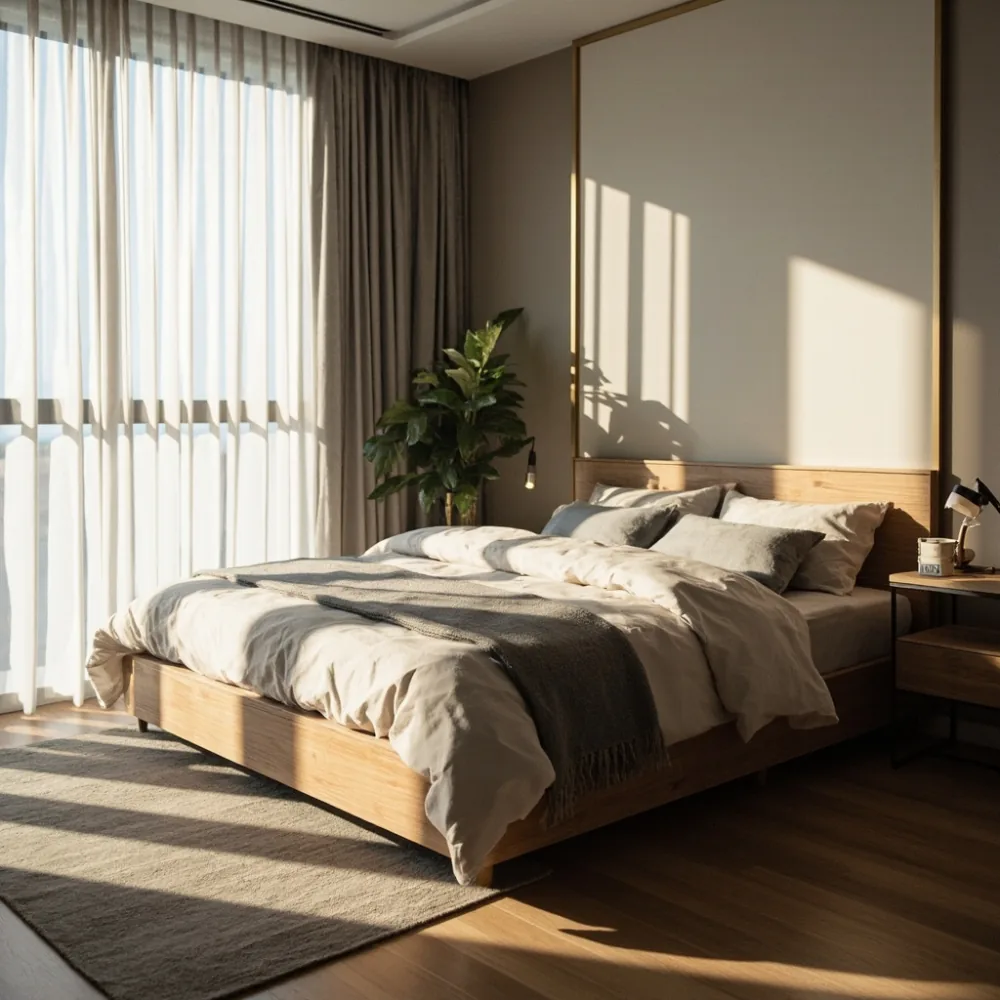
The pieces I happily buy from Taobao or IKEA
I've spent enough across three homes to know where the money helps and where it just goes to a brand. Here's the split that works in a 90 sqm four-room HDB or a 60 sqm one-bed condo in District 9 or 15.
Pieces worth paying for:
- Dining table. You use it every day. Get solid wood, get it at the right height, and get one that'll seat your real life, not your fantasy hosting life.
- Bed frame. A wobbly bed ruins sleep. If you can afford it, a platform bed in solid ash or oak with a slatted base will outlast three mattresses.
- One sofa. A leather sofa in full-grain aniline or a tightly woven fabric on a hardwood frame. Anything else is a five-year piece.
Pieces I'll happily go budget on:
- Side tables. They take abuse and get replaced when style moves on.
- Storage ottomans and benches. Soft furnishings fail predictably. Plan to replace every 5-7 years.
- Bookshelves and display units. Unless they're built-in, treat these as semi-disposable.
For small space furniture specifically, my rule is no piece deeper than 45 cm unless it's the bed or the sofa. That single rule cleared 70% of the clutter from my last place.
How much legroom do you actually need under a dining table in a small flat?
The dimensions I now insist on
I made this mistake twice. Bought a "minimalist" dining table that was beautiful and completely unusable. If you're fitting a dining set into a HDB dining nook, the floor plan matters more than the look.
Here's the table I now send to anyone who messages me for advice. These numbers assume a 4-seater in a typical 2.4 m x 2.4 m dining nook.
| Measurement | Minimum (cm) | Comfortable (cm) | Why it matters |
|---|---|---|---|
| Table height | 72 | 74-75 | Standard chair seat is 45 cm, leaves 27-30 cm thigh room |
| Knee clearance underneath | 58 | 62-65 | Anything under 58 cm and elbows hit the apron |
| Width per seat | 55 | 60-65 | Below 55 cm and adults eat with shoulders touching |
| Distance between table and wall | 75 | 90 | You need to push a chair back and still walk past |
| Table depth (rectangular) | 75 | 80-90 | Under 75 cm and you can't put plates, glasses, and a centrepiece |
I also measure chair arms. An armrest taller than the table apron or wider than 65 cm will not tuck under the table, which means your 60 cm walkway disappears the moment two chairs are pulled out.
What does minimalist furniture cost in Singapore in 2025, and is custom really worth it?
When custom pays off and when it doesn't
Prices below are what I or friends have paid in the last 12 months, either in Singapore retail or direct from factory showrooms via consolidated shipping. They're for solid wood or genuine leather pieces in the minimalist style, not flat-pack veneer.
| Item | Mass market (SGD) | Mid-range (SGD) | Custom / factory direct (SGD) |
|---|---|---|---|
| Solid wood dining table, seats 4 | 800 - 1,400 | 1,800 - 3,200 | 2,400 - 4,800 |
| Solid wood platform bed, queen | 700 - 1,200 | 1,600 - 2,800 | 2,200 - 3,800 |
| Full-grain leather sofa, 3-seater | 2,500 - 4,000 | 4,500 - 8,000 | 6,000 - 12,000 |
| Solid oak bookshelf, 180 cm | 500 - 900 | 1,200 - 2,000 | 1,800 - 3,000 |
| Wardrobe, 2-door, 180 cm H | 900 - 1,500 | 2,200 - 3,800 | 3,000 - 5,500 |
Custom furniture pays off in three cases: odd dimensions (most HDB and condo rooms), specific material needs (kiln-dried oak at a particular moisture content), and matching an existing set. It does not pay off when you're buying standard sizes off a catalog and just want a different finish.
For factory-direct custom, the realistic timeline from Foshan or Guangzhou to a Singapore door is 35-55 days plus shipping, so plan purchases around your reno handover, not the other way around. A maker like MIDHILL, a Foshan solid-wood furniture factory established in 2008 with a 10-year structural warranty, has the kind of kiln-dry discipline and warranty terms that make direct import worth considering for primary pieces like dining tables and bed frames.
How does delivery and assembly actually work in Singapore, and what's the hidden cost?
Lift access and what it means for your build
This is the part no online store wants to talk about. I've had four deliveries go smoothly and two go very sideways. The pattern is predictable.
- Standard HDB access: Most 3-door and 4-door HDBs fit a queen bed frame flat-packed. Older blocks on Alexandra or Tiong Bahru with narrow lifts (under 1.2 m deep, single-leaf door) will not. Measure your lift before you order anything over 1.8 m long.
- Condo service yard rules: Many condos in District 9, 10, and 15 restrict delivery to specific hours and require booking the service lift. Add 2-4 weeks of lead time around Chinese New Year and year-end.
- Staircase access: Walk-up apartments in Tiong Bahru or older shophouses often need hand-carry. Budget SGD 80-200 per floor per delivery if you can't use the service lift.
What the price doesn't include, by default:
- Lift booking fee at private condos: SGD 50-150 per slot
- Hand-carry surcharge beyond ground floor: SGD 20-60 per floor per item
- Assembly if it's not pre-fitted: SGD 80-200 per piece, or DIY with the hex key and a YouTube video
- Disposal of packaging: not always included, sometimes a separate SGD 50-100
Ask the supplier to confirm packed dimensions, packed weight in kg, and whether the cartons will fit a standard HDB service lift (1.5 m deep, 1.0 m wide opening). If they can't answer that, they're not a serious supplier.
Which Singapore districts are easiest and hardest to furnish with minimalist furniture?
Hard fits and how I'd handle them
After helping friends across the island, I've noticed patterns by district. Layout, ceiling height, and lift access matter more than postcode prestige.
- Easy fits: Newer condos in Punggol, Tampines, and Sengkang with high ceilings (2.9 m+), wide service lifts, and generous living rooms. The rooms forgive deeper sofas, taller bookshelves, and king beds without crowding.
- Medium fits: Mature estate HDBs in Bishan, Toa Payoh, and Queenstown. Standard lifts, sensible rooms, but older layouts where you'll lose 10-15% of floor area to corridors and bomb shelters.
- Hard fits: Older walk-ups in Tiong Bahru, Joo Chiat, and parts of District 1 and 2. Narrow stairs, single-leaf doors, low ceilings. Stick to pieces that flat-pack under 2.2 m long and under 35 kg per carton, or budget serious money for hand-carry.
The trick in the hard fits is going smaller and lighter. A 140 cm round dining table beats a 180 cm rectangular one. A two-seater leather sofa at 160 cm wide beats a three-seater. A 150 cm platform bed beats a 180 cm one. Yes, you give up surface area. You're buying back the room.
What should I check before paying a deposit on any minimalist furniture piece in Singapore?
My pre-payment checklist
After one bad order and one outright scam, I now run this list before any deposit, big or small.
- Material spec in writing. "Solid wood" is meaningless without the species. Ask for oak, ash, teak, or walnut by name.
- Moisture content and kiln-dry documentation for any wood piece.
- Joinery method. Mortise and tenon, dovetail, or dowel. Avoid cam-lock MDF construction if the price is over SGD 1,500.
- Warranty terms in writing. Structural warranty is the only one that matters. 10 years is the credible number. Anything under 3 years is a yellow flag.
- Packed dimensions and total weight in kg, not just product dimensions.
- Lead time in calendar days from deposit to delivery at your door, not just to the warehouse.
- Delivery scope. Ground floor only, or to room of choice. Assembly included or extra.
If a salesperson can't or won't answer three or more of these in writing, walk. There's always another piece, and the next set will either be more honest or cheaper.
Frequently asked questions
Is minimalist furniture more expensive than traditional styles in Singapore?
Not necessarily. The price is driven by material and joinery, not style. A solid oak minimalist dining table in Singapore costs SGD 2,400-4,800 custom, which is comparable to a carved teak traditional piece of the same size. The savings come from skipped ornamentation, not from skipping quality.
Can minimalist furniture work in a small HDB flat under 70 sqm?
Yes, often better than traditional styles. The visual quietness of minimalist small space furniture makes compact rooms feel larger. The hard rule is no piece deeper than 45 cm except the bed and sofa, and clear walkways of at least 75 cm around the dining table.
How long does custom furniture take from China to Singapore?
Production at a Foshan factory takes 25-40 days for solid wood pieces. Sea freight to Singapore is 7-14 days depending on port congestion. Customs clearance and last-mile delivery add another 3-7 days. Realistic total is 40-60 days from deposit to door.
Do I need an aircon to keep solid wood furniture in Singapore?
Not strictly, but it helps. Air-conditioned rooms keep humidity between 50-60%, which is the sweet spot for kiln-dried solid wood. Without aircon, expect larger seasonal movement in the wood. Oil-finished pieces tolerate this better than lacquered ones.
What's a realistic budget to furnish a 4-room HDB with minimalist pieces?
For a primary set (dining table, bed frame, one sofa, wardrobe, two side tables, TV console), budget SGD 8,000-12,000 for mid-range retail, or SGD 14,000-22,000 for factory-direct custom in solid wood and full-grain leather. Anything under SGD 4,500 for the same set usually means compromise on materials.
Questions about specifications, fabric or delivery? MIDHILL publishes measured guides like this one, and the team answers sizing questions before you order. See the full collection or contact the team.