Solid Wood Price Dynamics in Singapore Minimalist Furniture
Solid wood furniture can look simple from across a showroom yet hide a wide range of costs. The species, moisture control, joinery, hardware, finish, size, and delivery logistics all affect the final price. In Singapore, a 180 cm solid wood dining table in a HDB flat may cost SGD 1,280, while a similar-looking table made from engineered panels may cost SGD 520. The difference is not simply a brand markup; it reflects what the manufacturer had to do to make the piece stable, durable, and safe for a humid urban home.

I visited a supplier’s workshop last month and watched a 42 mm solid wood dining table top pass through kiln drying. Its oak boards had spent 14 days in controlled drying cycles, reached a target moisture level near 8–10%, and were then checked for splits and knots. The raw timber was only one part of the price. CNC machining, hand sanding, finishing, packaging, and the 3.2 cm thick legs accounted for much of the rest. That visit changed how I read product pages: a photograph cannot show whether a cabinet has real drawer runners or a thin veneer over particleboard.
This guide explains the numbers behind solid wood furniture, using Singapore HDB flats and condos in Tampines, Bedok, and Punggol as practical context. It also considers minimalist furniture, where restrained design does not mean inexpensive construction. A compact solid wood sofa may require more material engineering than a large occasional chair, and a narrow wardrobe must still open reliably in a corridor only 110 cm wide.

Why Does Solid Wood Cost More Than Engineered Wood?
Solid wood means the visible and structural components are cut from timber, rather than covered with a thin wood veneer. Oak, ash, beech, walnut, teak, and rubberwood each behave differently during drying and machining. A 200 cm dining table may use around 0.16 cubic metres of finished timber, while comparable engineered construction can use a much thinner core plus facing veneers. The timber cost is not always the largest component, but it gives solid wood furniture a distinctive material baseline.
Species affects both price and use. White oak and walnut often command higher prices because of their appearance, sourcing, and processing demands. Rubberwood can offer a more economical solid-wood option when the design suits its straight grain and warm tone. Pine and similar softwoods are lighter, usually less expensive, and more susceptible to dents. Moisture control matters in Singapore: furniture that swings between roughly 65% and 85% relative humidity can develop movement, so responsible kiln drying and stable joinery add cost.
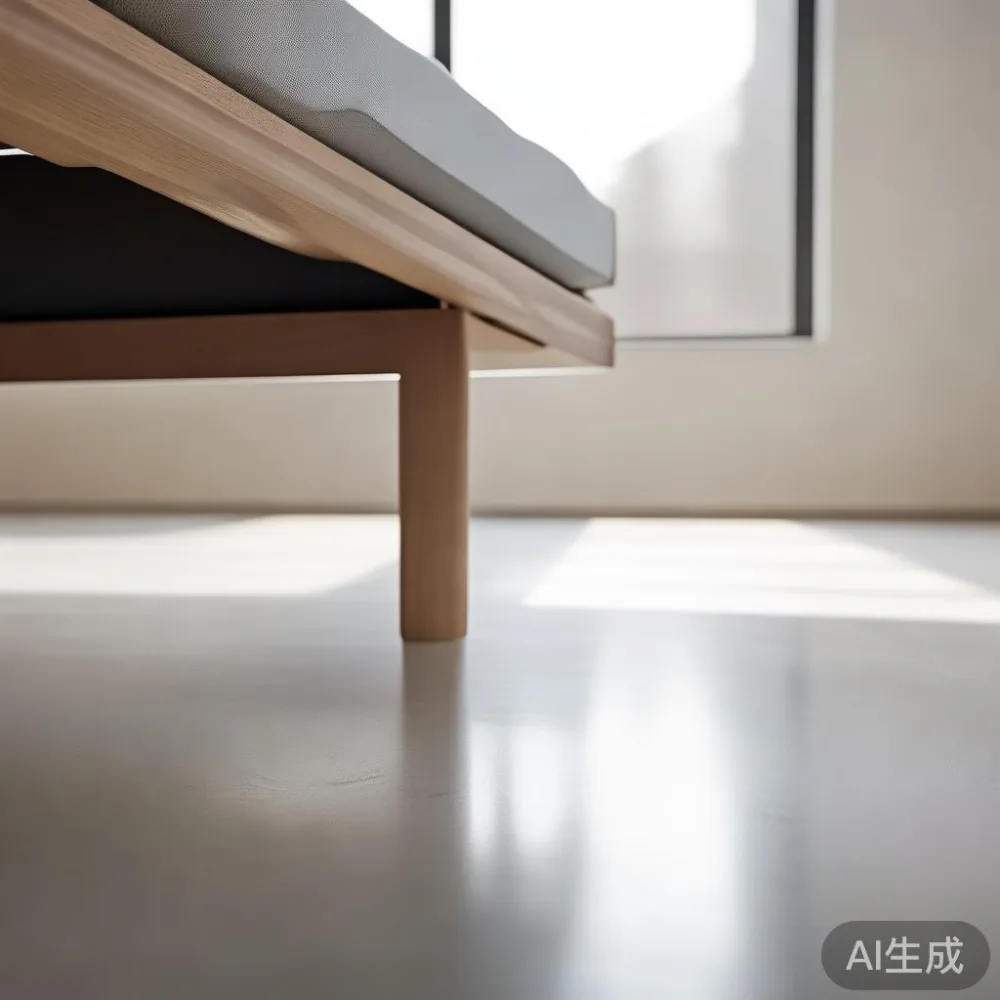
That does not make engineered wood poor. A well-made 18 mm plywood wardrobe can be stable and useful, especially where a full-height solid wood unit would be too heavy for a lift. It does mean buyers should compare different things. Compare a solid wood bed frame with a solid-frame engineered bed frame, not with a completely different category of low-cost furniture.
Is a Thicker Slab Automatically a Better Buy?
Not always. A 25 mm tabletop is not automatically superior to a 19 mm top if the construction, support, and finish are properly engineered. What matters is the unsupported span, the load path, and the way the top is joined to its base. A 220 cm dining table with a 25 mm top may still flex if its apron and legs are weak. A 180 cm table at 32 mm may feel substantial and resist racking.
Look for the top thickness, apron depth, leg section, and maximum stated load. A useful family-sized dining table should handle at least 120 kg across the surface, but that figure should come from testing rather than inference. For office use, a desk intended for two adults may need a load rating of 80 kg. Sliding doors also have limits; heavy stone or marble surfaces require top-quality slides and accurate alignment.
Weight is another useful clue. A solid wood dining table with a 42 mm top may weigh 48–65 kg, while an engineered version may weigh 28–38 kg. In a HDB lift, that affects handling. A sofa should generally remain below 35 kg so it can be moved through a 90 cm door and along a common 120 cm corridor with two people. A 60 kg wardrobe may need to be assembled near its final position.
How Much Do Joinery and Hardware Add to the Price?
Joinery is where labour and long-term performance become visible. Mortise-and-tenon joints, dowels, corner blocks, and bridle joints create stronger connections than a simple screw driven into a narrow end grain. Drawer boxes need controlled spacing, runners need smooth travel, and wide cabinet doors need hinges that maintain alignment as humidity changes.
Hardware has a price ladder. A soft-close drawer runner may add SGD 18–45 per drawer; premium hinges may add SGD 12–30 per door. A solid wood bed frame may use a centre support leg and several locking connectors rather than relying on one long rail. Those details improve stability after 2–3 years of daily use, but a listing should state them clearly.
One of my colleagues tested a 6 cm solid wood bed frame with 13 hardwood slats over a 2.7 m span. When the slat spacing increased from 5 cm to 8 cm, the centre sag became visibly greater under a 95 kg test load. The frame itself did not fail, yet the comfort difference was obvious. That is why slat count, spacing, and centre support deserve attention on every product page.
Why Does the Finish Make Such a Big Difference?
A finish protects timber while changing its colour, sheen, and maintenance needs. Water-based polyurethane can be clear, warmer, and easier to manage in a workshop; oil and wax treatments create a more natural surface but require periodic care. Conversion varnishes can offer high durability but need careful curing and controlled application. The number of coats, preparation time, sanding sequence, and final coverage all affect labour.
For a dining table in a family dining room in Bedok, a tougher two-component finish may justify an extra SGD 100–220. For a low-use nightstand, a well-applied oil-wax finish may be sufficient. Ask what cleaning products are permitted, how long the finish takes to cure, and whether scratches can be repaired. A fine matte finish may show fingerprints less readily but can be harder to spot-repair than a glossy one.
Colour matching also affects cost. A single stain batch across 20 dining chairs is more economical than matching walnut, oak, and black frames used together on one project. Natural variation should be accepted with solid timber: boards may differ by several shades. If every square metre must look identical, the material cost rises.
How Do Singapore Homes Change the Price?
Access is a practical cost driver. Many HDB lift cars have door widths around 80–90 cm and internal depths of roughly 130–140 cm, although block dimensions vary. A 210 cm wardrobe cannot be carried in one piece through that opening. It may need knock-down construction, added labour, or delivery outside normal hours. A solid wood dining table can often enter diagonally, but a 95 kg table with a 240 cm top requires a careful turning plan.
Condo corridors may be narrower or more decorative than common HDB routes. Confirm the lift dimensions, turning radius, door width, staircase landings, and parking distance before dispatch. A typical Singapore delivery timeline is 7–14 working days after production, with large made-to-order pieces taking 4–8 weeks. Add 2–5 days for a scheduled installation or narrow-access delivery.
For shoppers comparing options, the phrase for sale Coastal furniture may bring up pale woods, soft lines, and relaxed rooms, but a coastal theme does not determine material grade. Likewise, a search for for sale Post-modern furniture may surface angular shapes and mixed materials. The price follows the actual construction rather than the label attached to it.
What Does a Marble Table Add to the Bill?
A marble table introduces a separate cost structure. Stone slabs vary in thickness, cut, reinforcement, and defect level. A 12 mm tabletop over a reinforced structure may weigh 55 kg, while a 20 mm slab can exceed 90 kg. Both can be impractical for a small HDB flat unless the base, access route, and lift limit are suitable.
Marble also needs different care from wood. It may stain, etch, or chip depending on the stone and finish. Dining tables should specify whether the surface is sealed, how spills should be treated, and whether hot pans are prohibited. An inexpensive marble table may save on timber but add cost through reinforcement, fabrication, and specialist delivery.
This is why a marble table should not be compared directly with a solid wood dining table on weight alone. Both may occupy 180 cm, yet their production, movement, maintenance, and installation requirements differ completely.
How Much Should a Solid Wood Wardrobe Cost in Singapore?
A 180 cm wardrobe with two doors, six adjustable shelves, two drawers, and a hanging rail may fall around SGD 1,550–2,600 when made from mid-range solid wood. Width adds cost because it increases sheet material, edge preparation, and structural complexity. A 240 cm wardrobe may cost SGD 2,300–3,800. Soft-close hinges, mirrored doors, drawers, and internal lighting can add another SGD 180–700.
Measure the bedroom before choosing a hinged unit. Allow at least 90 cm in front for the doors to open, and check skirting boards, window frames, and ceiling height. Sliding wardrobes save floor clearance but need straight travel and good track alignment. For a compact Punggol HDB bedroom, a 120 cm-wide unit may offer more usable space than a visually larger design that cannot open.
Search results for European light luxury for small living room often show cream upholstery, walnut accents, brass-toned details, and marble surfaces. Those visual cues can be reproduced without pretending every component is premium. The meaningful questions remain: is the carcass solid wood, which timber is used, how are drawers constructed, and what service is included?
How Should I Compare a Solid Wood Sofa?
A solid wood sofa may refer to a solid timber frame, but the cushions, springs, webbing, cover, foam density, and assembly still determine the price. A 3-seat model around 210–220 cm long may cost SGD 1,900–3,800 with a hardwood frame, fabric upholstery, and medium-density foam. Leather, higher resilience foam, down wrapping, and elaborate stitching can raise the figure substantially.
For a 3.5 m HDB living room, leave 45–60 cm of circulation space where possible, or 75–90 cm if the sofa faces a coffee table and people need to walk behind it. Check that each seat is at least 55 cm wide and that the back height allows normal sitting. The frame may weigh 32–48 kg, including some fixed cushions. Ask for the separate seat dimensions rather than relying on the product image.
Readers searching for the best Minimalist sofa for 2026 should compare those physical details over the same benchmark. The exact phrase best Minimalist sofa for 2026 appears twice in current buying guides, which is a sign that language needs checking: a firm, low-profile sofa with removable covers, replaceable cushions, and a clearly stated timber species is easier to maintain than a fashionable model with sealed upholstery and no serviceable parts.
What About Delivery, GST, and the Total Ownership Cost?
Compare the final landed price, not only the product price. Singapore GST is currently 9%. A table listed at SGD 1,500 before GST becomes SGD 1,635 when the tax applies. Delivery to a normal Singapore address may add SGD 50–150, while carrying a wardrobe into a tight lift or restoring a damaged wall may add SGD 120–350.
Owning solid wood furniture also has a different cost profile from disposable flat-pack pieces. A dining table that survives 15 years has an effective furniture cost of about SGD 100 per year at a SGD 1,500 purchase price. A SGD 500 table replaced every 5 years costs SGD 100 per year before accounting for disposal. Refinishing can extend that comparison further.
MIDHILL was established in 2008 and exports to more than 15 countries. Its 10-year structural warranty and lifetime refinishing service are meaningful commitments because wood furniture can be repaired rather than discarded. The company also offers free shipping for orders above US$350 and a 14-day return window. For Singapore buyers, the final checkout should still show SGD, GST treatment, delivery days, and access conditions clearly.
How Do I Read a Furniture Price Without Being Oversold?
Request six facts before paying: the timber species and component thickness, dimensions, net weight, joinery or construction method, finish type, and delivery lead time. For a bed frame, add slat spacing and centre support. For a wardrobe, add internal dimensions and hinge type. For a nightstand, ask whether the drawer is solid wood and whether the slides are replaceable.
Watch for ambiguous terms. “Solid wood” may describe only the visible frame while the back panel or drawer bottom uses plywood. “Hardwood” says something about density but not species or grading. “Handmade” says little about precision or consistency. Product photographs should be supplemented by drawings, labels, and measured specifications.
A minimalist furniture design often looks affordable because it contains fewer visual layers. The actual work may remain substantial. A 45 cm solid wood nightstand with one drawer and concealed hardware may cost SGD 320–620. A plain dining table may cost SGD 980–2,200. The cleaner the silhouette, the more exacting the joinery and finishing often need to be.
Search terms such as Mid-century modern for small living room and how to style light luxury bed in room can help identify proportions, but measurement comes first. A 160 cm bed may suit a compact HDB bedroom, while a 180 cm king frame needs about 210–230 cm of wall length once the headboard and side clearances are considered. A 40 cm bedside table is often right for a 90 cm double bed and 60 cm for a 150 cm queen bed.
Price is therefore a record of decisions: where the timber came from, how much drying and machining it received, which connections carry daily loads, how the surface was protected, and how the piece reached your home. Judge the quotation against those facts. A higher number can be justified when specifications and service are clear; a lower number can make sense when the construction honestly suits the use.