How to Match Minimalist Furniture to a Warm Interior Without Losing the Calm
Last month I visited a 92 sqm condo in Punggol with my colleague, a homeowner who had spent S$4,200 on three flat-pack wardrobes and a dining set that looked good in the showroom but turned her living room into something resembling a dentist's waiting area. The pieces were technically minimalist — straight lines, no carvings, pale laminate — but the room felt cold, flat, and oddly small. The problem was not the design language. The problem was that she had treated minimalist furniture as a synonym for "white and thin," and had forgotten that warmth is a material, a colour temperature, and a scale decision. We swapped two pieces for solid wood, dropped the kelvin count of her bulbs from 6,500 K to 2,700 K, and added a 180 cm by 90 cm travertine-look coffee table. The same square metreage felt like a different apartment.

This guide is written for Singapore homes — HDB flats in Tampines and Bedok with their 0.9 m corridor landings and 1.0 m min-lift doors, and newer condos in Punggol with 1.2 m service lifts. Everything that follows is sized for those constraints, priced in SGD, and built around one idea: minimalist furniture should disappear emotionally, not physically. Warmth is what keeps it from disappearing into the background of your life.
What actually makes a minimalist interior feel warm?
Warmth in a minimalist space comes from material density, not decoration. A solid wood bed frame weighing 58 kg will always feel warmer than a hollow-core equivalent at half the weight, even if both are the same off-white tone. This is the principle behind French light luxury — restrained silhouettes, but every surface is a real material: cherry wood, brushed nickel, unlacquered brass, full-grain leather. Post-modern light luxury takes the same instinct and loosens the proportions slightly, mixing a 210 cm curved-back sofa with a strictly rectilinear dining table so the room reads as composed, not strict.
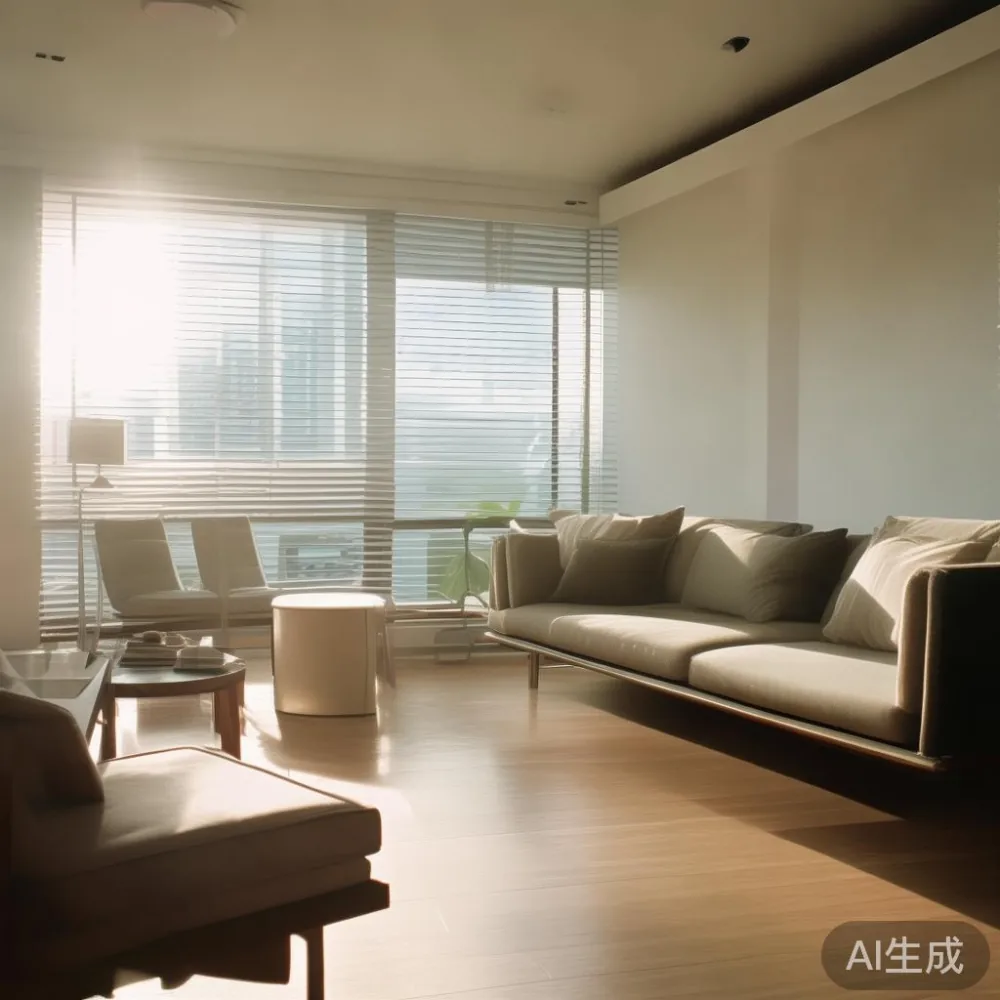
Three measurable knobs control warmth in any minimalist furniture plan: wood species and tone, textile weight (GSM of linen, weight of wool rugs in kg per square metre), and light colour temperature in kelvins. Get those right and you can put a 240 cm marble table in a 28 sqm living room and still feel calm. Get them wrong and a small console will feel like a clinic.
How do I choose a coastal style for a study?
Pick one warm wood, one cool accent, and limit the metal finishes to silver hardware, and you will have a coastal study that still reads as minimalist without veering into beach-resort kitsch. The trick is to treat "coastal" as a palette (white oak, bleached teak, linen oat, soft blue-grey) rather than a theme of anchors and ropes. A 140 cm by 60 cm solid wood desk in a natural oak finish, paired with a slim nightstand-style bookcase and a single 40 cm ceramic vase, will outlast trends and survive the morning sun from an east-facing HDB window in Bedok better than any rattan-effect laminate.
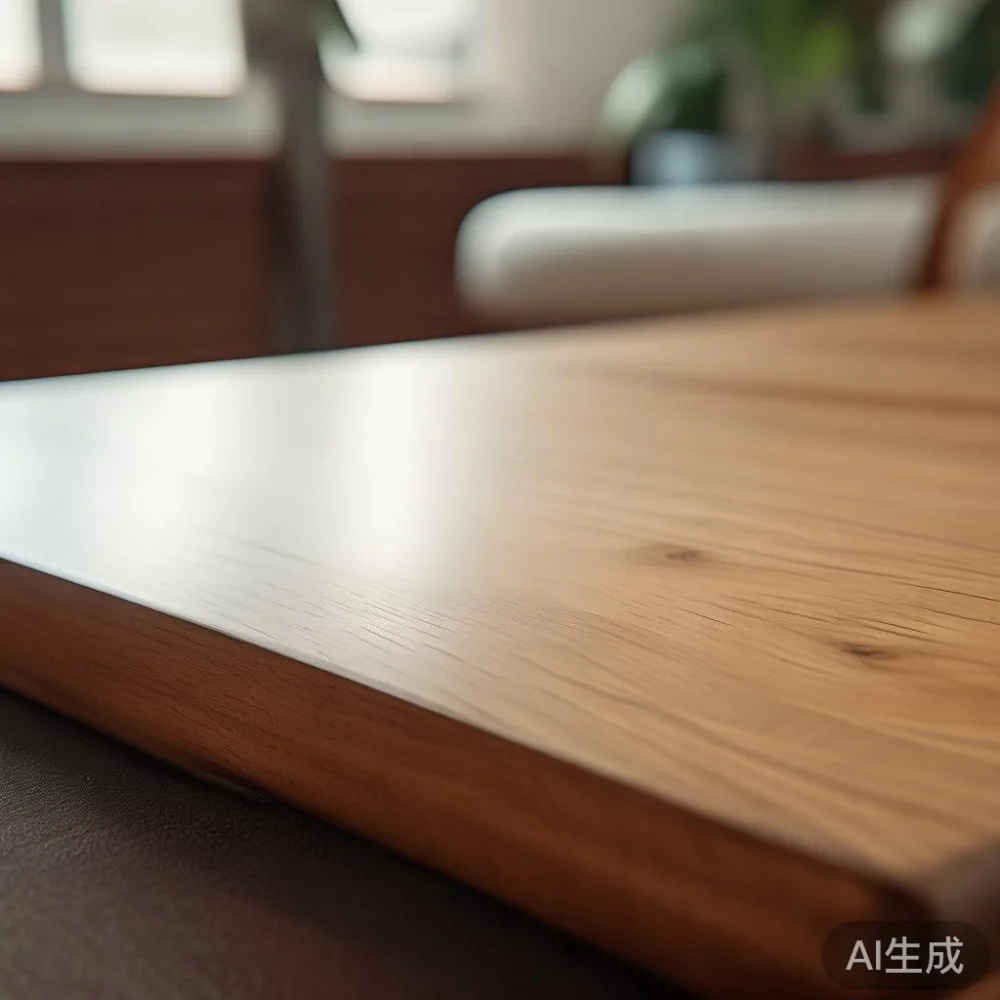
For a Singapore study of about 9 to 12 sqm — typical for a converted HDB bedroom or a small condo flex room — keep the largest piece under 150 cm wide so you retain a 70 cm walking aisle past the door. Coastal pairs especially well with oak's open grain, and you can ground the scheme with a 200 cm by 140 cm wool rug at roughly 2.8 kg per sqm to absorb the ceiling echo that bare tiles create. Skip the bleached look if your study has no natural light; a mid-tone oak (around Pantone 7501 N, if you want a reference) will read warmer than a near-white wash under artificial light.
Choosing wood tones so the room does not flatten out
Most Singapore homeowners I speak to default to two extremes: pale Scandinavian ash, or dark walnut. Both can work, but mixing them in one room usually creates visual noise. A cleaner rule: pick one dominant wood, one supporting wood within two shades on the same tonal scale, and let the third surface be a stone or a painted neutral.
For a Tampines 4-room HDB living room of about 30 sqm, a workable combination is a solid wood dining table in white oak (around S$1,850 for a 180 cm by 90 cm extension version) paired with a solid wood sofa frame in natural ash, and a single marble table — perhaps a 110 cm round Carrara-look piece at S$1,450 — as the cool counterweight. The ash and oak are close enough to feel intentional, the marble keeps the palette honest, and no single piece fights for attention. A solid wood bed frame in the master bedroom can then echo the dining table tone to tie the flat together visually, even with the corridor door closed.
If you are buying from a Foshan manufacturer such as MIDHILL, ask for the actual wood species in the Bill of Materials, not just a marketing colour name. "Warm walnut" on a price tag can mean American black walnut, African walnut (mansonia), or a stained poplar that will fade within 18 months under Singapore's UV index, which averages 9 to 11 year-round. A 10-year structural warranty is meaningless if the stain fails in year two; this is why MIDHILL publishes its wood species per SKU rather than hiding them behind a finish code.
Sizing minimalist furniture for HDB lifts and corridors
Measure before you fall in love. The single most common mistake I see is a couple buying a 240 cm wardrobe that physically will not enter a Bedok 4-room flat, because the lift opening at the lobby is 1.0 m wide and the corridor turn is 1.1 m. A 240 cm wardrobe is 2.4 m long; you cannot rotate a 2.4 m object through a 1.1 m pivot without lifting one end, which is usually impossible above 35 kg per panel.
Useful working numbers for Singapore homes:
- Standard HDB lift door: 0.9 m to 1.0 m wide, 2.1 m tall. Goods lifts in newer BTOs: 1.2 m wide.
- Service lift in most mid-tier condos (e.g. Punggol, Tengah): 1.2 m by 1.5 m cabin, 1.1 m door.
- Corridor turning radius in HDB blocks: roughly 1.1 m at the stairhead.
- Stairwell ceiling in low-rise walk-ups: 2.4 m, with a handrail that protrudes 8 cm.
- Typical HDB bedroom door: 0.9 m by 2.1 m. Master bedroom door in newer BTOs: 1.0 m by 2.1 m.
Translate that into furniture sizing. For a king mattress 182 cm by 190 cm, your bed frame should be about 190 cm by 210 cm, which still fits a 1.0 m door if the headboard is under 12 cm thick and you remove the legs for transport. For wardrobes, modular units under 120 cm wide will go through any Singapore door without disassembly. Anything larger should be flat-packed with on-site assembly, and you should budget S$120 to S$180 for the carpenter if the seller does not include white-glove service.
My colleague's Punggol mistake was buying a 220 cm sofa frame that cleared the lift but not the mood she had pinned on her mood board. A 200 cm three-seater at 95 cm deep, with removable legs and arms under 18 cm, would have given her the same seating capacity and a less crowded walkway between the sofa and the TV console. She now owns a 200 cm ash frame sofa at S$2,140 — and the room finally looks finished.
Building a warm minimalist palette around one hero piece
Every warm minimalist room I have seen in Singapore has one hero piece — usually the dining table or the bed — and two or three supporting pieces that defer. Pick the hero first, then choose the supporting pieces to make it feel inevitable.
For example, a French neoclassical cherry wood sectional sofa works as a hero in a 32 sqm living room if the rest of the palette is quiet. Cherry is naturally warm (it reads at about 1,800 K to the eye, even though it does not emit light), and neoclassical proportions — low arms, deep skirt, gentle curves — give the room a single sculptural anchor. Around it, place a 180 cm by 90 cm solid wood dining table in white oak at S$1,780, two nightstand-sized side tables at 45 cm by 45 cm (around S$260 each), and one marble table in a cool grey at 100 cm diameter (S$1,520). That is a five-piece warm minimalist living-dining scheme at roughly S$7,200, leaving S$1,800 to S$2,400 for a wool rug, two linen curtains, and the lighting labor.
The trick is to resist the urge to add a sixth piece. Minimalist furniture plans fail when owners treat them as checklists. A room with five pieces that each earn their space will photograph better, age better, and clean faster than a room with nine pieces that are each "kind of" necessary.
Light, textiles, and the 2,700 K rule
Furniture cannot carry the warmth on its own. Even the best solid wood bed frame will read cold under a 6,500 K LED downlight, because kelvin and wood tone fight each other. For warm minimalist interiors in Singapore, set your living room and bedroom lights at 2,700 K (warm white), your kitchen at 3,000 K if you need to see what you are chopping, and your bathrooms at 3,500 K. Anything cooler than 3,500 K will push your carefully chosen oak toward grey under evening light.
Textiles matter as much as the kelvin setting. A 100% linen curtain at 220 gsm will drape better and feel warmer than a polyester equivalent at 90 gsm, even at the same off-white colour. For a 240 cm tall window in a Punggol condo, budget S$220 to S$320 per panel for linen-look polyester that washes at 40 °C, or S$380 to S$520 per panel for true Belgian linen that will outlast three sofa changes. A wool rug at 2.5 to 3.2 kg per sqm, sized 200 cm by 140 cm under a coffee table, will absorb enough sound to make a 28 sqm living room feel 30% calmer in the first week.
One local number worth memorising: a typical HDB flat has about 3.2 m of ceiling height, which is lower than most international apartment standards. This means your light fixtures should hang no lower than 2.1 m above the floor, and your floor lamps should stay under 165 cm so they do not visually shorten the room. A 165 cm ash floor lamp with a linen shade at S$320 is enough warmth for a 16 sqm bedroom without crowding the ceiling.
Budgeting for minimalist furniture in SGD (without the regret)
Singapore furniture prices have moved around 12 to 18% in the past three years, partly because of freight and partly because of GST, which is now 9% on imported furniture. For a complete warm minimalist scheme in a 4-room HDB (about 92 sqm), a sensible budget in 2026 looks roughly like this:
- Solid wood bed frame (queen), white oak: S$1,650 to S$2,400.
- Solid wood sofa frame, 200 cm to 220 cm, ash or cherry: S$2,100 to S$3,200.
- Solid wood dining table, 180 cm extension: S$1,750 to S$2,400.
- Solid wood wardrobe, 240 cm modular: S$1,950 to S$2,800.
- Nightstand pair, 45 cm to 50 cm: S$460 to S$720.
- Marble table (accent): S$1,200 to S$1,800.
For a Foshan-made, export-grade set in those sizes, expect a landed Singapore price in the S$9,000 to S$13,000 range before GST. That is broadly S$98 to S$142 per sqm of apartment, and it is the price band where solid wood construction, dovetail joinery, and a 10-year structural warranty start to appear together. Below S$7,500 for the same list, you are usually paying for hollow frames, MDF cores, or veneers that will peel at the corners within 36 months under Singapore humidity, which averages 78 to 82% year-round.
Free shipping over US$350 (about S$480) is now common from cross-border suppliers, and 14-day returns take the worst-case sting out of buying a solid wood dining table you have never sat at. White-glove delivery with assembly in a HDB corridor usually adds S$120 to S$200 on top. Lifetime refinishing is rarer than it sounds; ask specifically whether the offer covers the top, the edges, and the legs, or only the top. MIDHILL, for one, offers lifetime refinishing on the entire piece, not just the visible faces, and that detail is worth S$300 to S$500 over the life of a dining table.
Three warm minimalist layouts for typical Singapore homes
Layout A — 4-room HDB in Tampines, 92 sqm, S$10,400 spend. Living room: 200 cm ash sofa, 110 cm travertine-look marble coffee table, 45 cm ash side table, 240 cm ash TV console at S$320 per running metre. Dining: 180 cm oak extension table, four ash chairs at S$220 each. Master bedroom: 190 cm oak bed frame, two 50 cm ash nightstands, 200 cm ash tallboy at S$1,150. Second bedroom: 120 cm modular oak wardrobe, 140 cm oak study desk. Total around S$10,400 before GST.
Layout B — Punggol condo, 78 sqm, two adults, S$8,800 spend. Living-dining: 220 cm cherry sectional sofa (S$2,950), 100 cm round marble accent table (S$1,520), 180 cm oak dining table (S$1,780), two oak benches at S$380 each. Bedroom: 190 cm ash bed frame (S$1,850), one 50 cm ash nightstand (S$280), 180 cm oak wardrobe (S$1,650). The piece count is six, not nine, and the room reads warmer for it.
Layout C — Bedok 5-room HDB, 110 sqm, family of four, S$13,200 spend. Living: 240 cm three-seater plus chaise ash sofa (S$3,400), 130 cm oval marble coffee table (S$1,950), 240 cm ash TV console (S$1,650). Dining: 210 cm oak extension table seating six (S$2,180), six oak chairs (S$1,320). Master: 200 cm oak bed frame (S$2,050), 240 cm oak wardrobe (S$2,400), two nightstands (S$560). Two smaller bedrooms with 140 cm beds (S$1,180 each), 180 cm wardrobes (S$1,650 each), and 130 cm study desks (S$520 each). The full plan lands at about S$13,200 before GST and delivery.
What to check before you pay a deposit
Three documents, not the marketing page. First, the Bill of Materials, listing solid wood species, joinery method (mortise-and-tenon, dovetail, dowel), and finish type (wax, oil, lacquer, conversion varnish). Second, the warranty terms in writing: how many years for structure, how many for finish, what is excluded (humidity damage above 70% RH is normal wear, not a defect). Third, the shipping terms in Incoterms: DDP Singapore means duties and GST are included; FOB means they are not, and you will pay 9% GST on the declared value at the door.
If the seller cannot produce the first two in writing within 48 hours, walk. A manufacturer with a 10-year structural warranty and a published lifetime refinishing policy will have those documents ready, because their export team sends them to fifteen or more countries on a routine basis. Ask how many countries they ship to, how many containers they loaded last quarter, and whether their warranty is honoured by a Singapore agent or only by return-to-factory. The last point matters: a return-to-factory warranty on a S$1,800 dining table is not worth the freight cost.
Closing thoughts on staying calm in a warm room
The reason warm minimalist furniture works in Singapore flats is that it solves a local problem, not a generic one. Local humidity punishes hollow cores, local sun punishes dark stains, local lift sizes punish over-sized wardrobes, and local ceiling heights punish tall floor lamps. A plan that respects those four constraints will look more relaxed than a Pinterest board copied from a 3.2 m ceiling Brooklyn loft. Pick one warm wood, one cool stone, one kelvin temperature, and one or two pieces that you would still want in ten years. The rest will follow, and your Tampines, Bedok, or Punggol home will feel calm at 9 pm on a Tuesday, which is the only test that matters.